

When a pipe breaks, a basement floods, or water enters a building unexpectedly, the first priority seems obvious: get the water out.
Water extraction is important, but it is only the beginning of a professional water damage restoration project.
Water can move beneath flooring, soak into drywall, enter wall cavities, and be absorbed by structural materials. Even after the floor appears dry, moisture may remain in areas that cannot be identified by sight alone.
Professional water damage restoration is a systematic process designed to remove standing water, identify where moisture has traveled, dry affected materials, verify that drying is progressing, and repair areas that cannot be restored.
Here is what that process typically looks like.
1. Water Extraction
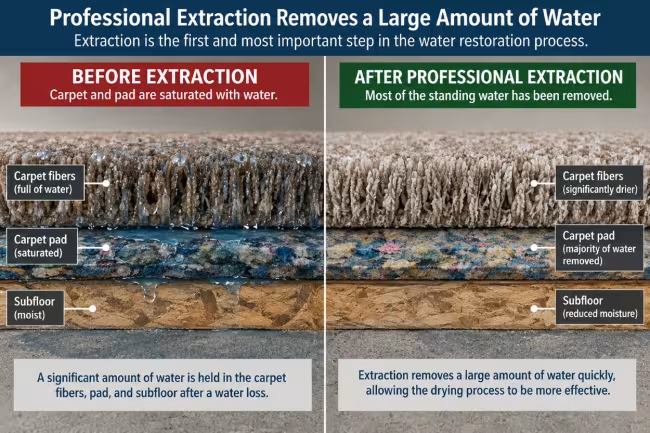
When significant amounts of water are present, removing as much liquid water as possible is usually the first step.
Professional extraction equipment may be used to remove water from carpet, hard-surface flooring, basements, and other affected areas.
Why is extraction so important?
Because physically removing water is generally much more efficient than attempting to evaporate all of it with drying equipment.
Depending on the situation, technicians may use portable extractors, truck-mounted extraction systems, submersible pumps, or specialized floor extraction tools.
But a floor that no longer has visible water on it should not automatically be considered dry.
That is where moisture detection becomes important.
2. Moisture Mapping: Finding Where the Water Went
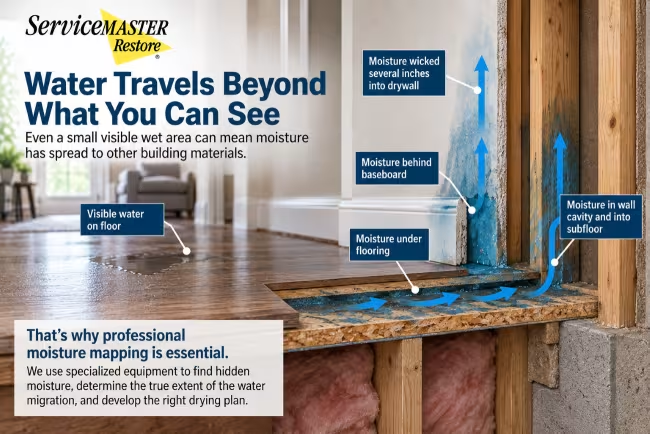
Water rarely stays exactly where you can see it.
It may wick upward into drywall, migrate beneath flooring, soak into carpet and pad, enter wall cavities, or spread into adjacent rooms.
Professional restoration technicians use moisture-detection equipment to evaluate affected materials and determine the extent of the water migration.
This may include moisture meters, thermal imaging when appropriate, and other measuring instruments.
Technicians can then establish a moisture map of the affected area.
Think of moisture mapping as creating a picture of where the water traveled—not just where it was originally visible.
This information helps determine which materials may be dried in place, which areas require additional investigation, where drying equipment should be positioned, and whether some materials need to be removed.
3. Structural Drying
Once excess water has been removed and the affected area has been evaluated, the focus shifts to drying.
Professional structural drying is more than placing a few household fans around a room.
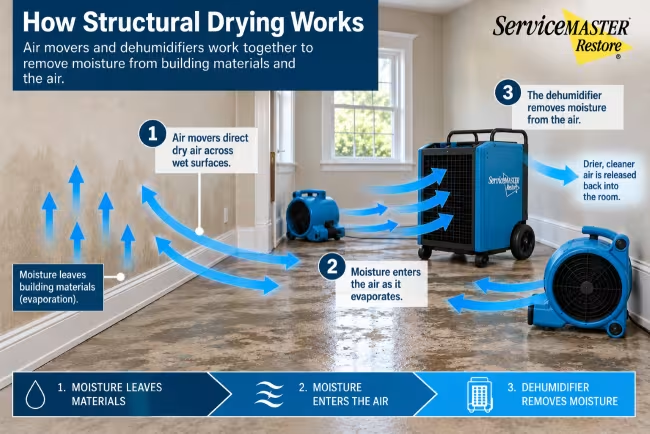
Commercial air movers are positioned to increase airflow across wet surfaces and encourage evaporation. At the same time, commercial dehumidifiers remove moisture from the air.
These two processes work together.
Air movement helps moisture leave wet materials. Dehumidification helps remove that moisture from the drying environment.
The drying plan may change depending on the materials involved, the amount of water absorbed, the size of the affected area, environmental conditions, and whether moisture has entered concealed spaces.
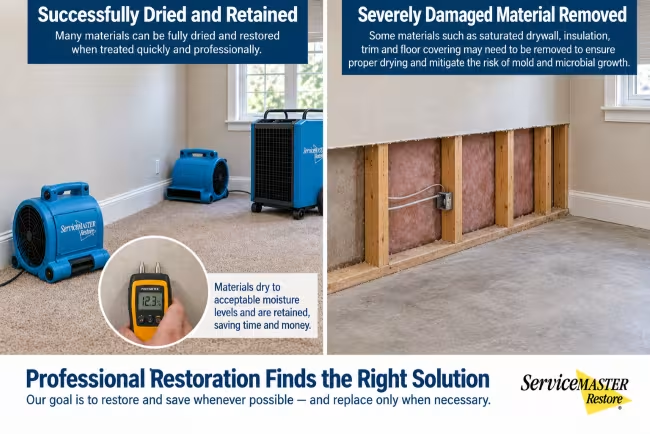
In some situations, portions of drywall, insulation, flooring, carpet pad, or other materials may need to be removed when they cannot be effectively or appropriately restored.
4. Monitoring the Drying Process
One of the most important—and sometimes overlooked—parts of professional water restoration is monitoring.
Drying equipment should not simply be installed and removed several days later based on a guess.
Technicians return to the property to take moisture readings and evaluate drying progress.
Those measurements help answer important questions:
- Are affected materials actually getting drier?
- Is the drying system working as intended?
- Does equipment need to be repositioned or adjusted?
- Are previously wet areas reaching appropriate drying goals?
The restoration company can use these readings to document progress and make adjustments to the drying plan when necessary.
This is one of the biggest differences between something that looks dry and a drying process that has actually been measured and documented.
5. Repairs and Restoration
Drying the structure does not necessarily mean the project is finished.
Water can damage drywall, insulation, trim, flooring, cabinetry, and other building materials. Some materials may be successfully dried and retained, while others may require removal and replacement.
Once appropriate drying goals have been reached, repairs can begin.
Depending on the loss, this could include replacing drywall or insulation, reinstalling baseboards, repairing flooring, painting, or completing other reconstruction work necessary to return the affected area toward its pre-loss condition.
The extent of repairs varies considerably from one water loss to another.
Why the Entire Process Matters
A common misconception about water damage is that the problem is solved once the standing water disappears.
Unfortunately, water does not always cooperate.
It can travel farther than expected and become trapped in materials that appear normal from the outside. That is why professional restoration focuses not only on removing water, but also on finding, measuring, drying, monitoring, and documenting moisture throughout the affected area.
The process can be summarized simply:
Extract the water → Map the moisture → Dry the structure → Monitor the progress → Complete necessary repairs
Each step builds on the one before it.
Skipping moisture evaluation or drying verification can leave unanswered questions about what is happening beneath the surface.
Frequently Asked Questions About Water Damage Restoration
How long does it take to dry a water-damaged property?
Drying time depends on the amount of water, the materials affected, environmental conditions, and how far moisture has traveled. Professional technicians monitor moisture levels throughout the drying process rather than relying on a predetermined number of days.
How do you know if water is behind drywall?
Water can travel behind baseboards and into drywall or wall cavities without being immediately visible. Restoration professionals use moisture meters and other moisture-detection methods to help determine where water has traveled and which materials are affected.
Does wet drywall always have to be removed?
Not necessarily. Whether drywall can be dried in place depends on factors such as the source of the water, the extent of saturation, the condition of the material, and whether it can be effectively dried. Professional restoration does not automatically mean removing every wet material.
Why are air movers and dehumidifiers used together?
Air movers increase airflow across wet surfaces, helping moisture evaporate from affected materials. Dehumidifiers then remove moisture from the air. Together, they help create conditions that support efficient structural drying.
How do restoration technicians know when a structure is dry?
Technicians take moisture readings during the restoration process and compare affected materials with established drying goals and appropriate reference readings. Drying equipment should not be removed simply because surfaces look or feel dry.
What should I do first after discovering water damage?
If it is safe to do so, stop the source of the water when possible and contact a professional water damage restoration company. Prompt extraction and moisture evaluation can help limit how far water spreads and identify materials that require attention.
Experience and Training Matter
At ServiceMaster of Mid Nebraska, we are an IICRC Certified Firm, and our technicians use professional water extraction, moisture-detection, drying, and monitoring equipment when responding to water losses.
From a leaking pipe in a home to a significant commercial water loss, our goal is not simply to remove the water you can see. It is to identify the areas that have been affected, establish an appropriate drying plan, monitor the results, and help move the property through the restoration process.
When water damage occurs, what happens after the water is extracted can be just as important as getting the water out in the first place.
ServiceMaster of Mid Nebraska
Professional Water Damage Restoration
Serving Lexington, North Platte, and communities throughout Central Nebraska