

What Does an IICRC Certified Firm Actually Mean?
Understanding the credentials behind professional cleaning and restoration services
When a home or business experiences water damage, fire damage, or a mold problem, choosing the right restoration company can have a significant impact on the outcome.
Most property owners understandably focus on immediate concerns: How quickly can someone respond? How much will the work cost? Will my property be restored properly?
But there is another important question that often gets overlooked:
What qualifications does the company actually have?
You may have noticed that some restoration and cleaning companies advertise themselves as an IICRC Certified Firm.
But what does that designation really mean? And why should it matter to a homeowner, business owner, property manager, or insurance professional?
Understanding the answer can help you make a more informed decision when hiring a restoration contractor.
What Is the IICRC?
The Institute of Inspection, Cleaning and Restoration Certification (IICRC) is an independent, nonprofit organization that develops industry standards and administers professional certifications for the inspection, cleaning, and restoration industries.
Founded in 1972, the organization has become an internationally recognized authority in these fields.
The IICRC develops technical standards that help establish accepted practices for services such as:
- Water damage restoration
- Fire and smoke damage restoration
- Mold remediation
- Professional carpet and textile cleaning
- Structural drying and moisture control
These standards provide a technical foundation for how restoration and cleaning work should be evaluated, planned, and performed.
Rather than relying entirely on personal experience or individual preferences, restoration professionals can use recognized standards to guide their decisions.
What Does It Take to Become an IICRC Certified Firm?
An IICRC Certified Firm is a business that has met specific requirements established by the organization.
To qualify, a company must maintain at least one active IICRC Certified Technician, carry current liability insurance, and complete the organization's Certified Firm application process.
Certified Firms must also maintain their credentials through the organization's renewal requirements.
The designation represents more than simply purchasing a membership or placing a logo on a website.
It identifies a business that has formally committed to professional education, recognized industry practices, and ethical business conduct.
However, there is an important distinction worth understanding.
A company's IICRC Certified Firm designation does not mean that every employee holds an individual IICRC certification or that the company is certified in every restoration specialty.
Individual technicians earn their own certifications, and those credentials are specific to their training and areas of expertise.
Certified Firm vs. Certified Technician: What's the Difference?
These two credentials are related, but they are not interchangeable.
An IICRC Certified Technician is an individual who has completed the required training and successfully passed an examination for a particular certification.
For example, a technician may earn a Water Damage Restoration Technician (WRT) certification, demonstrating knowledge of water damage restoration principles and procedures.
Other certifications address specialized disciplines, including applied structural drying, fire and smoke restoration, and microbial remediation.
An IICRC Certified Firm, on the other hand, is the business entity that meets the organization's firm-level requirements.
This distinction matters because restoration projects frequently involve several technical disciplines.
A company may be recognized as an IICRC Certified Firm, but consumers should still ask whether the individuals performing or supervising their particular project have appropriate training and experience.
Why Do Industry Standards Matter?
Consider a common example: a supply line breaks inside a home, allowing water to spread across the flooring and into surrounding building materials.
Removing the visible water is only one part of the restoration process.
Moisture can migrate into wall cavities, beneath flooring, and into other areas that are not immediately visible.
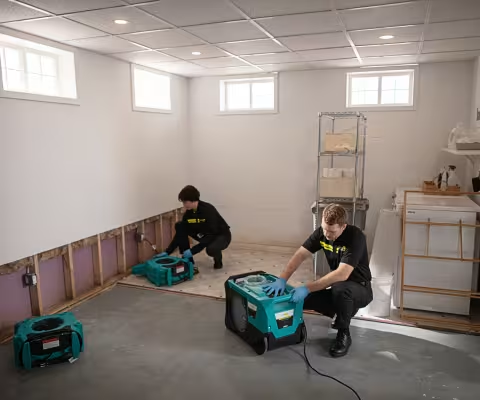
A professional restoration approach may require moisture measurements, evaluation of affected materials, specialized drying equipment, and ongoing monitoring.
The IICRC S500 Standard for Professional Water Damage Restoration provides a recognized technical framework for evaluating and addressing these situations.
Similarly, the IICRC S520 Standard for Professional Mold Remediation provides guidance for assessing and performing mold remediation projects.
These standards help restoration professionals make decisions based on established technical principles rather than guesswork.
The objective is not simply to make a damaged property look better. It is to address the underlying conditions that caused the damage and restore affected materials appropriately.
Why Continuing Education Is Important
Restoration technology and industry knowledge continue to evolve.
Moisture detection equipment improves. Drying methods change. Research advances our understanding of building materials, contamination, and restoration techniques.
For this reason, IICRC Certified Technicians must meet continuing education requirements to maintain their individual certifications.
Continuing education helps technicians remain informed about developments in their respective fields.
This is particularly important in restoration work, where two properties with seemingly similar damage can require very different approaches.
A flooded basement, a broken water supply line, and a sewage backup may all involve unwanted water, but the appropriate restoration procedures can vary substantially.
Understanding those differences is an important part of professional restoration.
Does Certification Guarantee Quality Work?
No professional credential can guarantee that every project will be completed perfectly.
An IICRC Certified Firm designation does not replace the need for experience, sound judgment, appropriate equipment, effective communication, and quality workmanship.
It also should not be confused with a government-issued contractor license or an independent inspection of every completed project.
However, certification provides consumers with a meaningful starting point when evaluating a restoration company.
It demonstrates that the business has met established organizational requirements and has made a commitment to professional standards and education.
That is valuable information when comparing contractors, particularly during an emergency when decisions must be made quickly.
Questions to Ask Before Hiring a Restoration Company
Whether you are dealing with water damage, fire damage, mold, or a specialized cleaning project, consider asking a prospective contractor:
- Are you an IICRC Certified Firm? Ask whether the company's designation is currently active.
- What certifications do your technicians hold? Look for qualifications relevant to the work being performed.
- What industry standards guide your work? A qualified contractor should be able to explain the procedures and principles used.
- How will you document the work? Depending on the project, documentation may include moisture readings, photographs, equipment records, or other observations.
- Do you have experience with this type of damage? Certifications are important, but practical field experience remains essential.
These questions can help consumers look beyond advertising claims and better understand the qualifications of the company they are considering.
You can also verify a company's Certified Firm status directly through the IICRC's official website.
What This Means at ServiceMaster of Mid NE
At ServiceMaster of Mid NE, we have served central Nebraska since 1979, providing professional cleaning and restoration services to residential and commercial customers.
We are proud to be an IICRC Certified Firm.
For us, this designation reflects our commitment to approaching restoration work with an understanding of industry standards, appropriate restoration methods, and the importance of professional training.
Our work frequently involves situations where the damage extends beyond what is immediately visible.
Whether responding to water intrusion, fire and smoke damage, or mold-related concerns, our objective is to evaluate the conditions, explain the recommended work, and help property owners make informed decisions.
Our decades of experience provide practical knowledge, while recognized industry standards help guide our approach to restoration.
The Bottom Line
When selecting a restoration contractor, certifications should not be the only consideration. Experience, reputation, responsiveness, communication, and the ability to perform the work properly are equally important.
But professional credentials provide a valuable way to distinguish companies that have made a formal commitment to recognized industry practices.
An IICRC Certified Firm designation is not a promise of perfection. It is a meaningful indicator of professional commitment, technical education, and accountability.
And when your home or business has been damaged, understanding who you are hiring—and the qualifications behind their work—can make a meaningful difference.
ServiceMaster of Mid NE is an IICRC Certified Firm serving Lexington, North Platte, and surrounding central Nebraska communities. Established in 1979, we provide professional water damage restoration, fire and smoke damage restoration, mold remediation, and specialty cleaning services.
#IICRC #RestorationIndustry #WaterDamageRestoration #FireDamageRestoration #MoldRemediation #PropertyRestoration #ServiceMasterRestore