

Not all water damage is created equal.
When water enters a home or business, the immediate concern is usually how quickly it can be removed and how much damage it has caused. But before cleanup begins, there is another important question:
What kind of water are we dealing with?
A flooded basement caused by a broken water supply line presents different challenges than a basement flooded by a sewer backup. Although both situations may look similar, the contamination risks, cleaning procedures, and materials that can be salvaged may be very different.
Understanding those differences is essential for protecting occupants, preventing additional damage, and restoring the property safely.
Understanding Water Damage Categories
The restoration industry generally classifies water damage into three categories based on the level and nature of contamination.
Category 1 – Clean Water
Category 1 water originates from a sanitary source and does not initially pose a substantial contamination risk.
Examples include:
- Broken water supply lines
- Overflowing sinks or bathtubs without contaminants
- Certain appliance supply-line failures
Although Category 1 water begins relatively clean, it can deteriorate as it contacts contaminated materials or remains untreated.
Category 2 – Gray Water
Category 2 water contains significant contamination and may cause discomfort or illness if contacted or ingested.
Examples can include:
- Certain washing machine discharges
- Dishwasher overflows
- Water that has contacted contaminated building materials
Category 3 – Grossly Contaminated Water
Category 3 water contains pathogenic, toxigenic, or other harmful agents and represents a substantially greater contamination concern.
Examples include:
- Sewage backups
- Water containing fecal matter
- Floodwater from rivers or streams
- Certain other heavily contaminated water sources
Sewage backups are generally classified as Category 3 water damage, requiring specialized handling, cleaning, and restoration procedures.
Importantly, water classification depends on the actual conditions, not simply its appearance. Water that looks relatively clear may still contain significant contamination.
Why Sewage Backups Present Greater Health Risks
A sewage backup can introduce microorganisms and other contaminants into a building.
Depending on the source, sewage may contain:
- Bacteria, including potentially harmful intestinal organisms
- Viruses associated with gastrointestinal illness
- Parasites and other disease-causing microorganisms
- Organic waste and suspended solids
- Chemical contaminants and other potentially hazardous substances
Exposure may occur through direct contact, accidental ingestion, contact with contaminated surfaces, or splashes and aerosols generated during cleanup activities.
People with weakened immune systems, young children, and older adults may be especially vulnerable to certain infections.
For these reasons, sewage cleanup should not be approached as ordinary water extraction followed by routine carpet cleaning.
Removing the visible water does not necessarily remove the contamination left behind.
Why Porous Materials Are a Major Concern
One of the most significant differences between sewage cleanup and ordinary water damage restoration involves determining which building materials can be cleaned and which must be removed.
Some materials absorb contaminated water deeply into their structure, making effective cleaning and decontamination difficult or impractical.
Carpet and Carpet Padding
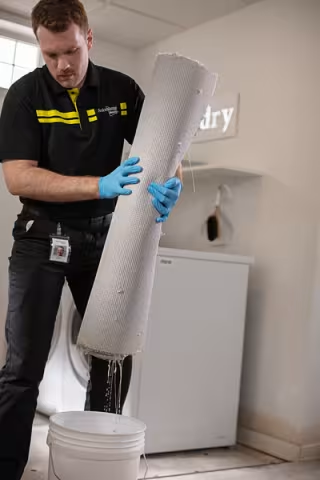
When sewage saturates carpet and padding, contamination can penetrate through the carpet fibers, backing, and underlying cushion.
In typical Category 3 sewage losses, affected carpet and padding are generally removed and discarded rather than cleaned for reuse.
Attempting to extract and shampoo sewage-contaminated carpet may leave harmful contamination within the materials.
Drywall and Insulation
Drywall is porous, and its paper facing can absorb contaminated water.
When sewage contacts drywall, particularly when it penetrates into wall cavities, affected portions may require removal.
Contaminated insulation often must also be removed because it cannot be reliably cleaned once saturated.
The extent of removal depends on the contamination, moisture migration, construction materials, and professional assessment.
Wood and Structural Materials
Not every material exposed to sewage must automatically be discarded.
Some structural wood, concrete, metal, and other materials may be suitable for cleaning and appropriate antimicrobial treatment, depending on their condition and the nature of contamination.
However, porous or deteriorated materials that cannot be adequately cleaned may require replacement.
The objective is to determine what can be safely restored rather than automatically removing everything or attempting to save materials that cannot be properly decontaminated.
Protective Equipment Is Not Optional
Because sewage cleanup can involve exposure to biological contaminants, technicians must use protective equipment appropriate to the hazards identified.
Depending on the conditions, this may include:
- Chemical-resistant or waterproof gloves
- Protective clothing or disposable coveralls
- Waterproof boots
- Eye and face protection
- Appropriate respiratory protection when the exposure assessment requires it
Respirators must be selected for the identified hazards and used within an appropriate respiratory protection program.
Protective equipment also needs to be removed carefully to avoid transferring contamination to clean areas.
In more significant losses, restricting access to affected areas and establishing contamination-control procedures may be necessary.
These precautions protect both restoration personnel and building occupants.
Sewage Cleanup Requires More Than Water Extraction
Ordinary water damage restoration often focuses on removing water, controlling humidity, and drying affected building materials.
Sewage restoration involves those same moisture-management principles, but additional steps are required to address contamination.
1. Identify and Stop the Source
Before restoration proceeds, the source of the sewage backup must be identified and corrected.
This may involve a blocked sewer line, failed sewage ejector pump, municipal sewer surcharge, or another plumbing or drainage problem.
Restoration work should not begin in earnest while sewage continues entering the property.
2. Evaluate the Contamination
Technicians assess the affected areas, identify the water category, and determine which materials are contaminated.
Moisture measurements and inspections help identify the extent of water migration, including areas where water may have traveled beneath flooring or into wall cavities.
3. Establish Contamination Controls
Depending on the size and conditions of the loss, work areas may need to be isolated to reduce the potential for spreading contaminants.
Unnecessary foot traffic should be prevented, and cleaning equipment must be managed to avoid cross-contamination.
4. Remove Sewage and Unsalvageable Materials
Standing sewage and contaminated debris are removed using equipment and procedures appropriate for the exposure hazards.
Materials that cannot be adequately cleaned, such as many sewage-saturated carpets, pads, and insulation products, are removed and disposed of according to applicable requirements.
Controlled removal is important because careless demolition can spread contamination into previously unaffected areas.
5. Clean and Decontaminate Remaining Surfaces
Once contaminated debris has been removed, remaining salvageable surfaces require thorough cleaning.
This typically includes physical removal of soil and organic contamination before applying appropriate antimicrobial products where indicated.
Disinfectants and other antimicrobial products must be selected and used according to their labeling, including surface compatibility, dilution, and required contact time.
Simply spraying disinfectant onto sewage-contaminated materials is not a substitute for removing contamination and thoroughly cleaning the affected surfaces.
6. Dry and Monitor the Structure
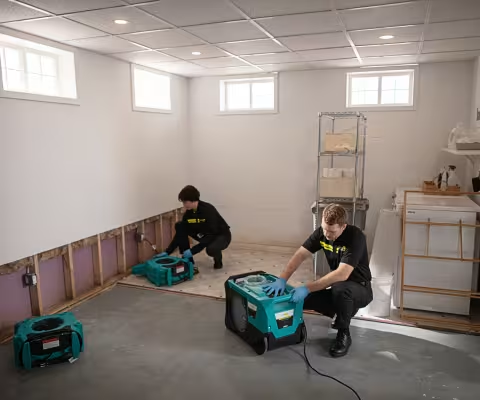
After appropriate cleaning and contamination-control procedures, structural drying can proceed.
Commercial dehumidifiers, air-moving equipment, and moisture-monitoring instruments may be used to return salvageable materials to acceptable moisture conditions.
Drying equipment must be deployed carefully to avoid dispersing contamination.
Restoration professionals monitor moisture conditions throughout the process rather than relying solely on whether surfaces appear dry.
Why Household Cleaning Methods May Be Inadequate
A homeowner discovering sewage in a basement may understandably want to begin cleaning immediately.
However, common household methods may not adequately address the contamination.
For example:
A wet/dry vacuum: A conventional household vacuum may not be suitable for collecting sewage and could expose users or contaminate the equipment.
Carpet shampooing: Cleaning the surface of a sewage-saturated carpet does not necessarily address contamination within the backing and padding.
Bleach: Applying bleach does not eliminate the need for physical cleaning, removal of unsalvageable materials, and proper drying. Bleach can also damage certain materials and must never be mixed with other cleaning chemicals.
Fans: Using ordinary household fans before contamination has been properly addressed may spread contaminated droplets or particles into other areas.
When sewage enters a property, occupants should avoid contact with the affected area and arrange for the source to be corrected and the contamination professionally assessed.
The Importance of an IICRC Certified Firm
The Institute of Inspection, Cleaning and Restoration Certification (IICRC) publishes industry standards used by restoration professionals, including ANSI/IICRC S500, the Standard for Professional Water Damage Restoration.
The standard provides a framework for evaluating water damage, managing contamination, determining appropriate restoration methods, and documenting the drying process.
An IICRC Certified Firm demonstrates a commitment to recognized industry standards, qualified personnel, and professional business practices.
However, certification does not mean every damaged material can be saved or that every sewage loss requires exactly the same procedures.
Each situation must be evaluated based on the source of contamination, affected materials, exposure conditions, and extent of damage.
The Bottom Line: The Type of Water Changes Everything
A broken clean-water supply line and a sewage backup may both leave several inches of water in a basement.
But the appropriate cleanup procedures can be substantially different.
With clean water, many materials may be candidates for restoration if prompt action is taken.
With sewage, contamination changes the priorities. Protecting occupants, controlling the affected area, removing unsalvageable materials, cleaning salvageable surfaces, and managing structural drying all become critical parts of the process.
The goal is not simply to make the building look dry and clean. It is to restore the affected environment using procedures appropriate for the contamination involved.
At ServiceMaster of Mid NE, we provide professional water damage restoration and sewage backup cleanup services throughout Central Nebraska, including Lexington, North Platte, Cozad, Gothenburg, Holdrege, and surrounding communities.
As an IICRC Certified Firm, we understand that effective restoration begins with identifying the type of water involved and selecting the appropriate procedures for the conditions.
When sewage enters your home or business, knowing the difference can make a significant impact on how the property is restored.
ServiceMaster of Mid NE | IICRC Certified Firm
Water Damage Restoration • Sewage Backup Cleanup • Fire & Smoke Damage Restoration • Mold Remediation