

Can Smoke Damage Affect Rooms That Never Burned?
When most homeowners think about fire damage, they picture burned cabinets, charred walls, and heavy soot where the fire occurred. But one of the most overlooked aspects of a house fire is how far smoke can travel.
Whether it's a small kitchen fire, an electrical fire in the basement, or a garage fire, smoke often spreads well beyond the room where the flames started. In many cases, bedrooms, hallways, closets, and other areas with no visible fire damage may still require professional cleaning.
Understanding how smoke moves through a home can help homeowners make better decisions after a fire—and prevent lingering odors and hidden damage.
Smoke Doesn't Stay in One Room
Smoke behaves differently than many people expect. As a fire burns, hot gases naturally rise and spread through the path of least resistance.
Smoke can travel through:
- Open doorways
- Hallways
- Stairwells
- HVAC ductwork
- Ceiling cavities
- Around doors and trim
- Small openings around electrical outlets and plumbing penetrations
Even when flames are contained to one room, smoke particles can quickly spread throughout much of the home in a matter of minutes.
Closed Doors Can Help—But They're Not Perfect
Closing bedroom doors before going to bed has been shown to slow the spread of heat and smoke during a fire. In many cases, closed rooms experience significantly less smoke contamination than open rooms.
However, "less" doesn't always mean "none."
Very fine smoke particles can still find their way into adjacent rooms through small gaps around doors, shared HVAC systems, or natural air movement within the home. While these areas may appear clean, they can still develop light smoke residue or persistent odors over time.
Smoke Particles Are Extremely Small
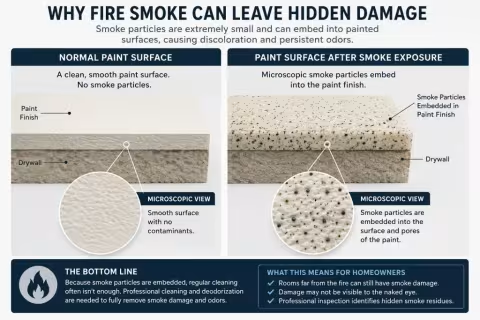
One reason smoke causes damage far from the fire is that many smoke particles are microscopic.
These tiny particles can settle onto:
- Painted walls
- Ceilings
- Window coverings
- Upholstered furniture
- Mattresses
- Clothing
- Electronics
- Hardwood furniture
- HVAC components
In some cases, homeowners may not notice anything visually until weeks later, when odors become more noticeable or discoloration begins to appear on light-colored surfaces.
Your HVAC System Can Spread Smoke
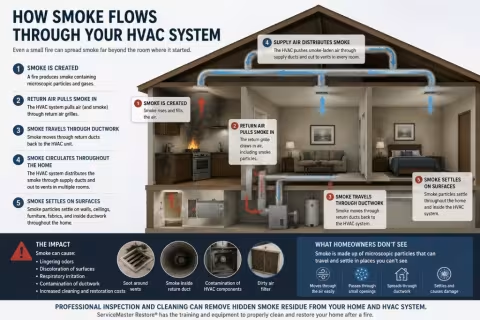
If your heating or cooling system is operating during or shortly after a fire, smoke may be drawn into the return air system and circulated throughout the home.
This can lead to contamination of:
- Supply ducts
- Return ducts
- Air filters
- Furnace components
- Evaporator coils
- Registers and vents
Not every fire requires HVAC cleaning, but a professional inspection can determine whether smoke entered the system and whether cleaning is recommended.
Why Some Rooms Smell Like Smoke Even Without Visible Damage
A common question homeowners ask is:
"Why does my bedroom smell like smoke when the fire was in the kitchen?"
The answer is simple: smoke particles often settle on soft, porous materials.
Items such as carpeting, upholstered furniture, bedding, clothing, and even unfinished wood can absorb smoke odors. Over time, especially during humid Nebraska summers, these trapped odor molecules may become more noticeable, making it seem as though the smell has suddenly returned.
Professional Inspection Finds What You Can't See
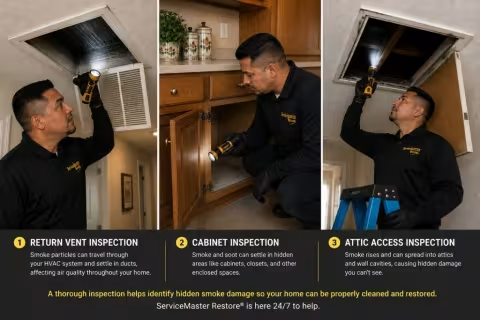
Visible soot is only part of the story.
Professional fire restoration technicians inspect areas that homeowners often overlook, including:
- HVAC registers and ductwork
- Inside cabinets and closets
- Door frames and trim
- Ceiling corners
- Attic access points
- Insulation near the fire area
- Hidden surfaces where smoke naturally settles
Identifying these areas early can help prevent lingering odors and reduce the likelihood of additional cleaning later.
Every Fire Is Different
No two fires behave exactly the same.
The amount of smoke contamination depends on factors such as:
- Where the fire started
- How long it burned
- Building layout
- Ventilation during the fire
- Whether windows or doors were open
- Operation of the HVAC system
- Type of materials that burned
Even a relatively small fire can produce surprising amounts of smoke throughout a home.
Don't Assume Clean Means Undamaged
It's common for homeowners to walk through unaffected rooms and assume everything is fine because they don't see soot.
Unfortunately, smoke damage isn't always visible.
If your home has experienced a fire, having the entire property professionally evaluated can help identify hidden smoke contamination before odors become permanent or residues cause additional damage.
Signs You May Have Hidden Smoke Damage
- Smoke odor in rooms that weren't affected by the fire
- Yellow or gray discoloration around HVAC vents
- Soot on the tops of doors or cabinets
- Smoke smell that becomes stronger on humid days
- Residue around ceiling registers or light fixtures
- Eye or throat irritation after returning home
Frequently Asked Questions (FAQs)
Can smoke damage spread throughout my entire home?
Yes. Smoke particles can travel through hallways, stairwells, ceiling cavities, and HVAC systems. Even rooms with no visible fire damage may require cleaning if smoke residue or odors have spread beyond the area where the fire occurred.
Does every house fire require air duct cleaning?
Not necessarily. Whether duct cleaning is recommended depends on factors such as where the fire started, whether the HVAC system was operating, and whether smoke entered the return air system. A professional inspection can determine if smoke contamination is present inside the ductwork.
Why does my home still smell like smoke even after cleaning?
Smoke particles often become embedded in porous materials such as drywall, wood, insulation, carpeting, upholstery, and fabrics. Surface cleaning alone may remove visible residue but not the microscopic particles causing persistent odors.
Can smoke damage electronics?
Yes. Smoke contains fine acidic particles that can settle inside electronics and appliances. Over time, these residues may contribute to corrosion or operational problems if not professionally cleaned.
Is smoke damage always visible?
No. Some smoke residue is nearly invisible, especially after smaller fires. Professional technicians inspect areas such as HVAC systems, cabinets, attics, closets, and door frames where smoke often settles but may not be immediately noticeable.
Should I repaint walls immediately after a fire?
Not usually. Walls should first be properly cleaned to remove smoke residue. Painting over soot without adequate cleaning and sealing can allow stains and odors to bleed through the new paint over time.
How soon should smoke damage be inspected?
As soon as it is safe to enter the home. Early inspection and cleaning can reduce permanent staining, lingering odors, and secondary damage caused by acidic soot residues.
Why are closed rooms sometimes affected by smoke?
Even with doors closed, smoke can move through small gaps around doors, shared HVAC ductwork, electrical penetrations, and natural air movement within the home. Closed doors often reduce smoke damage, but they don't always prevent it completely.
Trust ServiceMaster of Mid Nebraska After Fire Damage
At ServiceMaster of Mid Nebraska, we understand that fire damage involves much more than the burned area. Our trained restoration professionals inspect your entire home for hidden smoke contamination, soot residue, and odor sources to help return your property to a clean, safe condition.
From emergency response and smoke cleanup to odor removal and content cleaning, we're available 24 hours a day, 7 days a week to help homeowners throughout Lexington, North Platte, and Greater Central Nebraska recover after a fire.
Need help after a fire? Contact ServiceMaster of Mid Nebraska anytime for professional fire and smoke damage restoration.