

Fast Action Can Save Thousands in Repair Costs
When water damage strikes a home or business, every hour matters. Whether it's a burst pipe, overflowing appliance, leaking roof, or flooded basement, the first 24 to 48 hours after water intrusion are often the difference between a straightforward drying project and an extensive restoration involving demolition, mold remediation, and structural repairs.
At ServiceMaster of Mid NE, we've seen firsthand how quickly moisture can spread beyond what is visible. Prompt action helps protect your property, your belongings, and your long-term repair costs.
Water Doesn't Stay Where You Can See It
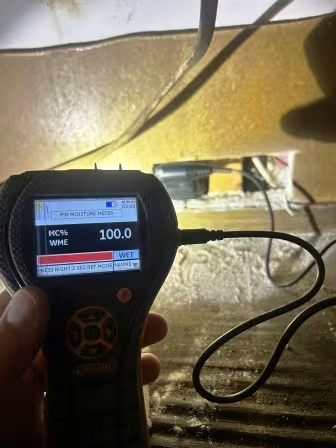
Many property owners assume that removing visible standing water solves the problem. Unfortunately, water often travels well beyond the original source.
Moisture can migrate into:
- Drywall and insulation
- Hardwood and laminate flooring
- Carpet padding and subfloors
- Wall cavities
- Crawlspaces
- Ceiling assemblies
- Cabinets and built-in fixtures
Without specialized moisture meters and thermal imaging equipment, hidden water can remain trapped for days or even weeks.
Structural Materials Begin Deteriorating Quickly
Building materials are designed to withstand normal humidity—not prolonged saturation.
Within the first day or two after water damage:
- Drywall begins losing structural integrity.
- Wood framing absorbs moisture and can swell or warp.
- Laminate and engineered flooring may buckle.
- Adhesives can fail.
- Insulation loses effectiveness once wet.
The sooner professional drying equipment is installed, the greater the chance materials can be restored instead of replaced.
Mold Growth Can Begin Surprisingly Fast
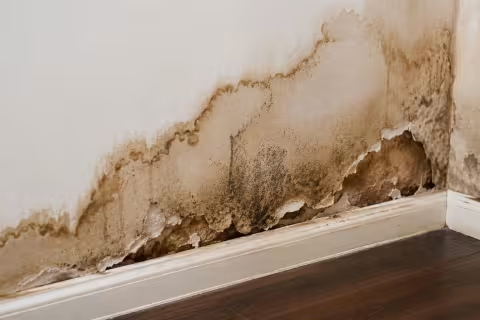
One of the biggest concerns after water damage is mold.
Given the right temperature and moisture conditions, mold colonies may begin developing within 24 to 48 hours. Once mold establishes itself, restoration often becomes significantly more complex and expensive.
Maintaining low moisture levels and proper air movement during the drying process is one of the most effective ways to reduce the risk of microbial growth.
Hidden Moisture Can Lead to Long-Term Problems
Even if surfaces appear dry, moisture trapped behind walls or beneath flooring can continue causing damage.
Potential long-term issues include:
- Musty odors
- Hidden mold growth
- Delaminated flooring
- Wood rot
- Stained finishes
- Corrosion of metal components
- Reduced indoor air quality
Professional water mitigation focuses on identifying and removing hidden moisture before these problems develop.
Professional Drying Is More Than Setting Up Fans
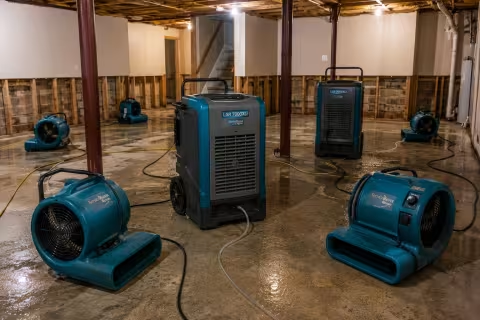
Many people assume household fans will adequately dry a flooded area. In reality, effective structural drying requires a carefully managed process.
Restoration professionals use:
- Commercial-grade water extraction equipment
- High-capacity air movers
- Low-grain refrigerant or desiccant dehumidifiers
- Moisture mapping
- Thermal imaging technology
- Ongoing moisture monitoring and documentation
Drying equipment is adjusted throughout the project based on moisture readings to ensure materials reach acceptable drying goals.
Insurance Companies Often Expect Prompt Mitigation
Most insurance policies require property owners to take reasonable steps to prevent additional damage after a loss.
Delaying cleanup can sometimes increase repair costs and complicate the claims process. Prompt mitigation demonstrates that reasonable efforts were made to minimize further damage.
What You Should Do Immediately After Discovering Water Damage
If you discover water damage:
- Stop the source of the water if it can be done safely.
- Shut off electricity to affected areas if necessary and safe.
- Remove valuable belongings from standing water.
- Photograph the damage for documentation.
- Contact your insurance carrier if appropriate.
- Call a qualified water damage restoration company as soon as possible.
Avoid assuming that because surfaces feel dry, the structure has fully dried.
Water Damage Restoration in Lexington, North Platte, and Greater Central Nebraska
At ServiceMaster of Mid NE, our technicians use professional moisture detection equipment and industry-approved drying methods to locate hidden moisture and restore properties after water damage.
From flooded basements and burst pipes to appliance leaks and storm-related water intrusion, rapid response during those first 24–48 hours can significantly reduce damage and help return your home or business to pre-loss condition.
If you experience water damage anywhere in Lexington, North Platte, or the surrounding Central Nebraska communities, acting quickly can make all the difference.