Need Structural Drying or Dehumidification in Clifton Heights, PA?
Clifton Heights homes take on moisture from several directions, and many of them are built in ways that make drying slow. The borough sits on the hillsides above Darby Creek. When heavy rain moves across Delaware County, runoff rushes downhill toward lower-elevation streets, and storm drains along Baltimore Pike and the surrounding roads can back up. Nor’easters and the remnants of tropical storms have pushed water into basements near the creek before. Many homes are twins and rowhomes built generations ago, with stone or brick foundations, plaster walls, and original wood framing that soak up water and release it slowly. Shared walls and connected structures let moisture travel from one home to the next. Humid Mid-Atlantic summers keep basements damp for months, and in winter, sealed homes trap moisture inside with little airflow to carry it away. After a storm, a plumbing leak, or an appliance failure, water can stay hidden inside walls, subfloors, and ceilings long after the surface looks dry. Our professional dehumidification services use commercial-grade equipment and targeted moisture assessment to address the water that remains after cleanup. Moisture mapping finds damp areas inside walls, subfloors, ceilings, and other concealed spaces so a wet surface doesn’t become a hidden source of ongoing damage. ServiceMaster Restoration Services - Clifton Heights is proud to help families throughout Clifton Heights and Delaware County move from water removal into a complete, thorough dry-out.
Damp walls or musty air in your Clifton Heights home? Get professional drying help now.
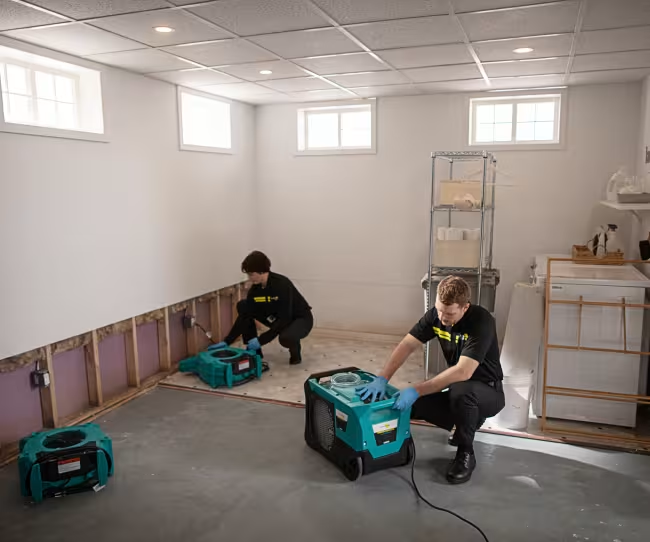
Storm Aftermath Structural Drying for Clifton Heights Basements
After a heavy Delaware County storm, a basement can look clean while its walls and floors stay soaked. In Clifton Heights, runoff from the hillsides collects against foundations on lower streets near Darby Creek, and older stone and brick walls absorb that water like a sponge. Once the standing water is pumped out, the moisture inside the masonry slowly releases back into the basement air for weeks. Carpet padding, paneling, and the bottom of drywall stay damp, and the humid summer air keeps them from drying. In older homes, that hidden dampness can lead to efflorescence, crumbling mortar, musty odors, and mold inside wall cavities.
Frozen Pipe Drying & Hidden Moisture Removal
When a winter cold snap hits Clifton Heights, older twins and rowhomes are often the first to feel it. Pipes running along cold stone foundation walls, through uninsulated basements, and inside exterior walls can freeze and crack. Sometimes the leak only begins once temperatures rise again. Water then seeps into plaster, drywall, insulation, and framing, often inside a wall or above a ceiling where it can’t be seen. Because homes stay closed up through the winter, there’s little airflow to help it dry. Moisture can spread through the structure and even into a neighbor’s home through a shared wall before anyone notices.
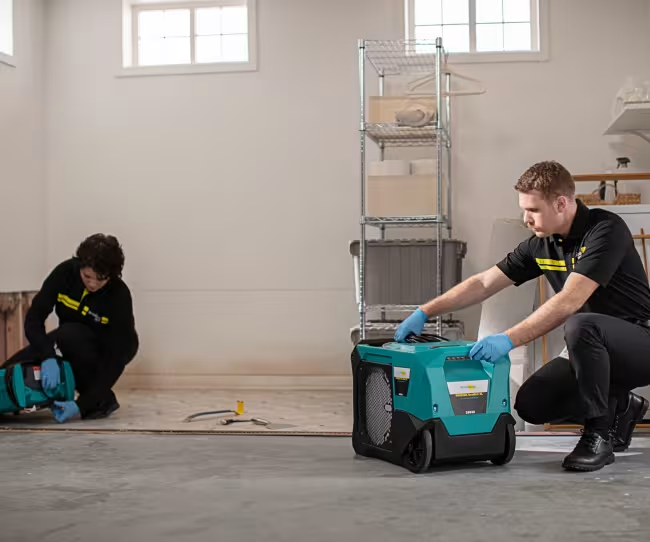

Appliance Leak Structural Drying (Laundry Rooms, Kitchens, Basements)
In compact Clifton Heights homes, kitchens, laundry corners, and basements sit close together, so an appliance leak doesn’t have far to travel before it reaches other rooms. A cracked washing machine hose, a dripping dishwasher connection, or a split refrigerator water line can release water beneath tile, vinyl, and laminate flooring. From there, it can seep into cabinets, subfloors, and walls. In multi-story twins and rowhomes, water from a first-floor kitchen can drip through to the basement ceiling below. Because rooms and structural components are so closely connected, moisture often spreads farther than expected, staying hidden until floors warp or musty smells appear.
Why Choose ServiceMaster Restoration Services for Drying and Dehumidification in Clifton Heights

Precision Moisture Mapping
Industrial-Grade Dehumidification Systems
Controlled Structural Drying Process
Mold Prevention Through Moisture Control
Why Improper Drying Can’t Wait in Clifton Heights Homes
Clifton Heights' humid summers and older residential construction can make incomplete drying a continuing source of property damage. What looks dry on the surface may still contain elevated moisture underneath.
Within 24 hours: moisture can migrate deeper into materials. Drywall, wood framing, insulation, and other porous materials can absorb water and humidity, particularly in enclosed wall cavities and basements.
Within 24–48 hours: conditions can become favorable for mold growth. Areas with trapped moisture and limited ventilation require prompt attention to reduce the opportunity for microbial growth.
After one week: structural and odor concerns can escalate. Persistent moisture can contribute to warped materials, embedded odors, and continued moisture migration behind finished surfaces.
What to Do Immediately After Water Damage in Your Clifton Heights Home
-
1Step 1Remove Standing Water if Safe
If conditions are safe, remove visible water with towels, wet vacuums, or pumps. This can reduce immediate saturation, but it does not eliminate moisture trapped inside structural materials.
-
2Step 2Increase Airflow in Affected Areas
Open windows when outdoor conditions allow and use fans to encourage surface-level evaporation. Be aware that household fans alone may not adequately dry enclosed walls, subfloors, insulation, or other structural materials.
-
3Step 3Protect Contents from Ongoing Moisture
Move furniture, rugs, electronics, and other belongings away from damp areas when it is safe to do so. Elevating or relocating contents can help limit additional exposure to moisture.
-
4Step 4Call Professional Drying & Dehumidification Experts
Once immediate safety concerns have been addressed, contact professionals for a complete moisture assessment. Commercial drying equipment, dehumidification, and moisture monitoring can address areas that are difficult to reach with household equipment.