Need Burst Pipe Cleanup in Clifton Heights, PA?
A burst pipe can turn a small plumbing failure into widespread water damage within minutes, and Clifton Heights homes have a few reasons to watch their pipes closely. Many of the borough’s rowhomes and twins were built in the early 1900s, with water lines running along cold stone foundation walls, through drafty basements, and inside exterior walls with little insulation. Mid-century homes on the surrounding streets often still rely on aging galvanized and copper plumbing that’s been patched and extended over the decades. Southeastern Pennsylvania winters swing back and forth between hard freezes and quick thaws, and each cycle puts fresh stress on weakened joints and fittings. In attached homes, a break in one house can send water through shared walls into the home next door. Heavy rains that leave basements already damp only make the damage worse. ServiceMaster Restoration Services - Clifton Heights provides emergency water extraction, moisture detection, and structural drying after pipe failures. Our team finds moisture hidden inside walls and floors and determines when damaged materials need to come out. We’re proud to serve Clifton Heights and surrounding Delaware County communities, including Upper Darby, Aldan, and Lansdowne.
Available 24/7 for fast water removal, drying, and repair coordination across Delaware County. Call Now
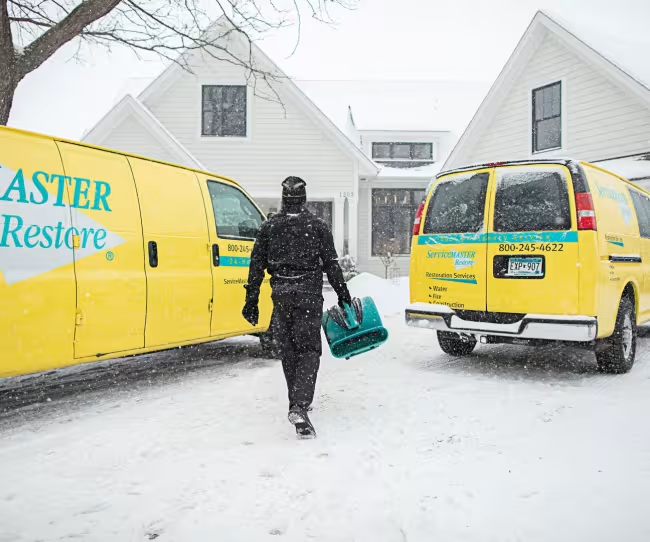
Winter Burst Pipe Flood Extraction in Clifton Heights Homes
When a deep winter cold snap settles over Delaware County, plumbing in older Clifton Heights homes is often the first thing to suffer. Pipes running along exterior walls, under first-floor kitchens, and through basements built into the hillside can freeze solid in a single night. As the ice expands, the pressure builds until the line splits. Water can then pour into finished basements, kitchens, and laundry areas for hours before anyone notices. It soaks drywall, flooring, and stored belongings, seeps into subfloors and framing, and can spread through shared walls into a neighboring rowhome. Our crews respond with fast water extraction to stop the damage from spreading.
Aging and Corroded Pipe Failures
Not every burst pipe in Clifton Heights is caused by the cold. Many of the borough’s older twins and rowhomes still rely on galvanized steel water lines installed generations ago. Over time, those pipes corrode from the inside, building up rust and mineral deposits that narrow the line and thin its walls until a section gives way under normal pressure. Older copper plumbing can develop pinhole leaks, and fittings loosen as homes settle on their aging foundations. These failures often start as slow drips inside walls, under floors, or along basement ceilings, then suddenly open into a full break that floods the room below.
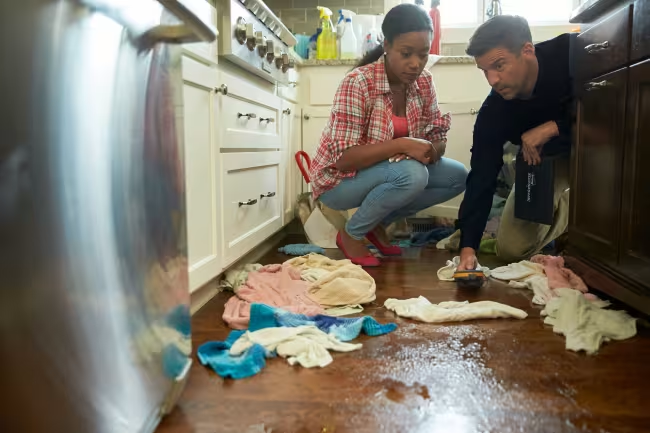
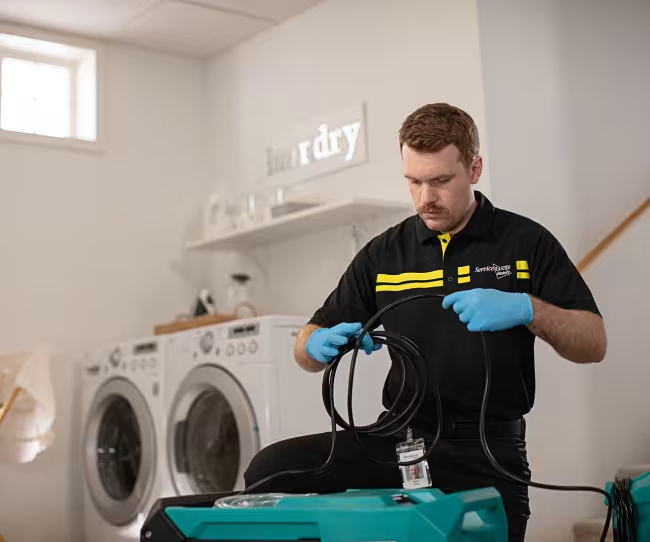
Appliance Leak Water Damage Cleanup (Washing Machines, Dishwashers, Refrigerators)
Not every water emergency starts with a frozen pipe. In Clifton Heights homes and apartments, appliances are often packed into compact kitchens, tight basement laundry corners, and small utility spaces with little room around them. A cracked washing machine hose, a loose dishwasher connection, or a split refrigerator ice maker line can release water quietly behind or beneath the appliance. In older homes, those appliances are often tied into aging plumbing and shutoff valves that don’t seal properly. Water spreads into cabinets, flooring, and subfloors, and in multi-story twins and rowhomes it can drip through the ceiling into the room below.
Why Choose ServiceMaster Restoration Services for Burst Pipe Water Damage Cleanup in Clifton Heights

Advanced Leak Detection Mapping
Rapid Industrial Water Extraction
Structural Drying & Humidity Control
Mold Prevention Response Protocol
Why Burst Pipe Water Damage Can’t Wait in Clifton Heights Homes
Once water enters a home, the condition of affected materials can change quickly. Older homes with plaster, wood framing, finished flooring, and concealed plumbing may have moisture in areas that are difficult to see or access.
Within the first day, materials can begin absorbing and retaining water. Drywall, wood trim, flooring, and subfloor materials may swell or become damaged, while prolonged exposure can affect finishes and fixtures.
After 24–48 hours, hidden moisture becomes an increasing concern. Water trapped behind walls, beneath flooring, or in insulation can remain even after visible standing water has been removed. Prompt moisture detection and drying can help address these concealed areas.
The longer water remains, the greater the potential for additional damage. Prolonged moisture exposure can contribute to deterioration of building materials and increase the scope of restoration work required.
What to Do Immediately After a Burst Pipe in Your Clifton Heights Home
-
1Step 1Shut Off the Main Water Supply
If it is safe to do so, locate and shut off the main water valve. Stopping the water source can limit additional flooding while you arrange for plumbing repairs and restoration.
-
2Step 2Turn Off Electricity in Affected Areas
If water is near outlets, electrical equipment, or appliances, avoid entering the affected area until it is safe. If you can do so without entering standing water, turn off power to the affected area at the breaker panel. Never handle electrical equipment while standing in water.
-
3Step 3Document All Damage
Take photos and videos of visible water, damaged flooring, walls, ceilings, appliances, and personal belongings when it is safe to do so. Documentation can help with the insurance claim and restoration assessment.
-
4Step 4Call ServiceMaster Restoration Services - Clifton Heights
Once immediate safety concerns are addressed, contact ServiceMaster Restoration Services - Clifton Heights. Our team can assess the damage, remove standing water, locate hidden moisture, and establish a structural drying plan.