
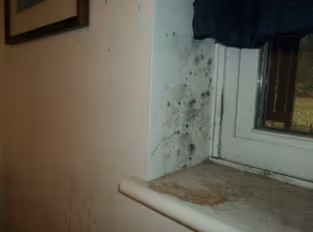
It's never a good thing to see spots on your walls, especially if they indicate mold growth. According to the Insurance Information Institute at least 1,000 species of mold are common to the United States - and mold is everywhere. While most molds are not hazardous, too much exposure to some molds may cause asthma or other health issues. And even if the mold doesn't cause health problems, it can definitely damage your home.
Mold growth is most prolific in warm, damp weather, but high moisture levels indoors and poor ventilation can contribute to mold growth at any time of year. At ServiceMaster Dynamic Cleaning, we get phone calls from customers with mold questions year-round. The two main questions are always the same: is the mold damage covered by insurance, and can you get rid of it?
Does Homeowners Insurance Cover Mold?
The cost of mold remediation can be expensive. And whether your homeowner's insurance policy will cover mold damage depends largely on the underlying cause of the mold. Insurance companies typically exclude coverage for ordinary mold because, while the damage is not intended, it is also not accidental, but results from circumstances that can be controlled by home maintenance and repair of deteriorating property. Thus, mold caused by water from humidity, slow leaks, or condensation is excluded from coverage.
In general, homeowners' insurance will pay for mold damage that is a direct result of sudden and accidental water issues. For example, if a pipe bursts in your basement and mold growth results, the damage should be covered because the source of the water is covered by the policy. Remember to investigate to make sure your pipes are in working order and that there are no defects or failures. But even if the damage is covered, many policies cap damage at a certain amount so it is important to always read your policy and know your coverage details. A home insurance policy that contains coverage for mold will have limits stated in the policy. The amount of coverage can vary, but is normally between $5,000 and $10,000. Some insurers may offer higher amounts of coverage, which depend on the type of policy and any endorsements that have been added.
Protecting Your Home From Mold
The best way to avoid having a claim denied is to stop mold from growing at all. And when it comes to keeping your home mold-free, the best defense is a strong offense. Eliminate moisture from your home and be on the lookout for signs of possible growth, such as musty smells or watermarks on walls and ceilings. Caught early, mold can usually be removed by a thorough cleaning with bleach and water. To prevent mold from re-growing, however, it is essential that the source of the moisture be eliminated and the affected area properly dried, cleaned, and, if necessary, replaced.
To help prevent mold growth in your home, here are some suggestions:
- Keep the humidity level in your home low, preferably no more than 30-50%.
- Use and maintain bathroom ventilation systems.
- Use both air conditioners and dehumidifiers.
- Install and maintain all-season attic and crawlspace ventilation systems.
- Keep drain lines from your air conditioning unit clean and unobstructed.
- Use exhaust fans when cooking, dishwashing, and using appliances that create moisture.
- Add mold inhibitors to paints before using them.
- Insulate windows, walls, pipes, roofs, exterior, floors, and other cold surfaces to reduce condensation.
- Routinely check indoor sources of moisture such as leaky pipes, appliance hoses, faucets, and toilets.
- If you see condensation or water collecting anywhere, dry it quickly and find the water source so you can get rid of it.
- Use steel-reinforced hoses instead of plastic ones. Inspect hoses, pipes, and fittings, and consider replacing hoses to major appliances like the washer and dishwasher every five years.
- Fix plumbing problems right away. Wet areas that get and stay dry 24-48 hours after a leak or spill happens usually do not mold.
- Don’t install carpet in wet areas like bathrooms, basements, and kitchens.
- Keep bathrooms dry and clean them with mold-killing products like bleach.
- Add a moisture barrier over dirt floors in crawlspaces.
- Repair holes and cracks in the walls and foundation.
- Clean and maintain your rain gutters and drainpipes.
- Watch your utility bills; an unusually high water bill could signal an interior leaking problem.
- Turn off your main water valve when you travel.
Recognizing the sources of mold growth and the costs of letting them go is the first step to taking control of the situation. The next step is to understand exactly what your home insurance policy does and does not cover for mold and water damage, which are two different issues.
If You Have Mold, We Can Help
If you have a mold problem at your home, we can help. ServiceMaster Dynamic Cleaning technicians are trained to assess the problem and determine a solution that works. We work with your insurance company and are happy to determine a solution that works for you if there is no coverage. Our goal is to make your home safe from mold and keep costs reasonable. Please call us at (800) 865-5157 or contact us now and let our mold remediation experience solve your home's mold problem.