Need Appliance Leak Water Damage Cleanup in Williston, VT?
Appliance leak water damage can start with a small drip and turn into a much larger problem for your Williston home. Vermont’s climate puts extra stress on the hoses, lines, and connections that keep appliances running. In many homes, the washing machine sits in a basement or mudroom where long, cold winters leave rubber hoses stiff and brittle. Refrigerator water lines that run along cold exterior walls can crack during subzero stretches, and ice storms that knock out power can leave freezers thawing across kitchen floors. Homes on private wells in the outlying parts of town often deal with mineral-heavy water that wears down valves and seals over time. Older farmhouses and historic homes in Williston Village have kitchens and laundry areas tied into plumbing updated over many decades. Newer homes near Taft Corners and North Williston often have upstairs laundry rooms and finished basements where a single leak can reach more than one level. Once water escapes, it can travel beneath vinyl, tile, laminate, and hardwood and into cabinets, walls, and subflooring. In closed-up winter homes or humid summer months, that moisture is slow to dry on its own. Our appliance leak cleanup services address water damage from dishwashers, washing machines, refrigerators, ice makers, and other water-connected appliances. We remove standing water, track down hidden moisture, and dry affected materials. For water damage restoration in Williston, VT, we’re proud to help local families get their homes back to normal.
Appliance Leak Causing Water Damage in Your Williston Home? Don't wait for hidden moisture to create a larger restoration problem. Call Now
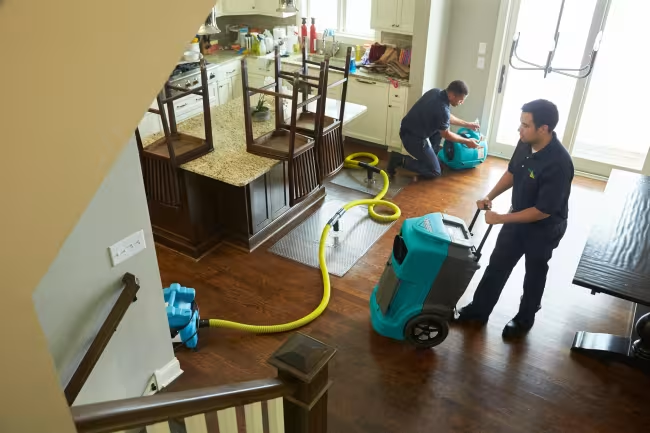
Dishwasher Leak Cleanup
Dishwasher leaks often stay hidden because the appliance sits tucked beneath countertops and between cabinets. Worn door gaskets, cracked supply hoses, loose drain connections, and failing pumps can release small amounts of water every time the dishwasher runs. In older Williston kitchens, dishwashers are often connected to plumbing that’s been modified several times over the years, and loose fittings are common. Homes on well water may see mineral buildup that wears out valves and seals faster. Water seeps into cabinet bases, spreads beneath flooring, and soaks into the subfloor. In homes with finished basements, it can drip into the ceiling below for weeks before anyone notices.
Washing Machine Overflow Restoration
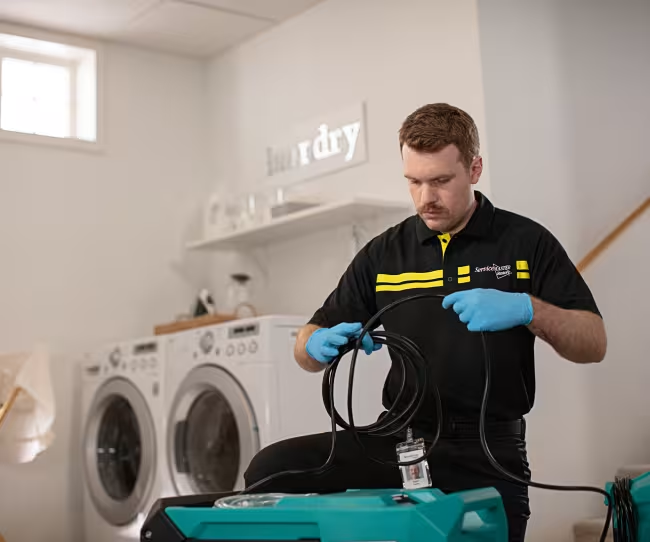
A washing machine hose failure can release a large amount of water in just a few minutes. In many Williston homes, laundry sits in a basement or mudroom, where rubber hoses spend months next to cold concrete and stiffen and crack over time. In older farmhouses, laundry areas are often tucked into back rooms or additions with aging floors that aren’t built to handle water. In newer homes with second-floor laundry, an overflow sits directly above bedrooms and living areas. When a hose bursts or a drain backs up, water spreads beneath flooring, seeps under walls into adjoining rooms, and can drip through ceilings below before the machine even stops.
Refrigerator Water Line Leak Cleanup
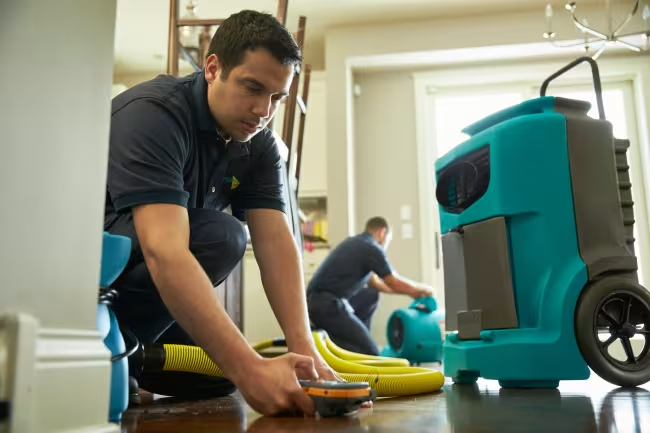
Refrigerators with ice makers and water dispensers rely on thin supply lines that run behind and beneath the appliance, out of sight. In Williston kitchens, those lines can turn brittle during long, cold winters, especially when the refrigerator sits along an exterior wall. Lines can also crack, kink, or loosen when the fridge is moved for cleaning. When an ice storm knocks out power, a thawing freezer can send water across the floor. A slow leak behind the refrigerator can soak flooring and nearby cabinets for weeks. Often the first sign is buckling flooring, a soft spot underfoot, or water stains on the basement ceiling below.
Why Williston Homeowners Trust Our Appliance Leak Services
Fast Response to Help Prevent Water from Spreading
Hidden Moisture Detection
Awareness of Vermont Conditions
Full-Service Water Damage Restoration
Why Appliance Leaks Require Immediate Action
Within Hours: Water can spread beyond the immediate area of the appliance and migrate beneath flooring or into adjacent rooms. Porous materials may begin absorbing moisture soon after exposure.
Within 24–48 Hours: Continued moisture can affect flooring, cabinetry, baseboards, subfloors, and other building materials. The longer materials remain wet, the more difficult they may be to dry completely.
Within Days: Persistent moisture can increase the potential for mold growth and additional material damage. Hidden moisture is particularly concerning when it remains beneath flooring or inside enclosed spaces where normal air circulation is limited.
Prompt restoration helps limit the amount of water damage and may reduce the scope of repairs required.
What to Do After an Appliance Leak in Williston
-
1Step 1Shut Off the Water Supply
If it is safe to do so, stop the appliance's water supply to prevent additional water from entering the home. If you cannot safely access the connection, leave it alone and wait for professional assistance.
-
2Step 2Unplug Affected Appliances
If the appliance or surrounding area is wet, avoid contact with electrical components. Do not enter standing water to unplug equipment. Electrical safety should take priority over attempting to save the appliance.
-
3Step 3Remove Surface Water Safely
If there is a small amount of accessible surface water and no electrical hazard, you can use towels or other safe methods to limit the spread while waiting for help. Avoid disturbing flooring or materials that may be hiding moisture underneath.
-
4Step 4Call ServiceMaster Restoration Services - Williston
Contact our Williston restoration team as soon as possible. We can assess the affected areas, remove standing water, identify hidden moisture, and begin structural drying as needed.