Need Water Damage Cleanup in Reno, NV?
Your washing machine was working fine yesterday, and now there’s water spreading across the laundry room floor. Appliance leaks tend to show up uninvited, and Reno’s climate and housing give them a few extra reasons to happen. In many Reno and Sparks homes, the washer and water heater sit in the garage, where they face summer afternoons in the high 90s and winter nights well below freezing. Those extreme swings make rubber hoses and plastic supply lines brittle and stress connections year after year. Older homes in Midtown and Old Southwest Reno often have kitchens and laundry areas tied into plumbing that’s been updated piece by piece over the decades. In newer South Reno neighborhoods, many homes are now old enough for builder-grade water heaters and supply lines to start failing. Northern Nevada’s seismic activity can also shift appliances and loosen connections. When a dishwasher line, washing machine hose, water heater, or refrigerator connection gives out, water spreads beneath flooring and into walls. In Reno’s dry air, the surface can look dry quickly while moisture stays trapped underneath. ServiceMaster Restoration Services - Reno provides water removal and structural drying throughout Washoe County, finding hidden moisture before a small appliance problem turns into a much bigger cleanup. We’re proud to help Reno families get their homes back to normal.
Appliance Leak Flooding Your Reno Home? We're Ready to Get the Water Out. Call Now
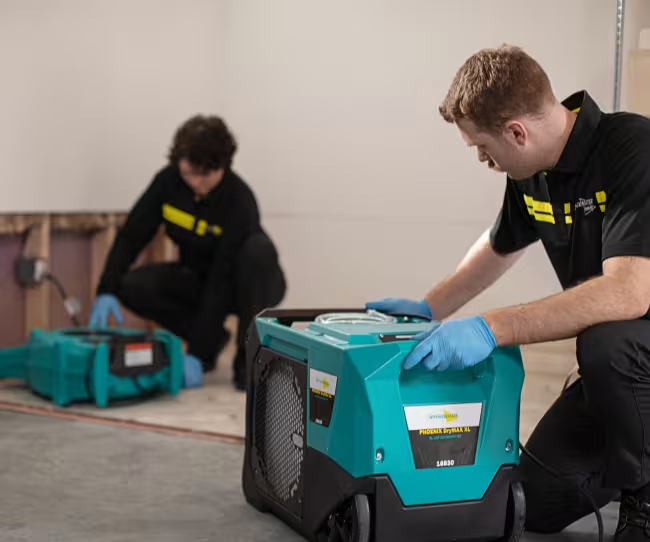
Water Heater Damage Restoration
Water heaters tend to stay out of sight until something goes wrong. In many Reno homes, they sit in the garage or a utility closet, exposed to the same temperature extremes as everything else stored there. Over time, sediment builds up at the bottom of the tank, the steel corrodes, and the tank eventually leaks or fails outright. Supply connections and relief valves wear out too, and seismic movement can strain lines on water heaters that aren’t properly secured. When a tank gives way, it can release dozens of gallons at once, soaking nearby walls, flooring, and stored belongings before anyone notices.
Washing Machine and Dishwasher Cleanup
A washing machine hose bursts, or the dishwasher starts leaking halfway through a cycle, and suddenly water is spreading across the floor. In Reno and Sparks homes with garage laundry, rubber hoses bake through hot summers and stiffen through freezing winters until they crack under pressure. In the kitchen, worn door gaskets, cracked supply lines, and loose drain connections let water slip beneath the dishwasher and into cabinet bases. Water seeps under flooring, into baseboards and drywall, and sometimes into the next room. On slab foundations, it spreads sideways beneath tile and laminate, staying hidden until floors lift or cabinets swell.
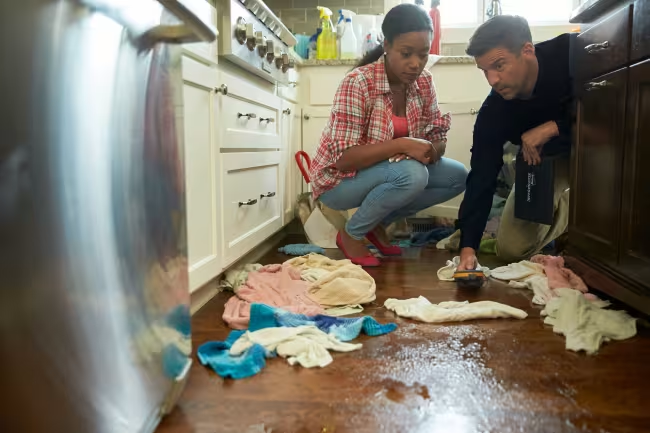
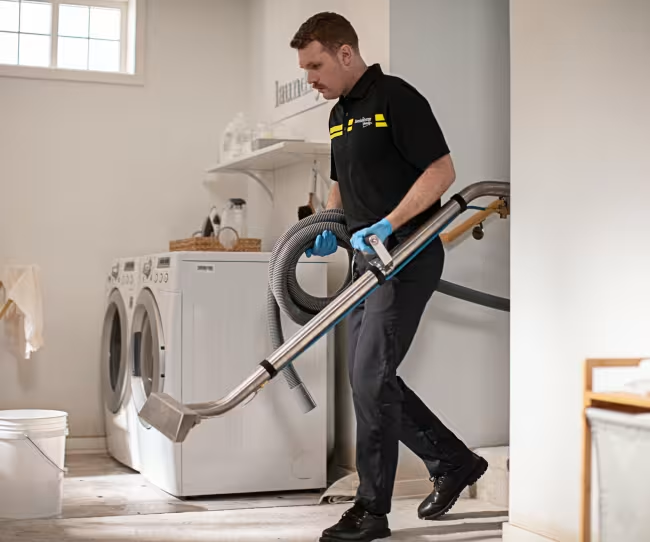
Emergency Extraction and Structural Drying
Refrigerator leaks are some of the easiest to miss. Thin plastic water lines for ice makers and dispensers run behind the appliance, where they can crack with age, kink when the fridge is moved, or loosen during ground movement. In older Reno kitchens, those lines were often added long after the house was built and routed through floors or cabinets. A slow leak can soak the subfloor and nearby cabinets for weeks. Because Reno’s dry air makes the floor surface look fine, the first signs are often buckling flooring, a soft spot underfoot, or a stain on the ceiling below.
Why Choose ServiceMaster Restoration Services - Reno?
Advanced Moisture Detection
Rapid Water Extraction Systems
Structural Drying & Monitoring
Mold Prevention Protocols
Why Appliance Leaks Shouldn't Wait in Reno Homes
That little puddle near the dishwasher might seem manageable. Unfortunately, water tends to travel, and the longer it sits, the more materials become involved. Here's how the damage might progress.
Within 24 Hours: The Water Starts Traveling. Water seeps beneath flooring and collects around cabinet bases. Porous materials begin absorbing moisture, sometimes causing swelling or discoloration before homeowners realize how far the leak has spread.
Within 24–48 Hours: Hidden Moisture Becomes a Concern. Damp areas behind appliances or beneath flooring create favorable conditions for microbial growth. Drywall and wood materials continue absorbing moisture, making professional drying increasingly important as time passes.
Within 1 Week: Repairs Become More Involved. Prolonged moisture might cause flooring to warp or subfloor materials to deteriorate. Persistent odors and microbial growth become concerns, potentially requiring removal or replacement of materials that initially seemed salvageable.
What to Do When an Appliance Leaks
-
1Step 1Shut Off the Appliance Water Supply
Locate the appliance's water supply valve and turn it off if safely accessible. For larger leaks, shut off your home's main water supply to stop water from entering the area.
-
2Step 2Disconnect Power Only When Safe
Avoid touching electrical appliances, outlets, or cords near standing water. If safely accessible from a dry location, shut off power at the breaker. Otherwise, leave the area and contact a professional.
-
3Step 3Contain and Document the Damage
If conditions are safe, use towels to absorb small amounts of water and move dry belongings away. Photograph visible damage before cleanup to support your insurance claim and restoration records.
-
4Step 4Contact ServiceMaster Restoration Services - Reno
Once the water source is controlled, contact our 24/7 restoration team. We'll assess the damage, begin water extraction, and develop a drying plan based on your home's specific conditions.
Get Your Reno Home Truly Dry. Call Now.