Water Gone, But Your Maple Grove Home Still Damp?
In Maple Grove, unwanted water shows up in every season, and it rarely leaves when the puddles do. Each spring, snowmelt raises groundwater around Fish Lake, Bass Lake, Weaver Lake, and the wetlands and ponds scattered through the city, pushing moisture into basements across town. In winter, subzero cold snaps freeze and burst pipes in established neighborhoods, sending water into walls and ceilings while homes stay sealed tight with little airflow to help them dry. Summer thunderstorms can drop heavy rain in minutes and overwhelm sump pumps and drainage. Humid July and August air then keeps basements from drying on their own. Most Maple Grove homes have finished lower levels, with carpet, drywall, and framing sitting right where water collects. Once water reaches walls or floors, a mop only goes so far. Moisture settles beneath flooring, behind drywall, and inside framing long after the standing water is gone, where it can lead to warping, odors, and mold. ServiceMaster Restoration Services - Maple Grove uses specialized moisture detection and structural drying techniques to find lingering dampness and dry water-damaged materials thoroughly, so you’re not left guessing what’s happening beneath the surface. We’re proud to help Maple Grove families dry out and move forward.
Moisture Overstaying Its Welcome? Maple Grove Experts Know How to Show It Out. Call Now
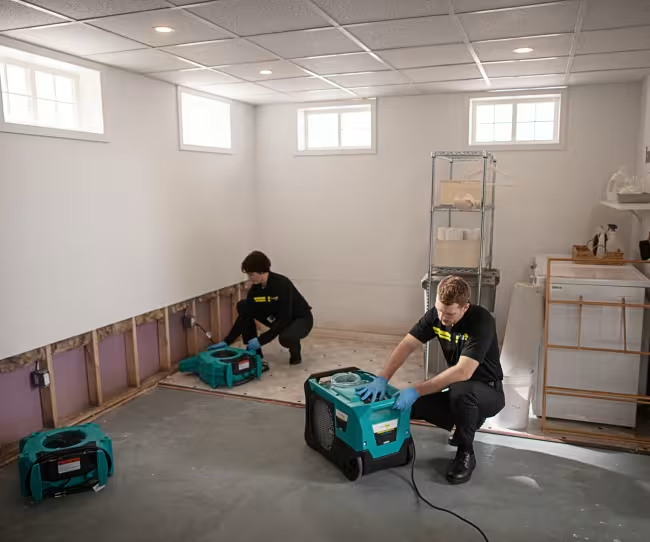
Post-Storm Structural Drying
Summer storms across Maple Grove can bring a lot of rain in very little time. When a thunderstorm stalls over the northwest metro, gutters overflow, storm drains back up, and sump pumps struggle to keep pace. Power outages can stop them entirely. Water seeps through foundation cracks and window wells and spreads across basement floors, soaking carpet padding, drywall, and framing. Even after the standing water is gone, moisture can stay trapped behind finished walls and beneath flooring for weeks. In the humid weeks that often follow a summer storm, those materials have little chance to dry on their own.
Winter Pipe Leak Drying
Minnesota winters are tough on plumbing. When temperatures plunge below zero, pipes in exterior walls, attached garages, crawl spaces, and drafty rim joists can freeze and split. The leak often starts once the line thaws, and the water rarely shows up where the break happened. It travels through insulation, runs along studs inside wall cavities, and seeps beneath flooring before appearing as a stain or soft spot somewhere else. With homes sealed tight for months, there’s little airflow to carry that moisture away. A wall can look perfectly dry while the materials inside stay wet enough to grow mold.
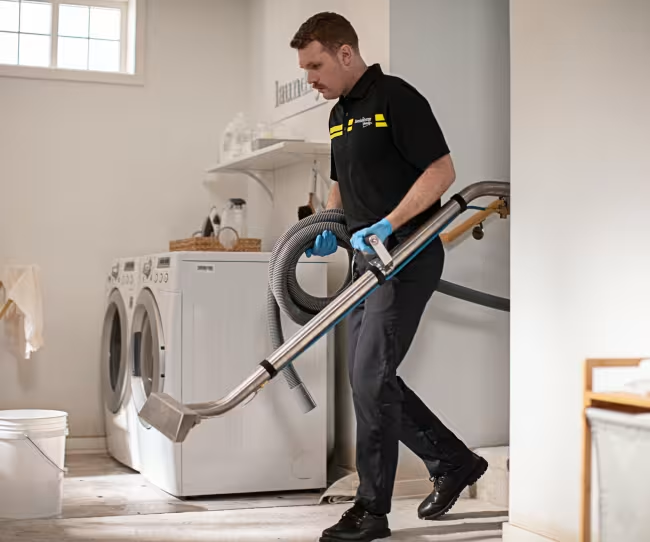
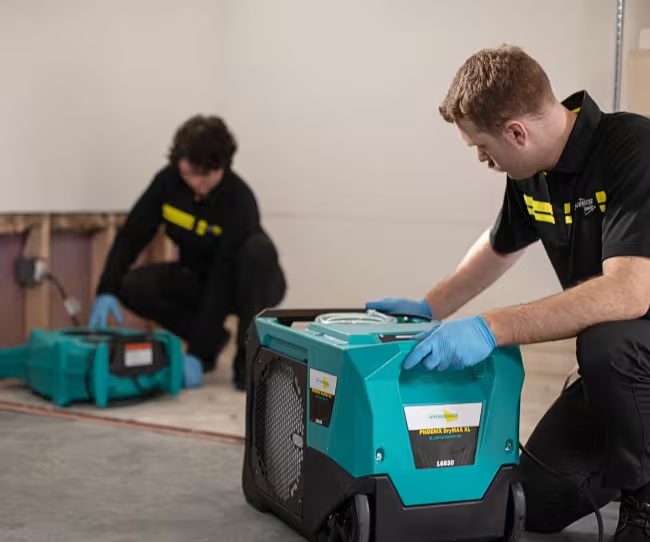
Basement Humidity and Groundwater Control
Basements near Weaver Lake, Fish Lake, and other low-lying parts of Maple Grove can struggle to stay dry during spring thaw and long rainy stretches. Rising groundwater presses against foundation walls and seeps in through floor joints and cracks. Even when there’s no standing water, concrete releases moisture into the air, and cool basement walls draw condensation through humid summer months. Finished basements trap that dampness behind drywall and under carpet. Over time, the lingering moisture leads to musty odors, peeling paint along lower walls, and conditions where mold can grow out of sight.
Why Choose ServiceMaster Restoration Services for Drying and Dehumidification in Maple Grove?
Hidden Moisture Detection
Commercial-Grade Drying Equipment
Monitored Structural Drying
Moisture Control for Mold Prevention
Why Lingering Moisture Shouldn't Wait in Maple Grove Homes
Just because the water's gone doesn't mean it's done causing trouble. Moisture hiding behind walls and beneath floors has a timeline of its own.
Within 24 Hours: Drywall, insulation, and other porous materials begin absorbing moisture. In Maple Grove basements, water trapped beneath flooring or behind finished walls often remains unnoticed as indoor humidity rises.
Within 24–48 Hours: Mold growth becomes possible when damp conditions persist. Moisture concealed inside wall cavities or beneath flooring creates favorable conditions, particularly following summer flooding or winter plumbing failures.
After One Week: Prolonged moisture increases the risk of warped materials, persistent odors, and deteriorating insulation. Some saturated materials might require replacement if drying begins too late or contamination is present.
What to Do After Water Damage in Your Maple Grove Home
-
1Step 1Stop the Water Source
If it's safe, shut off the main water supply or isolate the leaking fixture. For stormwater intrusion, avoid flooded areas until conditions are safe and the source is controlled.
-
2Step 2Maintain Safe Indoor Conditions
Leave interior doors open where safe to encourage airflow. Avoid directing excessive heat toward wet materials, and never operate electrical equipment near standing water or potentially compromised outlets.
-
3Step 3Remove Accessible Standing Water
For small, clean-water spills, use towels or a suitable wet vacuum if electrical conditions are safe. Leave sewage, contaminated floodwater, and extensive saturation to trained restoration professionals.
-
4Step 4Bring in Drying Professionals
ServiceMaster Restoration Services - Maple Grove provides emergency water removal services in Osseo and Maple Grove, followed by moisture detection and controlled drying to identify dampness that ordinary cleanup misses.