

Storm Damage Leads to Water Damage Restoration Projects in Attleboro and Taunton, MA
In late September, from September 23–26, a powerful Nor’easter brought high winds and heavy rain to New England. The storm left some homes vulnerable to water intrusion after falling trees and wind-related damage compromised roofs. Even after the rain had passed, water entering through a damaged roof can continue to affect insulation, drywall, ceilings, and wall cavities—sometimes in areas that are not easily seen.
Following the storm, ServiceMaster Dynamic Cleaning responded to multiple calls for water damage restoration, including projects in Attleboro and Taunton, MA. Each property had its own restoration needs, but both jobs required careful removal of water-damaged materials, attention to moisture hidden behind finished surfaces, and professional drying to restore the affected areas to appropriate conditions.
Water Damage Restoration in Attleboro, MA
At a property in Attleboro, the strong winds brought down a large tree, damaging the home’s roof. The roof damage allowed rainwater to reach several areas of the home, including the attic, a garage office, and the main garage. Because moisture can travel beyond the spot where water first enters, the restoration work involved more than cleaning up visible water. The team needed to access affected materials, remove wet insulation, inspect exposed cavities, and establish a controlled drying process.
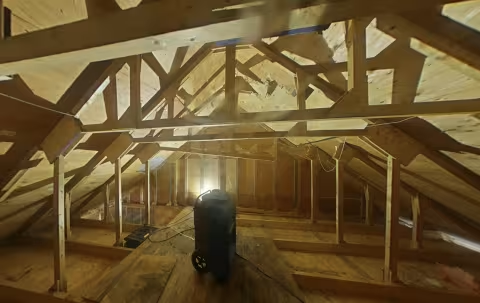
In the attic, the crew cleaned the affected areas and removed sections of the plywood flooring to reach the water-damaged insulation. Wet insulation was removed and disposed of, and the newly exposed areas were inspected for additional signs of water damage.
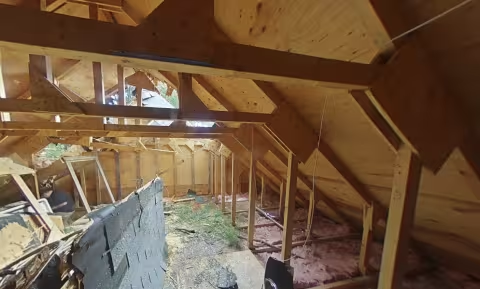
The garage office also required targeted demolition to access materials inside the walls. The team opened affected plywood wall sections as needed and removed wet insulation from the wall cavities. In the main garage, affected exterior walls were opened as necessary to remove water-damaged insulation and inspect the exposed cavities.
Once the affected materials had been addressed, the team set up professional drying equipment, including air movers and dehumidification equipment, in the impacted areas. Moisture levels and drying progress were monitored, with equipment left in place until the appropriate drying goals could be achieved. Photographs, moisture readings, equipment placement, and job notes were used to document the work and communicate with the insurance adjusters throughout the process.
Water Damage Mitigation in Taunton, MA
A second storm-related water damage project took place in Taunton, MA, where water entered through a hole in the roof caused by a fallen tree. The intrusion saturated portions of the living area's ceiling and walls. Our team needed to remove wet building materials and thoroughly dry the affected areas.
Before demolition began, the crew covered the hardwood floors to help protect them during the restoration process. The crew then removed wet drywall and insulation in the affected areas, allowing them to dry properly. An antimicrobial solution was applied to the affected areas as part of the restoration work.
After the wet materials were removed and the affected areas were treated, professional drying equipment was installed. The team monitored the drying process daily, checking conditions as the materials dried and recording progress toward the appropriate drying goals. This monitoring is an important part of water damage restoration because visible surfaces alone do not always show whether moisture remains inside walls or other building materials.
Why a Quick Response Matters After a Nor’easter
When a storm damages a roof, water can move into attic spaces, wall cavities, ceilings, and finished rooms. Wet insulation and drywall can retain moisture, and damp materials may contribute to further damage if not properly addressed. Prompt assessment helps identify which materials can be dried and which need to be removed, while moisture monitoring helps the restoration team evaluate progress beyond what is visible on the surface.
Homeowners should arrange for a qualified professional to assess and repair roof damage, while taking care to avoid unsafe areas, fallen trees, and downed power lines. If water has entered the property, it is also important to have the affected interior areas evaluated. Avoid entering rooms with sagging ceilings or other signs of structural instability.
Local Help for Storm-Related Water Damage
The September Nor’easter reminded us that high winds and heavy rain can lead to interior damage even after the worst of a storm has passed. In Attleboro and Taunton, ServiceMaster Dynamic Cleaning helped address water damage from roof leaks by removing affected materials, protecting interior finishes as needed, and setting up professional drying equipment with ongoing monitoring.
If your home or property has experienced water damage after a storm, ServiceMaster Dynamic Cleaning is available to help assess the damage and guide the restoration process. Our team provides water damage cleanup and restoration services throughout Bristol County, MA, and surrounding Southern New England communities.
Call 800-865-5157 to discuss your water damage restoration needs.