Need Appliance Leak Cleanup in Des Moines, IA?
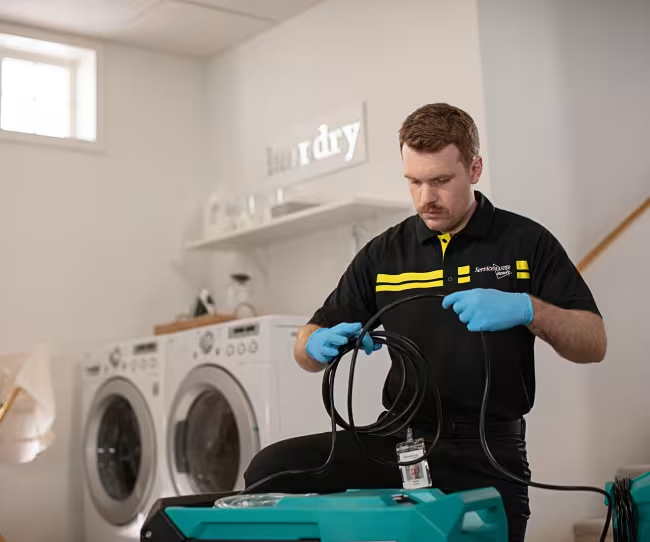
Water heaters that accumulate hard-water sediment and eventually fail, washing machines that overflow or split a hose and send water through laundry rooms into finished basements, and slow leaks from water softeners, furnace humidifiers, dishwashers, or refrigerator ice-maker lines can all cause unexpected damage in Des Moines homes. ServiceMaster by Rice - Des Moines provides appliance leak cleanup that includes water extraction, moisture mapping under flooring and behind walls, removal of damaged materials when necessary, and structural drying. We also document the damage to help support the insurance process. As a local restoration team, we're ready to help homeowners throughout Des Moines.
Don't wait for water to spread into adjoining rooms or beneath your flooring. Call our team for help with water extraction and drying.
Water Heater Burst Cleanup
Des Moines has notably hard water, and over the years mineral sediment builds up inside water heater tanks, speeding corrosion until the tank finally gives out. In older homes in Beaverdale, Drake, and other established neighborhoods, water heaters often sit in basement utility rooms right beside finished rec rooms, home offices, and storage areas. When a tank bursts, water can flood the basement in minutes. Even a slow drip from the tank or relief valve can go unnoticed for weeks, soaking framing, carpet, and drywall nearby. We extract the water and dry the affected areas while your plumber replaces the unit.
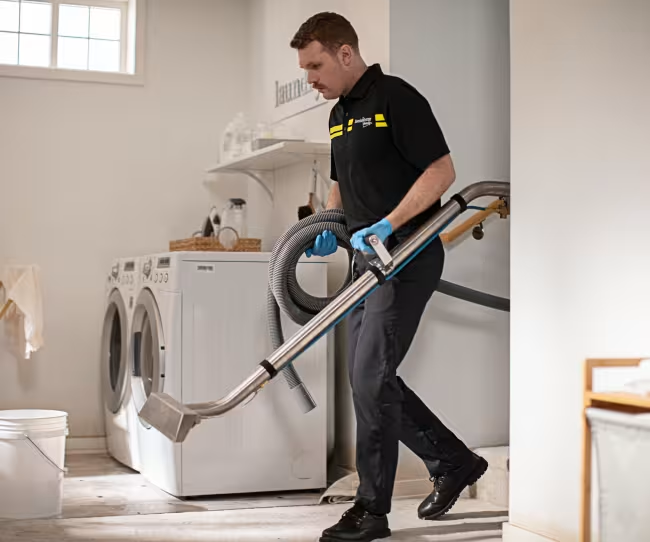
Washer Overflow Cleanup
A washing machine overflow or failed supply hose can send water across multiple rooms and even down to the next floor. Clogged drain standpipes, sticking inlet valves, and aging rubber hoses are common culprits, and Des Moines’ hard water can wear valves and fittings down faster. In older homes, basement laundry rooms often sit next to finished living spaces, letting water spread under walls and into carpet. In homes with upstairs laundry, water seeps through the floor and shows up as ceiling stains or wet drywall in the rooms below, sometimes long after the washer has stopped.
Water Softener, Dishwasher & Ice Maker Line Leaks
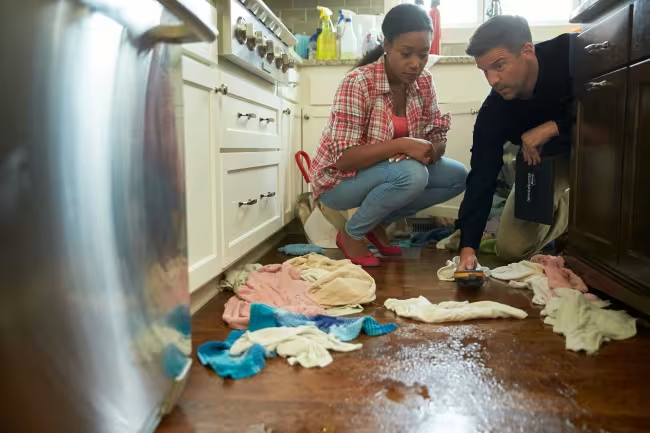
Some of the most damaging leaks start as small drips. Because Des Moines water is so hard, many homes rely on water softeners, and their tanks, valves, and drain lines can crack or leak over time, often in basements where no one looks. Dishwasher connections can drip slowly beneath cabinets, swelling cabinet bases and warping hardwood floors before anyone notices. Ice maker lines are especially sneaky, since the refrigerator hides the floor where water collects. By the time flooring buckles or a musty smell appears, moisture has often spread into subfloors and nearby walls, and mold may already be growing.
Why Choose ServiceMaster by Rice - Des Moines for Appliance Leak Cleanup
Basement Utility Room Experience

Hidden Moisture Mapping
Ceiling-to-Floor Tracing
Prevention Tips After Cleanup
Why Appliance Leaks Can't Wait in Des Moines Homes
Appliance water can spread beneath flooring, into basement walls, and through ceilings, while Des Moines' hot, humid summers create conditions that can encourage mold growth in damp materials.
Within hours: water spreads out of sight. Water can move beneath flooring, soak wall bottoms, collect inside cabinet bases, and travel through framing. An upstairs laundry leak may not become obvious until water stains or dampness appear on the ceiling below. By the time you find the visible signs, adjoining materials may already be wet.
24 to 48 hours: materials swell and mold can start. Carpet padding can hold substantial moisture, while drywall absorbs water through its lower edges. Laminate and hardwood flooring may swell, warp, or separate as moisture reaches the material beneath. Damp surfaces and building materials can also become vulnerable to mold growth, making thorough drying important.
After a week: drying turns into replacing. Prolonged moisture can contribute to deterioration in subfloors, cabinet materials, and wood framing. Musty odors may develop as damp areas remain untreated, and damage that could initially have been addressed through extraction and drying may require more extensive removal and replacement.
What to Do Immediately After an Appliance Leak in Your Des Moines Home
-
1Step 1Shut Off the Water to the Appliance
Close the appliance's shutoff valve, whether it's connected to your water heater, washer, softener, or another fixture. If you cannot locate it, turn off the home's main water supply. Stopping the water flow is the most important first step.
-
2Step 2Cut Power or Gas Safely
If the area is dry and safe to access, unplug the appliance or switch off its circuit breaker. For a gas water heater, turn the gas control to off or pilot according to the manufacturer's instructions. Never enter standing water near electrical outlets or equipment.
-
3Step 3Document Everything for Insurance
Photograph the appliance, the suspected leak point, and all visible wet areas before moving damaged items or materials. Keep a record of what happened and when you discovered it. Thorough documentation can help support your insurance claim.
-
4Step 4Call ServiceMaster Of Des Moines
Once the water is off and the area is safe, contact our team for appliance leak cleanup. We provide 24/7 assistance across Des Moines, with water extraction and drying to address the damage before it spreads further. The sooner drying begins, the better the opportunity to limit additional damage.