Need Commercial Mold Removal or Mold Mitigation for Businesses in Traverse City, MI?
Traverse City businesses face year-round moisture challenges that don't let up with the seasons. Humidity rolling in off Grand Traverse Bay, seasonal snowmelt, heavy precipitation, and sharp temperature swings all create conditions where mold can take hold inside commercial buildings, and it doesn't take a major event to start the process — a small plumbing leak, a roof issue, or an HVAC condensation problem can leave moisture trapped behind walls, ceilings, flooring, and insulation for months before anyone notices.
Older office buildings near Front Street, restaurants running high-humidity kitchens, and warehouses built on slab-on-grade foundations tend to be especially vulnerable, each for a different reason. Mold in these spaces often stays hidden until odors, discoloration, or indoor air quality complaints finally bring it to someone's attention.
ServiceMaster Restoration Services - Traverse City provides professional commercial mold remediation designed to find the actual source of the moisture, contain the affected area, remove the mold, and address the conditions that let it grow in the first place — whether your property has dealt with water intrusion, persistent humidity, a roof leak, or suspected hidden mold behind the scenes.
Seeing Signs of Mold in Your Traverse City Commercial Property? Call Now.
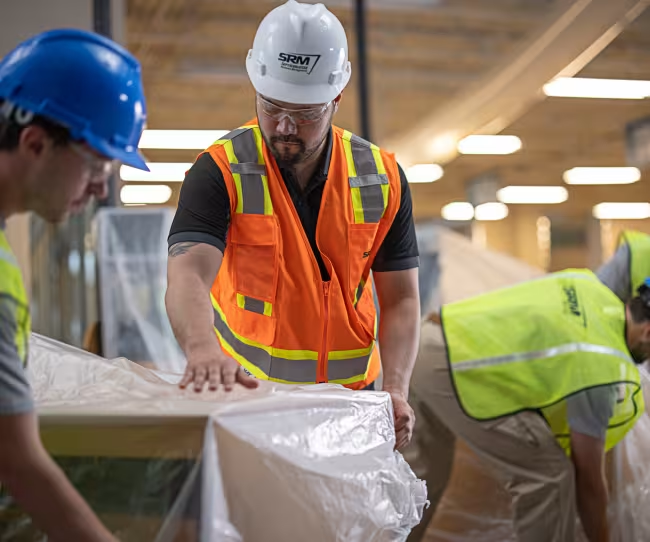
Waterfront Commercial Mold Remediation After Storm Intrusion
Commercial properties near West Bay, Clinch Park, and the surrounding waterfront face moisture intrusion whenever heavy rain, wind-driven storms, or seasonal high water push in from Grand Traverse Bay. Restaurants, hotels, retail stores, and other waterfront businesses sit close enough to the water that a single storm can send moisture behind drywall, beneath flooring, or inside insulation — and once it's there, it tends to stay hidden. Older waterfront buildings with limited drainage or aging foundations are especially exposed, since even modest water intrusion can settle into concealed spaces long after the storm itself has passed and the surface looks dry again.
HVAC & Roof Leak Mold Removal in Office Buildings
Roof leaks and HVAC condensation are a persistent source of hidden mold in Traverse City's office buildings and mixed-use commercial spaces, often with no visible sign until a smell or an air quality complaint finally gives it away. Freeze-thaw cycling, heavy winter snow accumulation, and the region's rapid spring temperature swings all put stress on roofing systems and drive condensation into ceiling systems, wall cavities, and ductwork. Because office buildings run sealed and climate-controlled for so much of the year, moisture that gets in has nowhere to go and no reason to dry out on its own — a quiet, building-wide risk that builds for months before anyone notices.
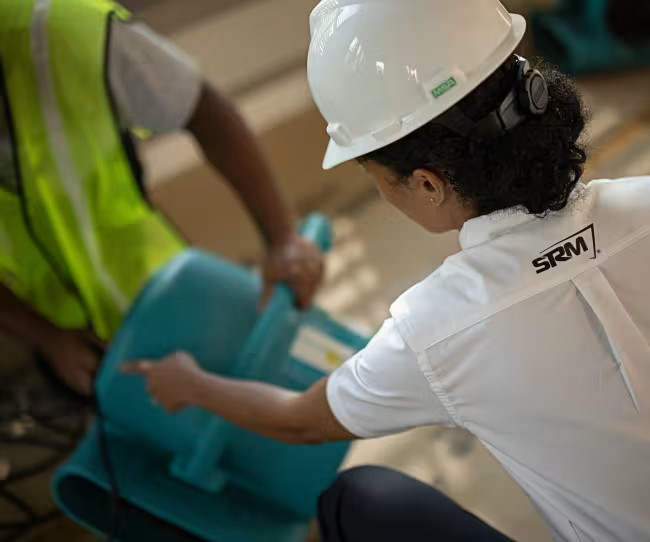
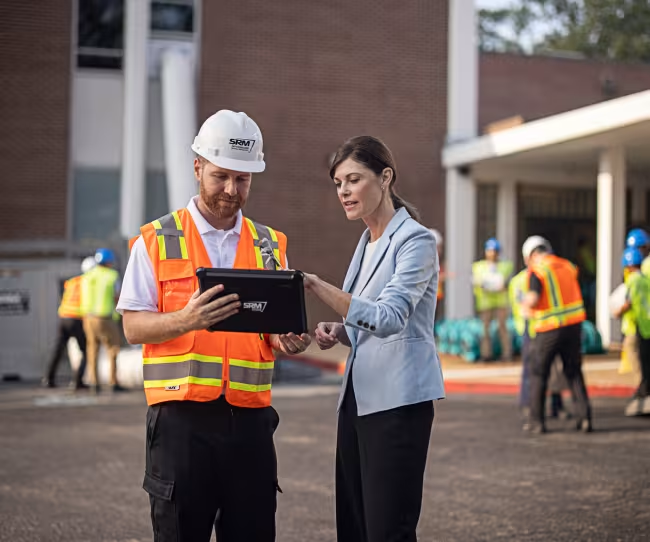
Industrial Mold Cleaning Services for Basements & Storage Facilities
Warehouses, storage facilities, and commercial basements across the area are prone to persistent moisture from groundwater, slab seepage, plumbing failures, or simply poor ventilation in large, infrequently used spaces. These properties often have long stretches of wall, floor, and shelving that go unchecked for weeks at a time, giving mold room to spread behind inventory, wall panels, and storage systems well before anyone visually confirms it. Slab-on-grade construction, common throughout the area's industrial buildings, adds another layer of exposure, since groundwater and moisture can seep upward through the foundation itself, independent of any storm, leak, or single event.
Why Choose ServiceMaster Restoration Services - Traverse City for Commercial Mold Remediation
Full-Facility Moisture Inspection
HEPA-Filtered Containment
Industrial Drying & Monitoring
Business Continuity Focus
Why Commercial Mold Can't Wait in Traverse City Businesses
Grand Traverse Bay humidity, seasonal snowmelt, and older commercial building stock all combine to let a small moisture problem become a much bigger one in a hurry.
Within 24 to 48 hours of a moisture source appearing, mold spores already present in the building can begin colonizing damp ceiling tiles, drywall, or insulation.
Within one to two weeks, visible colonies spread across a wider area and can travel through shared HVAC systems into other offices, suites, or parts of the building that had nothing to do with the original leak.
After a month or more, mold can affect indoor air quality across a much larger portion of the property, raise real health concerns for employees and customers, and require significantly more extensive — and disruptive — remediation than an early response would have.
What to Do as Soon as You Notice Mold in Your Traverse City Business
-
1Step 1Avoid Disturbing the Mold
Don't scrub, spray, or attempt removal yourself — disturbing it can release spores into the air and spread contamination to unaffected areas through shared HVAC systems.
-
2Step 2Restrict Access to the Area
Limit employee or customer access to the affected space, and close off nearby HVAC vents where possible until the area has been properly assessed.
-
3Step 3Document What You See
Photograph the affected area, note any musty smells or air quality concerns, and record when the issue was first noticed to support diagnosis and any insurance conversation.
-
4Step 4Call ServiceMaster Restoration Services - Traverse City
Reach out to schedule an inspection once you've documented the situation. Early action keeps remediation smaller, faster, and less disruptive to your business.