Need Appliance Leak Cleanup in Sioux Falls, SD?
Appliance leaks don’t always announce themselves with a puddle across the kitchen floor. In Sioux Falls, a few local conditions make these leaks more common and harder to spot. The city’s hard water, drawn from the Big Sioux River aquifer, leaves mineral deposits inside dishwashers, washing machines, ice makers, and water heaters. Over time, that buildup wears down valves, seals, and connections until they start to leak. South Dakota winters add more stress, with subzero cold snaps that make plastic supply lines brittle in basement laundry rooms and along exterior kitchen walls. In older neighborhoods like McKennan Park, Pettigrew Heights, and the Cathedral area, appliances are often tied into plumbing that’s been updated piece by piece over many decades. In newer homes across Prairie Tree, west Sioux Falls, and growing communities like Brandon, Harrisburg, and Tea, main-floor laundry rooms and finished basements mean a single leak can reach several levels of the house. Water from a dishwasher, washing machine, or refrigerator line can travel beneath flooring and cabinetry long before anyone notices. ServiceMaster Restoration Services - Sioux Falls locates hidden moisture, extracts standing water, and thoroughly dries affected areas before the damage spreads. We’re proud to help homeowners across Sioux Falls and Minnehaha County get back to normal.
Dishwasher, Washer, or Refrigerator Leak Making a Mess in Your Sioux Falls Home? We’ll Dry Things Out. Get Help Now
Dishwasher Leak Cleanup
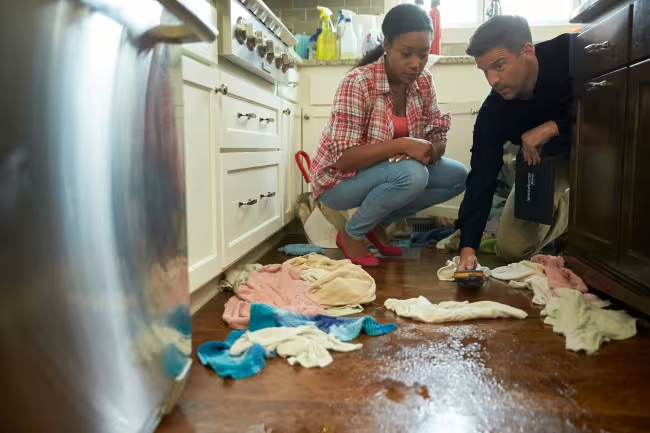
A dishwasher leak often starts beneath the unit or behind the cabinets, where no one can see it. In Sioux Falls, hard water leaves mineral scale on inlet valves, door gaskets, and drain components, and over time those parts stop sealing properly. Supply lines and drain connections can loosen or crack with age, especially in older kitchens where plumbing has been modified several times. Water seeps slowly into cabinet bases and subflooring and can wick into nearby walls. Many homeowners don’t notice until the floor in front of the dishwasher feels soft, the cabinet bottom starts to swell, or a musty smell develops.
Washing Machine Flood Cleanup
When a washing machine hose bursts or the machine overflows, water spreads quickly. In older Sioux Falls homes, laundry often sits in the basement, where rubber hoses can turn brittle through long, cold winters. In newer homes in west Sioux Falls, Brandon, and Harrisburg, main-floor and second-floor laundry rooms put water directly above finished living spaces. Hard water can also clog inlet valves and cause machines to overfill. Once a hose fails, water can soak carpet, drywall, and baseboards. In upper-level laundry rooms, it can drip through the ceiling into the finished rooms below before anyone realizes what’s happening.
Refrigerator Line Leak Restoration
The small supply line behind your refrigerator is easy to forget until it fails. In Sioux Falls, hard water leaves mineral buildup in ice makers and water dispenser valves, which can cause them to stick or leak. Thin plastic lines can crack in winter, especially when refrigerators sit along cold exterior walls. Lines can also kink or loosen when the fridge is moved for cleaning. Because the leak happens behind or under the appliance, water spreads slowly across subflooring and into cabinets and walls. Often the first sign is buckling flooring, a soft spot underfoot, or water dripping into the basement below.
Why Choose Our Sioux Falls Appliance Leak Cleanup Team?

Find Hidden Moisture
Remove Water Faster
Dry Beyond the Surface
Reduce Mold Risk
Appliance Leak Damage Moves Quickly
A little water behind the dishwasher might seem manageable, but moisture has plenty of places to travel inside a finished home. Faster cleanup gives affected materials a better chance of being restored.
Within 24 Hours: Water begins soaking into porous materials around the appliance. Cabinet bases, drywall, insulation, flooring, and subflooring might absorb moisture even when the visible water has already been removed.
Within 24–48 Hours: Moisture that reached enclosed spaces continues affecting surrounding materials. Kitchens, laundry rooms, and utility areas often contain cabinets or finished surfaces that make hidden dampness harder to spot.
After One Week: Prolonged moisture exposure may leave flooring warped, cabinetry swollen, or drywall deteriorated. Damp materials might also require a broader restoration scope if drying was delayed after the original leak.
First Steps After an Appliance Leak
-
1Step 1Stop the Water
If it is safe to do so, turn off the appliance and close its water supply valve. Stopping the source prevents additional water from entering your home while cleanup is arranged.
-
2Step 2Address Surface Water
Use towels to absorb smaller amounts of accessible water. Avoid entering areas with electrical hazards or using household equipment where outlets, cords, or powered appliances have been exposed to water.
-
3Step 3Record the Damage
Photograph the appliance, surrounding flooring, cabinets, walls, and other visibly affected areas before cleanup begins. Save relevant appliance information and repair documentation that could also be useful during an insurance claim.
-
4Step 4Bring In The Pros
Contact ServiceMaster Restoration Services - Sioux Falls for appliance leak water damage cleanup. Our team evaluates the affected area, extracts remaining water, and begins professional drying based on moisture readings.