
As a living fungus, mold only requires three resources to survive: warmth, moisture, and an organic food source. As soon as there’s a source of moisture in your home, mold will quickly feed on any wet porous materials, including drywall, wood flooring, ceilings, carpeting and more.
Finding mold spread across large areas is certainly a cause for concern and should always be handled by a mold removal professional. Due to the toxicity of the spores and difficulty with removing them from the building structure, only professional products and techniques will be able to remove it at the source.
It should also be handled by a professional because it will continue to spread to other areas of the home or office if it is not completely removed. Mold travels by releasing its spores into the air. Here’s how.
How Mold Spreads
As mold is a fungus that uses spores to spread across large areas, it roots itself into a food source, such as your walls, ceiling and even carpeting, and pushes out spores into the air. What people see is the mold’s fruiting body where large amounts of spores are contained. However, what they don’t see are the spores being constantly released, searching for a new source of moisture, food, and warmth.
Mold Will Always Travel Through the Air
Air ducts, fans, and even people and pets will eventually disturb mold growth. This causes the spores to travel and land on other surfaces, increasing the chance of inhabiting other areas of the home or building. Excess moisture throughout the home is a big problem since it won’t take long for mold to re-populate in many areas of the structure, sometimes only taking a few days.
Prevent Mold to Keep it from Spreading
As mold spores are released into the air in an attempt to inhabit other spaces, they are looking for a moisture source, such as a leaking pipe, excess humidity or condensation on the wall. But if you can keep the moisture levels down in your home or building, you can prevent it from destroying your living space.
It’s recommended to keep your home or office below 60 percent humidity level, so spores don’t have enough moisture to begin colonization. Also, be sure to wipe up any spills, dry out any wet materials, and throw out any damp garbage right away, including cardboard, paper, paper towels, wood or carpet, especially if it’s warm in the home or building. High temperatures will only allow mold to thrive, given the wet materials.
What to Do When Suspecting Mold in Your Home
If you notice any signs of mold, like mildew smells, heightened allergies, or humid conditions, it’s important to take these steps:
What to Do When Finding Mold
Image:
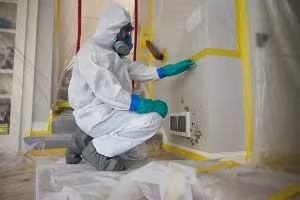
If you’ve already found mold in your living space, don’t touch it or try to clean it yourself. Disturbing it will only cause it to release more spores into the air.
But if you find the mold on a single item like a book or food item, simply throw it away to prevent it from spreading. Finding mold on your wall and using a household cleaner will only make matters worse. If it’s growing anywhere in your home where you can’t remove it, the problem is already rooted into the property structure.
At this point, don’t hesitate to contact a mold remediation professional to contain and remove it using professional products and methods.
Most professionals are IICRC-certified, trained and experienced in removing mold at the source and will take steps to prevent it from returning. Any moisture source that contributed to the mold growth will also be repaired if possible. But a plumber may also need to be called to repair any leaks.
Following the mold remediation service, it’s recommended to hire a mold testing service to verify the mold is completely removed. The removal service won’t have any problem making an additional visit if necessary.
Other Mold Prevention Methods
In addition to keeping the home or building dry, try to keep it clean and cool. A clean, cool space will make it difficult for mold to grow anywhere on the property. There also won’t be any small crevices or areas that trap moisture to allow it to grow.
There are also air filters that are approved for trapping mold spores, mold resistant paint and sheetrock, and disinfectants that kill mold spores. Simply by taking a few steps to keep your living space cool, clean, and dry, you shouldn’t have any problems dealing with mold.