Need Commercial Weather Damage Restoration in Midland, MI?
Commercial weather damage in Midland tends to come from a predictable but genuinely disruptive set of local forces. Tittabawassee River flooding can affect downtown offices and river-adjacent warehouses whenever heavy precipitation pushes the river past its banks, sending water into basements, ground floors, and storage areas with little advance warning. Midland's summer storm cells regularly bring hail and high wind capable of puncturing roofing membranes, a particular risk for the flat roofs common across industrial parks near US-10 and Eastman Avenue.
Winter and shoulder-season freeze-thaw cycling adds its own strain, stressing flat roofs and HVAC penetrations in ways that aren't always obvious until a leak develops. On top of all this, saturated soils across the area can drive groundwater intrusion into commercial foundations, basements, and loading dock areas independent of any single storm. Taken together, Midland businesses face meaningful weather-related exposure across every season, not just during the region's biggest storms.
Commercial Weather Damage Disrupting Your Midland Facility? Call Now.
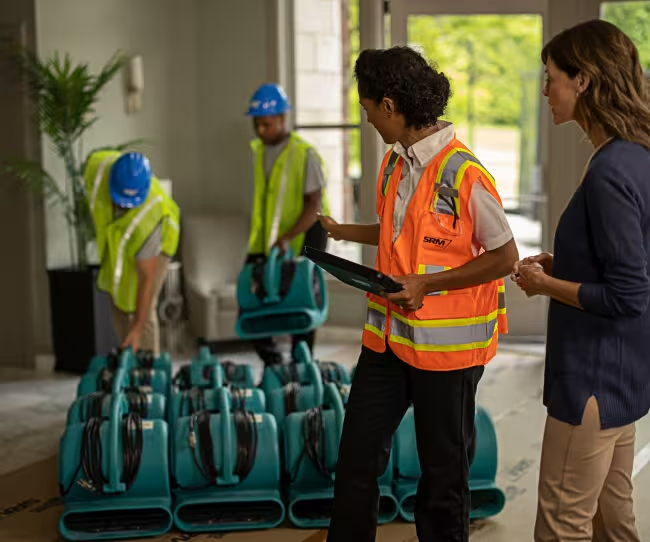
Emergency Storm & River Flood Response
Flooding from heavy precipitation and Tittabawassee River events can affect commercial basements, ground floors, storage areas, and mixed-use properties with little warning, and downtown offices and warehouses closest to the river face the most direct exposure. Once water enters a facility, it doesn't stay confined to where it came in — it travels through flooring, wall cavities, and shared spaces, often reaching areas far from the original point of entry before anyone realizes how far it's spread. Multi-tenant and mixed-use buildings near the river corridor face an added complication, since a flood event affecting one unit can just as easily affect the space next door.
Commercial Roof Wind & Hail Damage
Midland's severe summer storms bring high winds and hail capable of puncturing roofing membranes, damaging flashing, and creating openings that let water into commercial buildings — damage that isn't always visible from the ground or even from a quick rooftop glance. Flat roofs, common across the area's industrial parks and retail centers, are particularly vulnerable, since even a relatively small breach can expose electrical infrastructure, insulation, inventory, and interior finishes to water. A compromised roof section left unaddressed becomes a much bigger problem the moment the next rain arrives, turning a contained repair into extensive interior damage almost overnight.
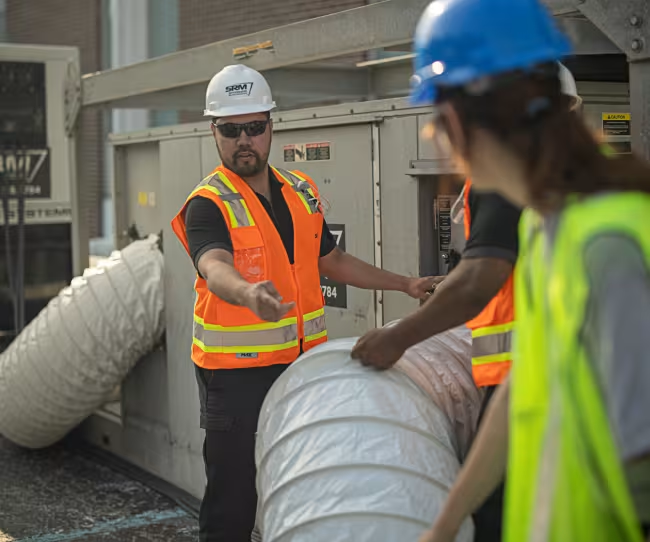

Industrial Water Mitigation & Basement System Recovery
Groundwater intrusion, sump system overloads, and slab seepage create significant, recurring problems for Midland warehouses, industrial facilities, storage spaces, and utility rooms, especially those built with below-grade footprints near US-10 and the Eastman Avenue corridor. Seasonal ground saturation raises the odds of water entering below-grade areas where equipment, inventory, and building systems are especially difficult to protect once they're wet. Because these spaces often run with limited staff traffic and minimal daily inspection, this kind of water intrusion can go unnoticed for far longer than a leak in an occupied office or retail space would.
Why Choose Our Team for Commercial Weather Damage Restoration in Midland, MI
Large-Scale Moisture Detection Systems
High-Volume Industrial Extraction
Structural Drying for Commercial Spaces
Operational Continuity Focus
Why Commercial Weather Damage Can’t Wait in Midland, MI Facilities
Midland’s climate and river-adjacent geography can accelerate property damage when water or storm damage is left untreated.
Within 24 hours: Water can spread into structural materials, electrical systems may become compromised, and inventory or equipment in basements and ground-level spaces can begin absorbing moisture.
Within 24–48 hours: Mold growth becomes an increasing concern in damp, humid commercial environments. Warehouses, office basements, and older industrial structures can be particularly challenging to dry when moisture remains trapped in walls, flooring, insulation, or other materials.
After several days: Structural materials may deteriorate, insulation can lose effectiveness, and moisture or contamination may spread into HVAC systems and storage areas. The longer damage remains unresolved, the greater the potential for increased restoration costs and operational disruption.
What to Do Immediately After Commercial Weather Damage in Your Midland Facility
-
1Step 1Ensure Employee and Tenant Safety
Keep employees, customers, and tenants away from areas with standing water, electrical exposure, structural instability, or potential roof collapse. Safety should always come before property assessment.
-
2Step 2Shut Down Utilities if Safe
If conditions allow, shut off affected electricity and water systems to help prevent additional damage. Do not enter flooded mechanical rooms or access electrical panels if doing so could create a safety hazard. Leave dangerous utility work to qualified professionals.
-
3Step 3Document All Damage for Insurance and Operations
Take detailed photographs and videos of affected rooms, inventory, equipment, roofing, walls, flooring, and visible structural damage when it is safe to do so. Documentation can help support insurance claims and business recovery planning.
-
4Step 4Call ServiceMaster Restoration Services - Flint Commercial Weather Damage Restoration Experts
Once employees and occupants are safe and damage has been documented, contact the Midland response team. Early intervention can help reduce downtime, protect assets, limit secondary damage, and restore operational capacity more efficiently.