Need Mold Removal in Gainesville, VA?
Gainesville sits in a humid subtropical corner of the Piedmont, and that climate does most of the heavy lifting when it comes to mold. Hot, sticky summer air rolling off the Bull Run watershed settles into basements and crawlspaces the same way it settles over the golf courses at Heritage Hunt, and it doesn't need a storm to do its damage — it just needs somewhere damp and still to sit. When storms do arrive, they arrive fast and heavy, the kind of thunderstorm that can find a weak seam in the roofline of a home near Somerset Crossing or along Linton Hall Road and quietly send water into the attic while everyone's watching the driveway flood instead. Add in the area's mix of decades-old farmhouses, newer construction along the Route 29 corridor, and everything in between, and you get a genuinely wide range of building ages and vulnerabilities across town.
Once moisture works its way into insulation, drywall, or flooring, it rarely announces itself right away — it spreads quietly, behind the walls, until a smell or a stain finally gives it away. Professional mold remediation in Gainesville has to address more than what's visible on the surface, and that's exactly the approach we bring to homes and businesses across the area.
Mold Growing in Your Gainesville Home or Business? Get Help Now

Storm & Roof Leak Mold Growth
Gainesville's summer thunderstorm season is a genuine, recurring event, not an occasional inconvenience — the kind of humid subtropical weather pattern that produces sudden, heavy downpours capable of finding every weak point in a roofline. Homes in communities along Linton Hall Road and near Somerset Crossing can take on hidden water intrusion through damaged roofing, siding seams, flashing, and attic ventilation points, often with no obvious leak visible from inside the home. Once that moisture reaches attic insulation or ceiling materials, it settles in and stays, and mold can take hold in exactly the kind of dark, still, humid space an attic naturally provides. The trouble is timing: the storm passes in an hour, but the moisture it left behind can work quietly for weeks before anyone notices a stain on the ceiling below.
Winter Condensation & Hidden Wall Mold
Gainesville's winters run mild by most standards, but the area still sees real cold snaps, and that back-and-forth between warm and cold is exactly what drives hidden condensation inside a home's walls. When warm indoor air meets a cold, poorly insulated exterior wall, moisture condenses right there in the cavity, gathering around windows, plumbing penetrations, and any other spot where temperatures don't quite match on either side of the drywall. This kind of mold has no interest in announcing itself — it can sit behind a wall or inside insulation for an entire winter before a musty smell or a faint stain finally gives away what's been building since the season's first cold snap.

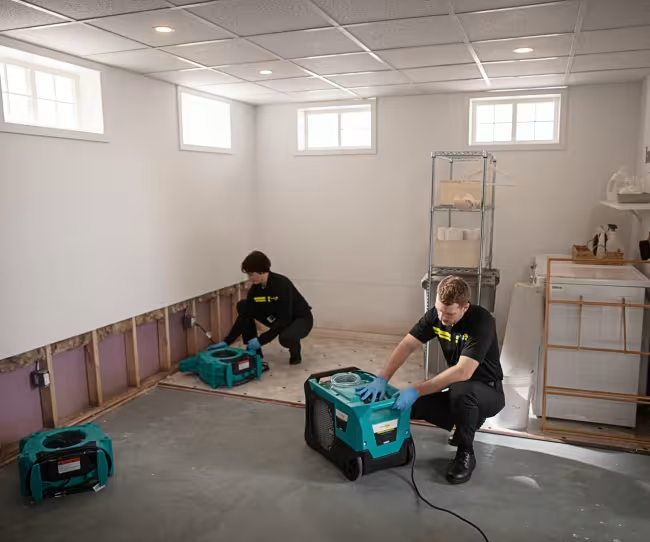
Basement & Crawlspace Mold in Gainesville
Basements and crawlspaces throughout Gainesville deal with a steady drip of moisture sources — foundation seepage, groundwater, plumbing leaks, sump pump issues, and simple humid air that has nowhere else to go. Properties near Catharpin Creek and other low-lying drainage areas feeding into the Bull Run watershed face an added layer of exposure, since heavy regional rainfall has to go somewhere, and low ground near a creek is often exactly where it ends up. These below-grade spaces also tend to be the least-visited part of a home, which means moisture problems here have the longest runway to develop before anyone notices — sometimes not until a musty smell drifts upstairs or a homeowner finally goes looking for a holiday decoration in storage.
Why Choose ServiceMaster Restoration Services for Mold Removal in Gainesville, VA
Advanced Mold Detection & Moisture Mapping
HEPA Filtration & Air Quality Protection
Targeted Structural Removal & Cleaning
Moisture Source Elimination Focus
Why Mold Damage Can't Wait in Gainesville, VA Homes
Northern Virginia's humid weather can allow mold to develop when moisture remains in porous building materials. The longer damp materials remain untreated, the greater the potential for contamination to spread.
Within 24–48 hours: Damp materials can begin supporting microbial growth, particularly when warm temperatures and elevated humidity are present.
Over the following days: Mold can spread across or into porous materials such as drywall, insulation, carpeting, and wood. Hidden growth may extend beyond the area that is visibly stained.
After prolonged moisture exposure: Contamination can become more extensive, potentially increasing the amount of material requiring removal and complicating restoration.
What to Do Immediately After Discovering Mold in Your Gainesville Home
-
1Step 1Avoid Disturbing the Affected Area
Do not scrub, scrape, or otherwise disturb extensive visible mold. Attempting to clean contaminated materials can release particles into the surrounding area and make the affected zone more difficult to contain.
-
2Step 2Limit HVAC Airflow if Possible
If mold is located near HVAC vents, returns, or other air-handling components, avoid circulating air through the affected area when it is safe and practical to do so. Professional assessment can help determine whether the HVAC system may be involved.
-
3Step 3Identify Moisture Sources
Look for signs of roof leaks, plumbing problems, condensation, foundation seepage, or other water intrusion. If possible, document visible water damage without disturbing contaminated materials.
-
4Step 4Call ServiceMaster Restoration Services - Gainesville, VA for Professional Mold Remediation
Once the area is stabilized, contact ServiceMaster Restoration Services - Gainesville, VA. Professional mold remediation can help contain the affected area, address contaminated materials, and identify the moisture conditions contributing to the problem.