Need Storm Damage or Flood Cleanup in Gainesville, VA?
Weather damage in Gainesville tends to come from fast-moving and often overlapping storm systems, not just one predictable threat. Intense summer thunderstorms can drop heavy rainfall across the Route 29 corridor in a short window, while hail poses a real risk to roofing systems in newer residential developments near Virginia Gateway. Tropical storm remnants add another layer of exposure, bringing prolonged wind-driven rain capable of penetrating siding, soffits, flashing, and foundations over the course of a single system passing through.
Winter brings its own slower-moving stress, with freeze-thaw cycling wearing on gutters, roofing materials, and exterior seals over the course of the season rather than in one dramatic event. Taken together, these risks mean Gainesville properties face meaningful weather exposure across the entire calendar year, not just during any single storm.
Storm or Flood Damage in Your Gainesville Property? Call Anytime—We Respond 24/7

Storm & Flood Water Extraction
Gainesville experiences rapid stormwater accumulation during intense summer thunderstorms, particularly around drainage paths and lower-elevation residential and commercial areas where runoff naturally collects fastest. Floodwater in these events can overwhelm sump systems and foundation waterproofing that were never built to handle that volume all at once, letting water penetrate flooring, subflooring, and wall cavities before anyone inside realizes how far it's traveled. Northern Virginia's humid summer conditions compound the problem further, since materials that stay wet in this kind of heat and moisture start deteriorating and growing mold far faster than they would in a drier climate.
Hail & Wind Roof Damage
Hail and high winds can damage a Gainesville roofing system with almost no warning, and neighborhoods near Virginia Gateway and other newer HOA developments often have large, exposed roof surfaces that take the brunt of severe spring and summer storms. High winds can lift shingles or expose underlayment outright, while wind-driven rain finds its way into attic spaces through even a small compromised area. Hail damage is particularly deceptive because it doesn't always create an immediately obvious opening — the impact can quietly weaken asphalt shingles in ways that don't produce a noticeable leak until weeks or months later, by which point moisture may already have reached the insulation, ceilings, walls, and flooring below.
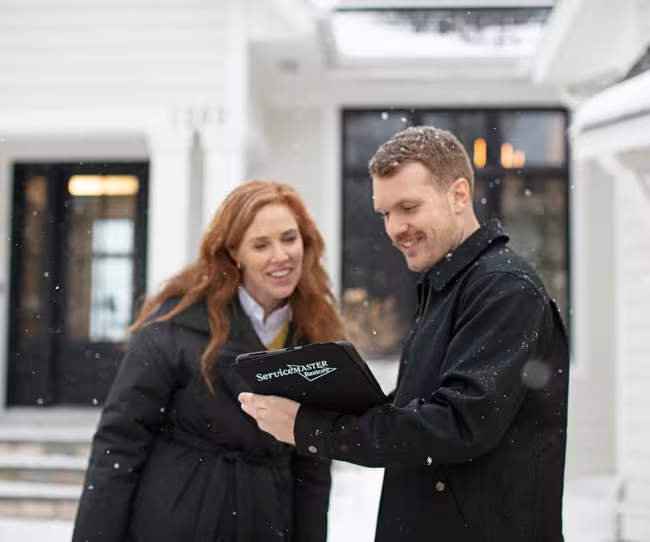

Neighborhood-Wide Storm Recovery
Severe weather can affect an entire Gainesville neighborhood at once, creating restoration needs across whole subdivisions rather than one home at a time. A single storm system can combine wind, heavy rain, hail, and sharp temperature changes, leaving roofs, siding, gutters, and foundations compromised across dozens of homes in the same event. Newer developments with similar roofing materials and construction timelines are especially exposed to this kind of shared vulnerability, since a storm capable of damaging one roof in the neighborhood is often capable of damaging most of them. When an entire community faces storm damage at the same time, restoration resources become harder to come by exactly when the need is highest — making it that much more important to document damage and get in line for help early.
Why Choose ServiceMaster Restoration Services for Weather Damage Restoration in Gainesville, VA
Rapid Storm Deployment Across Prince William County
Advanced Moisture Mapping & Detection Technology
Complete Roof-to-Basement Storm Recovery
Insurance Documentation for Weather Events
Why Weather Damage Can’t Wait in Gainesville Homes
Weather damage can worsen rapidly in Gainesville's humid climate, particularly when water becomes trapped inside enclosed building materials.
Within 24 hours: Water absorbed into drywall, insulation, and flooring can cause swelling, weakening, and deterioration. Moisture near electrical components can also create safety concerns.
Within 24–48 hours: Persistent moisture can create favorable conditions for mold growth, particularly in humid basements, wall cavities, and enclosed attic spaces.
After one week: Prolonged moisture exposure can contribute to warped framing, damaged insulation, deteriorated materials, and deeper contamination that may require more extensive removal and reconstruction.
What to Do Immediately After Weather Damage in Your Gainesville Property
-
1Step 1Ensure Safety and Avoid Hazard Areas
Stay away from flooded rooms, downed power lines, unstable ceilings, and visibly damaged roofing. Storm-damaged structures can contain hazards that are not immediately apparent.
-
2Step 2Stop Active Water Entry If Possible
If it is safe to do so, use temporary barriers such as buckets or containers to control minor interior water. Never climb onto a wet or damaged roof or enter an unstable structure to make repairs.
-
3Step 3Document Storm Damage from Safe Locations
Take photos or videos of visible roof damage, flooding, damaged siding, water intrusion, and affected interior areas. This information can be valuable when reporting your storm loss to your insurance company.
-
4Step 4Call ServiceMaster Restoration Services - Gainesville, VA Emergency Weather Damage Restoration Services
Once everyone is safe, contact ServiceMaster Restoration Services - Gainesville, VA. Rapid water extraction, structural drying, temporary roof protection, and moisture assessment can help prevent additional damage and move your property toward recovery.