Need Mold Removal or Basement Cleanup in Flint, MI?
Mold in a Flint home often starts with moisture that never completely goes away. Older houses throughout neighborhoods such as Civic Park, College Cultural, and Carriage Town can have aging foundations, basement walls, plumbing, and exterior materials that leave more opportunities for water to get inside. Flint's humid summers can make already-damp basements even more uncomfortable, while Michigan's freeze-thaw cycles can open small cracks and create new paths for moisture.
Basements are particularly vulnerable after heavy rain, snowmelt, plumbing leaks, or sump pump problems. Homes closer to the Flint River and other low-lying areas can face additional moisture concerns when water collects around foundations or enters lower levels.
When moisture remains hidden behind drywall, beneath flooring, or around basement framing, mold can follow. ServiceMaster Restoration Services - Flint helps homeowners identify the moisture behind the problem and restore affected areas throughout Flint, Burton, Grand Blanc, Davison, Flushing, and Genesee County.
Mold Growing in Your Flint Home? Call Now for 24/7 Mold Response.
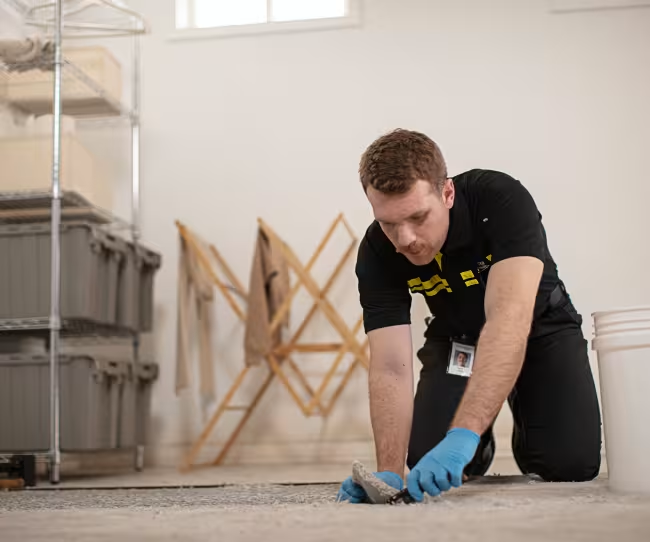
Basement & Foundation Moisture
Many homes have basements with aging foundations, masonry walls, older windows, and drainage systems that have been patched or updated over the years. Heavy rain can saturate the ground around a foundation, while small cracks or seepage points give moisture a way inside. Once that dampness reaches wood framing, drywall, insulation, or stored belongings, mold can take hold out of sight. In neighborhoods throughout Flint, a basement that smells musty or develops recurring damp spots may be signaling a moisture problem that goes deeper than what is visible on the wall.
Humidity & Condensation in Older Flint Homes
Flint's humid summers and cold heating season create two very different moisture challenges inside the same house. Warm, humid air can collect condensation around basement windows, bathrooms, kitchens, and poorly ventilated spaces, while winter temperatures can leave colder exterior walls and window areas vulnerable to repeated condensation. This matters in older Flint homes where insulation, ventilation, and air sealing may vary from room to room. Over time, that seemingly harmless dampness can accumulate on surfaces or inside wall assemblies. Mold does not need a dramatic flood to get started. A recurring wet spot, steamy bathroom, or damp basement corner can be enough.
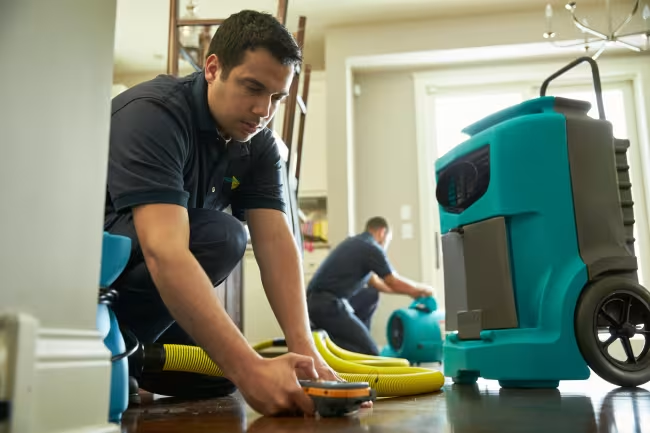
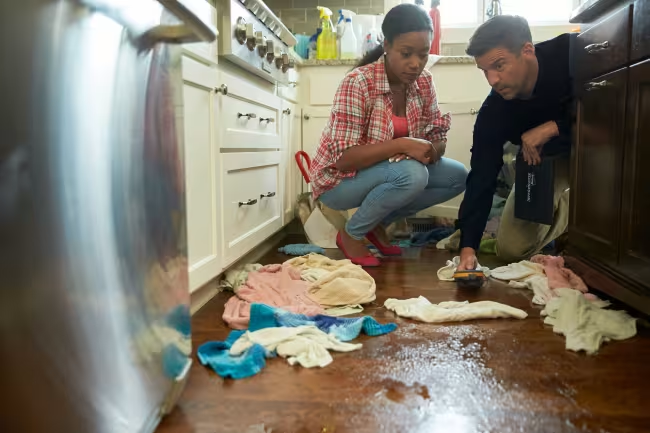
Plumbing & Roof Leaks Behind the Walls
In an older Flint home, a small plumbing or roof leak can become a much bigger problem before anyone notices. Aging supply lines, drain connections, water heaters, and bathroom plumbing can release moisture into cabinets, ceilings, and wall cavities. Above the roofline, worn shingles, flashing, or roof penetrations can let Michigan rain and melting snow seep into attics and upper walls. Because many Flint houses have decades-old construction layered with later repairs and renovations, water can become trapped between materials. By the time staining or a musty smell appears, the moisture may have already created an environment where mold can spread.
Why Choose ServiceMaster Restoration Services for Mold Removal in Flint, MI

Advanced Mold Detection Technology

HEPA Filtration & Air Scrubbing Systems

Safe Containment & Removal Procedures
Moisture Source Elimination Focus
Why Mold Removal Can’t Wait in Flint Homes
Flint’s seasonal moisture changes and basement-focused housing styles can allow mold to spread quickly once water is introduced.
Within 24 hours: Damp drywall, wood, and other porous materials begin absorbing moisture, especially in basements and crawlspaces.
24 to 48 hours: Mold spores may begin developing colonies on wet surfaces and can spread into hidden areas such as wall cavities.
After one week: Mold growth may become more extensive, increasing the complexity of cleanup and potential repairs.
What to Do Immediately After Discovering Mold in Your Flint Home
-
1Step 1Limit Air Disturbance in Affected Areas
Avoid touching or disturbing visible mold. Agitating contaminated materials can release spores into the air and increase the chance of spreading contamination.
-
2Step 2Identify and Stop Moisture Sources If Possible
If it is safe to do so, check for active leaks, basement water intrusion, plumbing issues, or condensation problems that may be contributing to mold growth.
-
3Step 3Increase Ventilation Without Spreading Contamination
Avoid using systems that may circulate mold spores throughout the home. Professional equipment and controlled airflow are often needed during remediation.
-
4Step 4Call ServiceMaster Restoration Services Mold Remediation Team
Professional containment and removal are critical when mold is discovered. ServiceMaster Restoration Services - Flint provides rapid-response mold remediation throughout Flint and Genesee County.