Need Water Removal or Flood Cleanup in Eureka, CA?
In Eureka, moisture rarely leaves on its own. Fog rolls in off Humboldt Bay most mornings, and the marine layer can hang over the city for days, keeping humidity high even in the middle of summer. Then the rainy season arrives, and Pacific storms can soak the North Coast from fall through spring, sometimes with atmospheric rivers that drop rain for days at a time. Many homes in Old Town, Henderson Center, Myrtletown, and Cutten were built generations ago with redwood framing, plaster walls, and raised foundations over crawlspaces. Those materials soak up water quickly and release it slowly. After a storm, a burst pipe, or any other water intrusion, the standing water may be gone, but moisture can stay trapped in subfloors, drywall, insulation, and framing for weeks. In Eureka’s damp air, that hidden moisture can lead to swelling, rot, musty odors, and mold. Our drying and dehumidification services use commercial air movers, dehumidification systems, and calibrated moisture monitoring to stabilize affected areas and reach the moisture you can’t see. ServiceMaster Restoration Services - Eureka is proud to help homeowners across Eureka and greater Humboldt County dry out and move forward.
Still dealing with hidden moisture in your Eureka property? Call Now for 24/7 Drying Services.
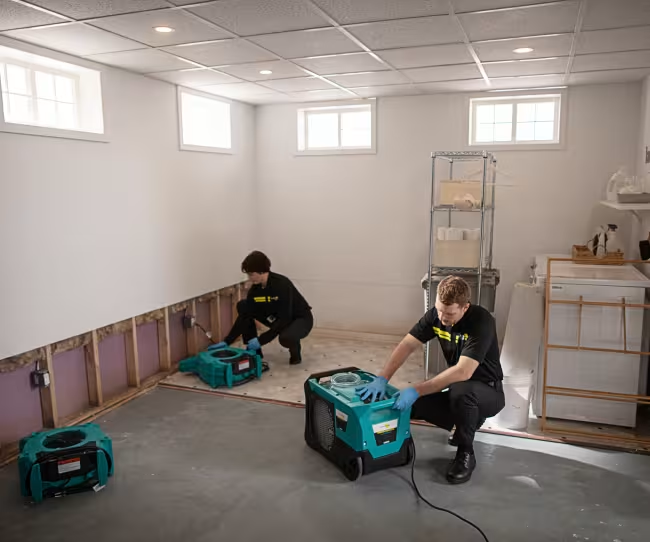
Storm Damage Structural Drying & Dehumidification
Pacific storms often arrive in waves on the North Coast, and the wet weather that follows can last for weeks. Wind-driven rain pushes through aging window frames, worn roofing, and gaps in siding on older homes near Old Town and the waterfront. It soaks into walls, attics, and floors. Even after the storm clears, Eureka’s fog and humidity keep those materials from drying. Redwood framing, plaster, and insulation hold onto moisture, and subfloors over crawlspaces stay damp from above and below. Over time, wood swells and softens, paint peels, and a musty smell settles in, often long after the storm has been forgotten.
Burst Pipe Structural Drying & Cold Weather Moisture Control
Eureka rarely freezes, so most plumbing failures here come from age, corrosion, and the ground itself. Many older homes still rely on galvanized or early copper pipes that have corroded from the inside after decades of use. Humboldt County also sits in one of the most seismically active regions in the country, and earthquakes and the slow settling of raised foundations can loosen fittings and stress water lines under the house. When a pipe gives way, water spreads beneath flooring, soaks into wall cavities, and drips into the crawlspace below. In the cool, damp coastal air, that moisture is slow to evaporate and can linger for weeks.
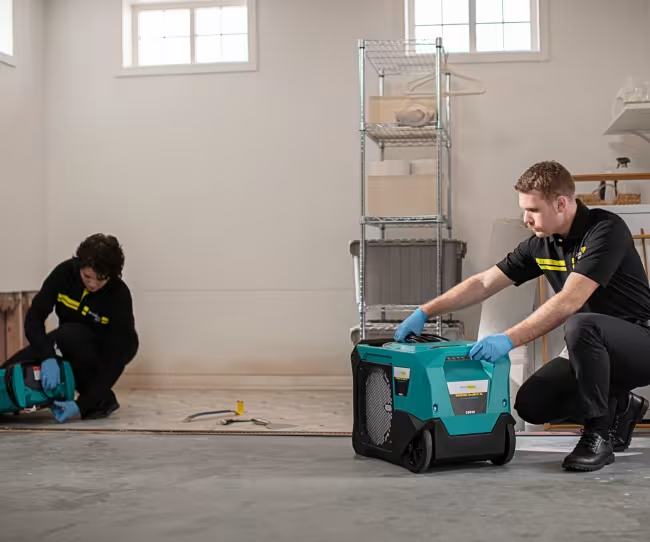
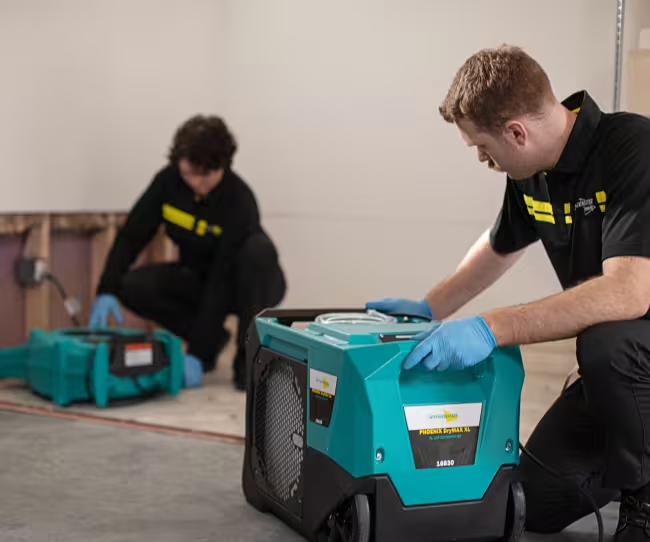
Crawlspace Moisture Control & Year-Round Dehumidification
For many Eureka homes, the crawlspace is where moisture problems begin and where they last the longest. Raised foundations common in older neighborhoods sit over bare soil or worn vapor barriers. High groundwater during the rainy season and damp coastal air keep those spaces wet year-round, and limited ventilation lets moisture build with nowhere to go. After a leak or flood, the crawlspace can stay soaked long after the rooms above look dry. That dampness rises into floor joists, subflooring, and insulation, leading to soft floors, wood rot, musty odors throughout the house, and conditions where mold can grow unseen.
Why Choose ServiceMaster Restoration Services for Drying and Dehumidification in Eureka, CA

Advanced Moisture Detection & Mapping
Industrial-Grade Dehumidification Systems
Continuous Monitoring Until Safe Levels Are Reached
Structural Protection Through Controlled Drying
Why Drying and Dehumidification Can't Wait in Eureka Homes
Eureka's coastal environment can slow natural evaporation. Moisture left behind after water removal may continue affecting building materials even when a property looks clean and dry.
Within 24 hours: Moisture can penetrate drywall, insulation, and wood framing. In older Eureka properties, particularly those with crawlspaces, hidden dampness may spread beyond the area where water was first noticed.
Within 24–48 hours: Elevated humidity and trapped moisture can create conditions favorable to microbial growth. Moisture behind walls, beneath flooring, or inside other concealed spaces may go unnoticed while visible surfaces begin to dry.
After several days: Prolonged moisture exposure can contribute to swelling, warping, weakening, and persistent odors in affected materials. The longer moisture remains, the more complicated restoration may become.
What to Do Immediately After Water Damage in Your Eureka Home
-
1Step 1Stop the Water Source if Still Active
If the leak or flooding is still occurring and you can do so safely, shut off the water source. Stopping additional water from entering the property allows restoration efforts to focus on existing moisture.
-
2Step 2Remove Standing Water if Safe
For small amounts of standing water, mops or a wet/dry vacuum may be appropriate if conditions are safe. Avoid entering areas with electrical hazards or disturbing saturated structural materials. Water can travel farther beneath surfaces than its visible footprint suggests.
-
3Step 3Improve Airflow in the Affected Area
If weather and conditions allow, opening interior doors and windows may improve ventilation. However, Eureka's outdoor humidity can limit the effectiveness of natural drying. Do not rely on ventilation alone when substantial water has entered the structure.
-
4Step 4Call ServiceMaster Restoration Services - Eureka
Contact a professional restoration team as soon as practical after addressing immediate safety concerns. ServiceMaster Restoration Services - Eureka can assess affected areas, identify hidden moisture, establish a controlled drying plan, and monitor progress throughout the process.