Need Mold Removal or Inspection in Bemidji, MN?
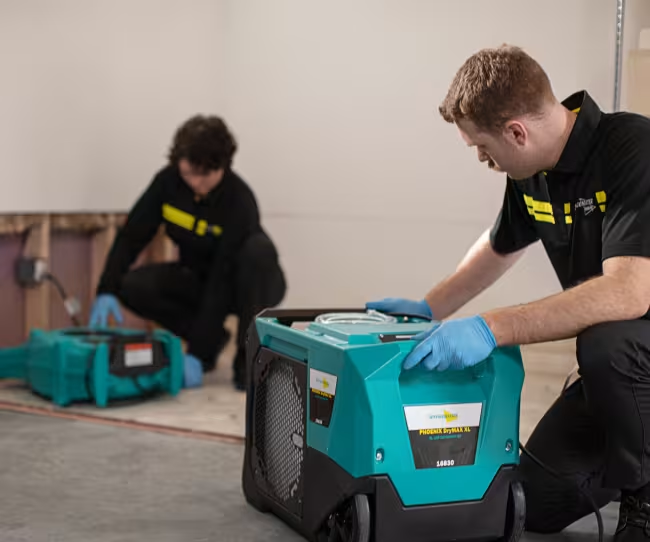
Living this close to Lake Bemidji means moisture is a year-round conversation, not just a spring problem. Summer humidity rolling off the lake settles into homes the same way fog settles over the water at dawn, and being this near the actual headwaters of the Mississippi means spring snowmelt saturates the ground around foundations with real, predictable regularity every single year. Winter flips the script entirely. Northern Minnesota cold builds ice dams along rooflines and drives condensation into attics where warm indoor air meets a cold roof deck, and the sheer length of a Beltrami County winter gives that moisture plenty of time to settle in before anyone's up there checking on it. Mold in this part of the state genuinely doesn't take a season off, it just changes its approach depending on which one it's dealing with. ServiceMaster Restoration Services - Bemidji brings moisture mapping, containment, and HEPA filtration to basement mold treatment, attic mold removal, and black mold cleanup alike, whatever season it is and whatever's causing it.
Mold spreading inside your Bemidji home or business right now? Call Now.

Basement Mold Near the Lake and Headwaters
Bemidji sits close enough to both Lake Bemidji and the Mississippi's headwaters that basements throughout town deal with a kind of ambient dampness other inland communities simply don't. Spring thaw saturates the soil around foundations with real predictability every year, and that groundwater pressure, combined with ordinary condensation and the occasional plumbing leak, creates persistently damp conditions in exactly the kind of low-light, low-airflow space mold prefers. This kind of growth tends to stay out of sight, developing behind finished basement walls or beneath flooring long before a musty smell finally gives it away.
Attic Mold After Ice Dams and Northwoods Winters
A Beltrami County winter puts a Bemidji attic through more than most people realize. Ice dams form along the roofline and back meltwater up under shingles, while warm air rising from the living space below meets cold roof sheathing and adds condensation on top of whatever's already leaking in. Because these winters run long, that moisture has months, not days, to settle into insulation, rafters, and roof decking before spring finally arrives and anyone climbs up to take a real look. By then, what started as a small ice dam problem has often had an entire season to spread.
Black Mold After Water Damage in Beltrami County
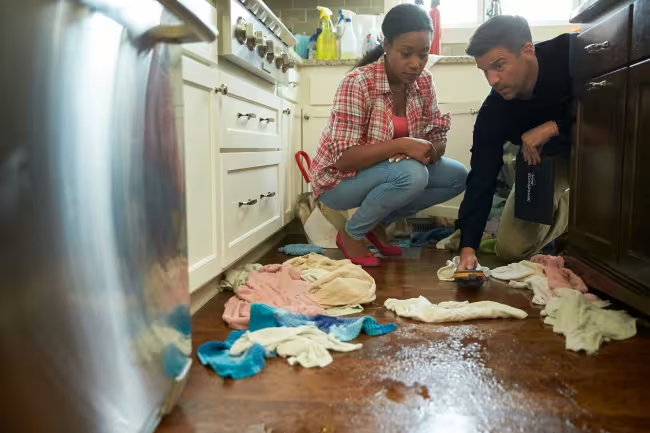
Mold following a plumbing failure, a roof leak, or any other water event doesn't announce itself politely, and in the more rural stretches of Beltrami County, between Bemidji and the surrounding lake and forest communities, a water problem can go unnoticed even longer than it would in a denser neighborhood. Dark-colored mold in particular shouldn't be disturbed casually, especially once it's established itself in porous materials, and the real work isn't just addressing what's visible, it's tracing the water source back to its origin so the same conditions don't just produce the same problem again next season.
Why Choose Our Team for Mold Removal & Remediation in Bemidji, MN
Hidden Moisture Detection Systems
HEPA Filtration & Air Quality Control
Full Containment & Safe Removal Protocols
Source Correction, Not Just Surface Cleanup
Why Mold Problems Can’t Wait in Bemidji, MN Homes
Once moisture enters building materials, the conditions for mold growth can develop quickly. The exact timeline varies based on moisture levels, temperature, material type, and other environmental factors, but delaying action can make remediation more extensive.
Within the first 24 hours: Wet drywall, insulation, wood, and other porous materials can absorb moisture and remain damp, creating conditions that support microbial growth.
Within 24–48 hours: If moisture remains unresolved, microbial growth can become more established and spread into concealed areas such as wall cavities, flooring systems, and insulation.
After several days or longer: Continued moisture can increase the extent of contamination and damage to porous building materials, potentially requiring more extensive removal and reconstruction.
What to Do Immediately After Discovering Mold in Your Bemidji Home
-
1Step 1Avoid disturbing the affected area
Do not scrape, brush, or otherwise disturb visible mold unnecessarily. Agitating growth can release particles into the surrounding air.
-
2Step 2Identify and stop moisture sources if safe
If the problem is connected to an active plumbing leak or other controllable water source, take safe steps to stop or contain the water. Do not attempt repairs that could put you at risk.
-
3Step 3Limit airflow through contaminated spaces
Keep doors closed where practical and avoid unnecessarily moving air through the affected area. This can help limit the movement of airborne contaminants while you arrange professional assessment.
-
4Step 4Contact mold remediation specialists
Professional inspection can help determine the extent of the problem, identify moisture sources, and establish an appropriate remediation plan.