Need Commercial Mold Removal in Bemidji, MN?
Bemidji's long winters, humid summers, and constant seasonal swings can leave commercial buildings dealing with moisture in places nobody thinks to check. Snow and ice around foundations, summer humidity, plumbing leaks, and condensation can all leave damp conditions behind walls, beneath flooring, or around mechanical spaces.
That matters for Bemidji's wide mix of businesses. Manufacturing and wood-products facilities can have large production and storage areas, while healthcare facilities, schools, hotels, restaurants, and retail spaces have their own collection of plumbing, HVAC, and high-traffic moisture concerns. The local economy includes substantial manufacturing, transportation, healthcare, education, retail, and tourism activity.
Mold can quietly develop inside insulation, ceiling assemblies, wall cavities, flooring, and other areas before there's an obvious sign. ServiceMaster Restoration Services - Bemidji helps commercial property owners address mold and the moisture conditions behind it, whether the problem is in a downtown office, a Paul Bunyan Drive retail property, a manufacturing facility, or a larger industrial space.
From healthcare and education to manufacturing, forestry-related businesses, hospitality, and retail, keeping moisture from becoming a long-term building problem is important for protecting both the property and the business operating inside it.
Mold Disrupting Your Bemidji Business or Facility? Call Now and Minimize Downtime.
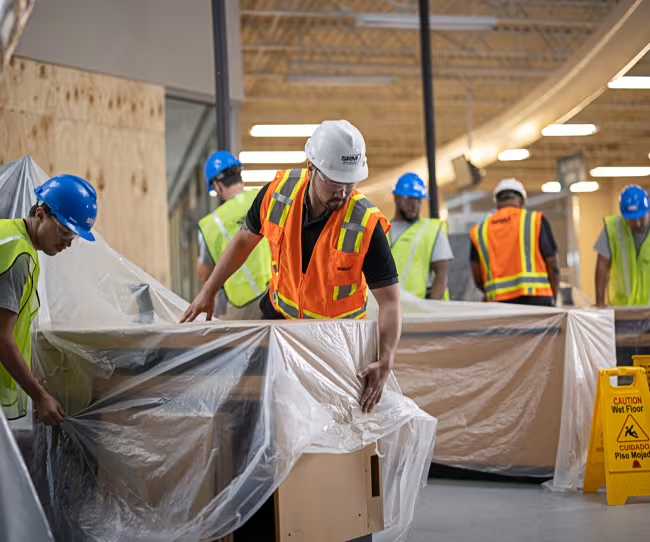
Storm & Snowmelt Moisture Behind Commercial Mold
A wet spring or a roof leak during a summer storm can leave a Bemidji business with more than a puddle to clean up. Moisture can work its way into ceiling assemblies, wall cavities, insulation, and lower-level spaces before anyone notices a problem. That matters in everything from downtown storefronts and hotels to manufacturing and warehouse facilities, where large enclosed areas can hide moisture for longer than expected. Properties near Lake Bemidji and the area's many waterways can also contend with damp ground conditions around foundations. Once moisture gets trapped inside a building, mold can quietly establish itself behind finished surfaces and around stored materials.
Winter Condensation & Freeze-Thaw Mold Growth
Bemidji's deep winter cold creates a very different mold problem. When warm indoor air meets cold exterior walls, roofs, windows, or poorly insulated areas, condensation can accumulate where nobody sees it. Repeated freezing and thawing can add another path for moisture, particularly around aging roofs, masonry, windows, and exterior walls. In an older downtown building, that moisture might settle behind a wall or above a ceiling. In a manufacturing facility or warehouse, it may develop around roof assemblies and large overhead spaces. Over time, these small pockets of dampness can give mold the foothold it needs.

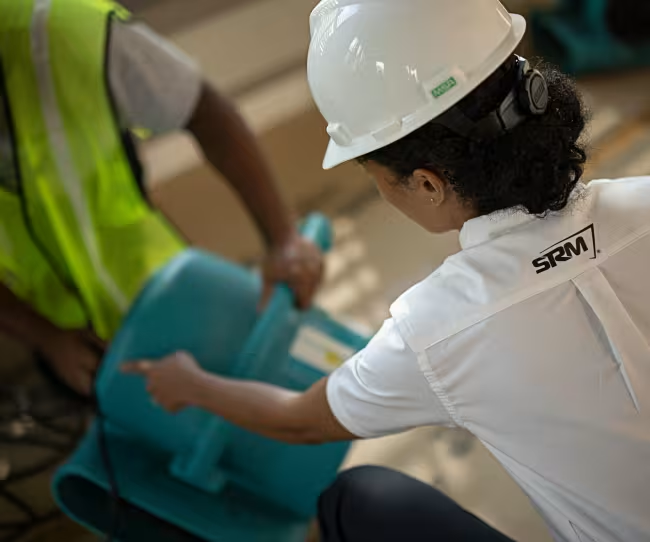
Storm & Snowmelt Moisture Behind Commercial Mold
A roof leak during a summer storm or moisture moving into a building during spring snowmelt can leave much more behind than a wet floor. Water can migrate into ceiling assemblies, insulation, wall cavities, and lower-level spaces before the source is obvious. That creates concerns for Bemidji's restaurants, hotels, offices, healthcare facilities, warehouses, and manufacturing properties, where finished interiors and stored materials can conceal moisture. Buildings around the Lake Bemidji area and the city's interconnected waterways can also face damp conditions around foundations. If wet materials remain hidden, mold can gain a foothold long after the original water intrusion has disappeared.
Why Choose ServiceMaster Restoration Services for Commercial Mold Removal in Bemidji, MN
Industrial Containment Systems
Commercial Moisture Mapping Technology
Downtime-Minimizing Restoration Process
Industrial Contents & Material Recovery
Why Commercial Mold Damage Can’t Wait in Bemidji Businesses
Bemidji’s climate creates conditions where mold can escalate quickly, especially in buildings with aging materials, limited ventilation, or ongoing moisture exposure.
Within 24 hours: Moisture begins absorbing into drywall, insulation, ceiling materials, and other porous building components. This is especially concerning in basements and lake-adjacent commercial properties near Lake Bemidji and Lake Irving.
Within 24–48 hours: Mold spores can begin multiplying and spreading through affected areas, including HVAC systems that distribute air throughout offices, retail spaces, and shared commercial environments.
Within one week: Building materials may deteriorate, odors can intensify, and restoration may require more extensive removal of damaged materials.
What to Do Immediately After Discovering Mold in Your Bemidji Commercial Property
-
1Step 1Limit Access to the Affected Area
Restrict employee and customer access to areas where mold is visible or suspected. Reducing traffic helps limit airborne spore movement throughout your commercial space.
-
2Step 2Shut Down Nearby HVAC Systems
If possible, turn off HVAC equipment serving the affected area. Mold spores can spread through ductwork, especially in sealed commercial environments during colder months.
-
3Step 3Document Visible Growth and Moisture Sources
Take photos of visible mold growth, water damage, affected ceilings, walls, storage areas, and any suspected moisture sources. Documentation can help support insurance communication and restoration planning.
-
4Step 4Call a Commercial Mold Remediation Specialist
Once the affected area is secured and documented, contact a professional restoration team. Fast action is essential in Bemidji’s climate, where moisture conditions can accelerate mold growth.