Need Commercial Mold Removal in Lodi, NJ?
HVAC condensation in offices and retail spaces along Main Street and the Route 46 corridor can create hidden moisture, while post-flood moisture has affected Lodi businesses after the Saddle River overflows during major storms, including the remnants of Hurricane Ida. Warehouses and loading docks near Route 17, Route 46, and Interstate 80 can also face persistent humidity.
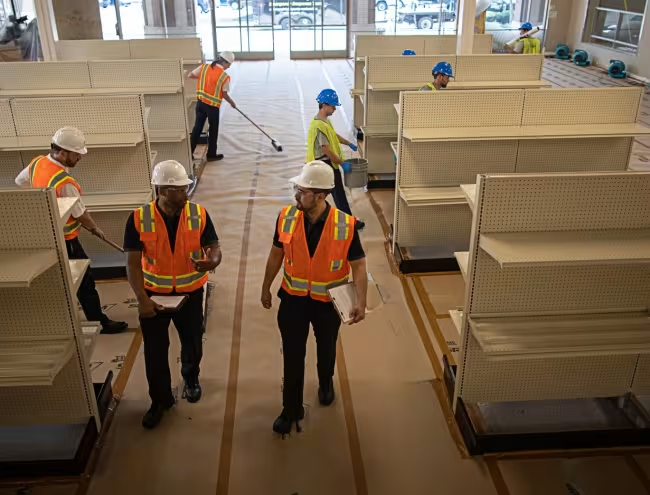
Commercial mold remediation starts by containing the affected area and limiting the movement of airborne spores. Depending on the property, the response may include negative air, HEPA filtration, moisture detection, material removal, and detailed documentation.
Because businesses cannot always stop operations, remediation can be coordinated around business hours whenever possible.
Mold can disrupt a business quickly. Call ServiceMaster Restoration by Senese for 24/7 commercial mold remediation

HVAC & Condensation-Driven Mold Remediation
Lodi's mix of offices, retail spaces, and mixed-use commercial buildings can experience condensation problems during humid summers and cold winters. Moisture can collect inside wall cavities, above drop ceilings, and around HVAC components, creating conditions for mold growth.
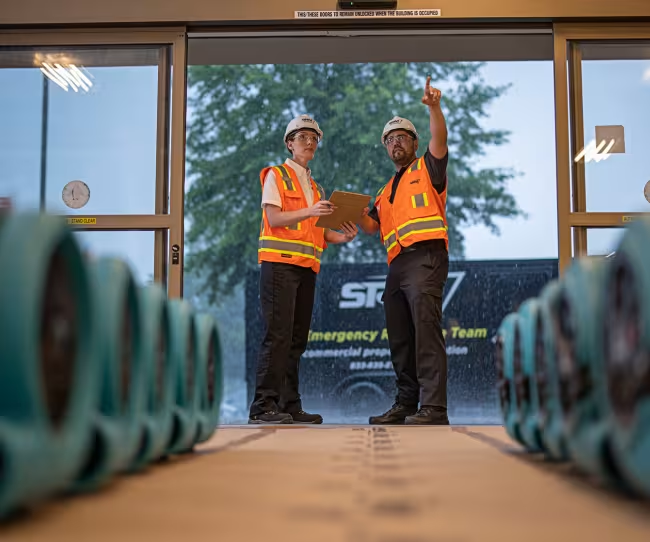
Commercial mold remediation may include thermal imaging and an HVAC inspection to identify moisture sources. Technicians can contain affected areas, use HEPA air scrubbing, and remove contaminated drywall or ceiling tile when necessary.
Following remediation, clearance testing can help verify that the affected area has been properly addressed before normal use resumes.
Post-Flood Mold Remediation
The Saddle River has repeatedly overflowed its banks during major storms, including flooding associated with the remnants of Hurricane Ida and recurring winter storm events. For Lodi businesses, the visible floodwater may disappear while moisture remains trapped behind walls or inside insulation.
A post-flood response begins with moisture mapping and structural drying to identify affected areas. Unsalvageable materials may need to be removed, followed by EPA-registered antimicrobial treatment where appropriate.
Timing matters because mold spores can begin activating in damp conditions within approximately 24–48 hours. Prompt commercial mold cleanup can limit the amount of affected material and reduce the scope of remediation.
Warehouse & Distribution Facility Mold Remediation
Lodi's industrial corridor around Route 17, Route 46, and Interstate 80 includes warehouse, distribution, and light industrial facilities where moisture can affect large areas. High-volume loading dock traffic can introduce humid air, while large flat roofs can create persistent moisture challenges.
These facilities may require large-footprint containment, industrial dehumidification, and mold removal from structural framing, insulation, or other affected materials. Remediation can also be phased so unaffected portions of a facility remain operational.
For businesses with active shipping, receiving, storage, or production schedules, a phased approach can help address mold without unnecessarily shutting down the entire property.
Why Choose ServiceMaster Restoration by Senese for Commercial Mold Remediation

Commercial-Grade Containment & Negative Air

Advanced Moisture Mapping

Minimized Business Disruption
Documentation for Insurance & Compliance
Why Commercial Mold Can't Wait in Lodi Businesses
24–48 hours: spores activate — Damp drywall, insulation, flooring, and other porous materials can begin supporting mold growth. If affected areas connect to HVAC systems, airborne spores may also spread beyond the original source.
Within one week: air quality degrades — As mold growth develops, employees or tenants may begin reporting musty odors or other indoor air-quality concerns. Continued exposure can increase complaints and create additional concerns for property managers and business owners.
Beyond two weeks: structural and financial damage compounds — The longer moisture and mold remain unresolved, the greater the potential for additional material damage, replacement costs, tenant disputes, and impacts to the property's use or value.
Fast action can make the difference between a contained remediation project and a much larger renovation involving extensive material replacement.
What to Do Immediately After Finding Mold in Your Lodi Commercial Property
-
1Step 1Isolate the Affected Area
Close doors and restrict the affected space. If appropriate, shut down the HVAC serving that zone to help limit the movement of airborne contaminants.
-
2Step 2Restrict Access & Log Complaints
Keep employees, tenants, customers, and other unauthorized people out of the affected area. Document reported concerns or complaints in writing for your property records.
-
3Step 3Document Everything for Insurance
Take photos and videos of visible mold, water damage, affected materials, and surrounding areas before anything is moved, removed, or cleaned.
-
4Step 4Call ServiceMaster Restoration by Senese
Once the area is safely isolated and documented, contact ServiceMaster Restoration by Senese for 24/7 commercial mold remediation response throughout Lodi and Bergen County.