

Need Commercial Mold Remediation in Mooresville, NC?
Mooresville businesses often need commercial mold remediation after humidity-driven moisture problems, roof leaks, HVAC condensation, plumbing failures, or water damage that was not properly dried.
Lake Norman’s humid summers and heavy air-conditioning demand create ideal conditions for hidden moisture buildup in commercial buildings. When combined with storm-related roof leaks, clogged drains, or HVAC condensate backups, mold can begin developing in as little as a few days.
We commonly see issues in corporate offices, medical and dental practices, retail centers, restaurants, motorsports and automotive facilities, warehouses, hotels, and multifamily properties throughout Mooresville’s business districts, including River Highway and commercial corridors along I-77.
Mold growth is often hidden, developing behind drywall, above ceiling tiles, under wet carpet, inside utility rooms, and around HVAC components. Even when surfaces appear dry, trapped moisture can continue feeding growth inside wall cavities and flooring systems.
ServiceMaster Restoration by McCoy helps identify the moisture source, contain affected areas, remove damaged materials, when necessary, dry the structure, and coordinate restoration so businesses can return to normal operations with minimal disruption.
Mold or musty odors in your Mooresville business? Call ServiceMaster Restoration by McCoy for commercial remediation help.
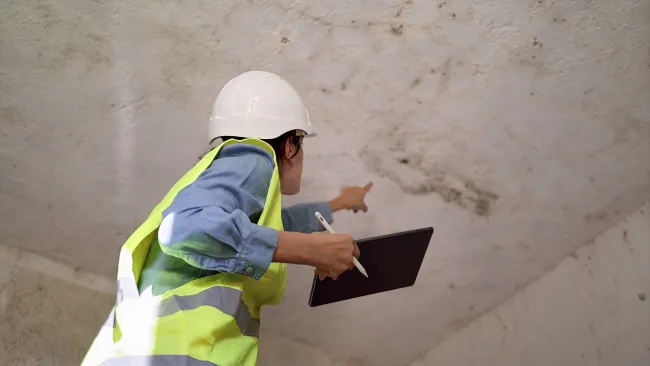
Mold Cleanup After Roof Leaks and Storm Water Intrusion
Roof leaks and storm-related water intrusion are among the most common causes of commercial mold damage in Mooresville buildings. Heavy rain, clogged roof drains, failed flashing, and water entry around skylights or HVAC rooftop penetrations can quickly introduce moisture into ceiling assemblies and wall systems. Once water spreads, it often affects ceiling tiles, insulation, drywall, carpet, stored inventory, documents, and equipment located below the leak path.
Our process begins with identifying and addressing the water source before mold removal begins. This step is critical to preventing recurring contamination. Once stabilized, we use targeted containment to isolate affected zones and protect occupied areas. Damaged materials are selectively removed, when necessary, followed by surface cleaning, structural drying, and ongoing moisture monitoring to confirm conditions are safe.
This approach helps prevent a localized roof leak from turning into a larger tenant disruption or operational shutdown across shared commercial spaces.
HVAC and Mechanical Room Mold Remediation
HVAC systems and mechanical rooms are frequent hidden sources of mold growth in Mooresville’s AC-dependent commercial buildings.
With long cooling seasons around Lake Norman, rooftop HVAC systems and air handlers often run continuously. When condensate drains clog, coils sweat excessively, or humidity levels remain elevated, moisture can accumulate in and around mechanical systems.
Mold may develop in mechanical rooms, utility closets, ceiling cavities, offices, treatment rooms, breakrooms, storage areas, and shared workspaces. One of the most common warning signs is a musty odor that becomes noticeable when the HVAC system cycles on.
Remediation may involve moisture mapping, containment around affected systems, cleaning impacted surfaces, targeted drying, and recommendations to reduce ongoing condensation risks. The goal is not just cleanup but improving long-term commercial moisture control within the building environment.


Wet Carpet, Plumbing Leak and Tenant-Space Mold Cleanup
Interior water events in occupied suites and shared tenant spaces often lead to hidden mold growth beneath flooring and behind walls.
Plumbing leaks, restroom overflows, breakroom sink failures, sprinkler discharge, and appliance malfunctions can allow water to spread quickly beneath carpet and flooring systems. In many cases, surface drying is not enough to stop hidden moisture from lingering.
Carpet, padding, baseboards, drywall, and lower wall materials can retain moisture long after the visible water is gone. Our process includes containment, moisture detection, controlled removal of damaged materials when necessary, cleaning, drying, odor reduction, and documentation for property records and insurance coordination.
Phased cleanup planning helps reduce disruption for employees, tenants, and customers while keeping building operations as stable as possible during restoration.
Why Choose ServiceMaster Restoration by McCoy for Commercial Mold
Moisture Source Investigation
Containment for Occupied Buildings
Commercial Material and Contents Cleanup
Drying and Business Continuity Support
Why Mold Damage Can’t Wait in Mooresville Businesses
Mold is fundamentally a moisture problem, so remediation should begin by identifying and correcting the source of water or humidity.
Within 24 to 48 hours, wet carpet, drywall, ceiling tiles, insulation, and other porous materials can begin creating conditions that support mold development after water exposure.
After several days, mold can spread behind walls, above ceilings, under flooring, and into adjacent tenant spaces, especially where moisture remains trapped and undetected.
As moisture continues, odors become stronger, staining becomes visible, and employee or tenant concerns often increase alongside operational disruption and repair complexity.
Fast commercial mold removal helps limit the spread, reduce downtime, and protect both property value and day-to-day business continuity across Mooresville facilities.
What to Do Immediately After Finding Mold in Your Mooresville Business
-
1Step 1Avoid Disturbing the Mold
Do not scrub, sand, or disturb visible mold. This can release spores into nearby occupied areas and increase contamination risk.
-
2Step 2Stop the Moisture Source if Possible
If a leak is active and safely accessible, shut off water sources or stop using affected equipment to prevent further moisture intrusion.
-
3Step 3Document the Damage
Take photos and videos of visible mold, water stains, affected materials, and impacted areas before moving anything or beginning cleanup.
-
4Step 4Call ServiceMaster Restoration by McCoy
Once the area is safe and documented, contact our team for professional office mold remediation and commercial response in Mooresville.
