Need Structural Drying in Midland, MI?
Midland homes face moisture challenges in every season. The Tittabawassee and Chippewa Rivers meet right in town. Each spring, snowmelt and heavy rain can raise both rivers and push groundwater toward low-lying neighborhoods, and record flooding has reached basements across the city before. Older homes around downtown Midland and Plymouth Park often have aging foundations and basements that let water seep through. Midland’s distinctive midcentury homes along the Eastman Avenue corridor and in established subdivisions can hide plumbing and appliance leaks inside walls and beneath floors, where water is hard to detect. Michigan’s climate makes drying even harder. Humid summer air drifting in from Saginaw Bay keeps damp materials from releasing moisture, while long winters keep homes sealed tight with little airflow to help them dry. Water absorbed by drywall, insulation, wood framing, and flooring can linger long after the visible puddles are gone, leading to warping, deterioration, and mold. Professional structural drying goes beyond removing surface water. Moisture mapping finds affected areas, industrial air movers and dehumidifiers pull moisture out, and ongoing monitoring confirms when materials are truly dry. We’re proud to help Midland County families recover from seasonal flooding, frozen pipes, and unexpected leaks.
Dealing with hidden moisture in your Midland home? Get help now.
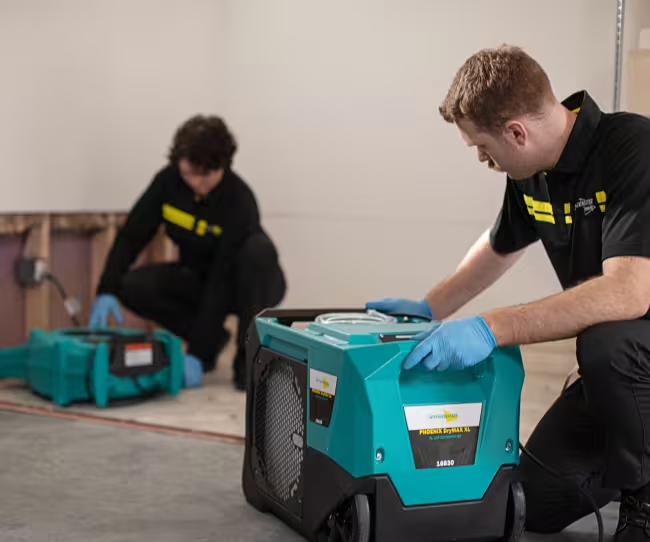
Post-Flood Structural Drying After Tittabawassee River Events
When the Tittabawassee River runs high in spring, homes in low-lying parts of Midland can take on water through basement walls, floor joints, and crawl space vents. Even after the floodwater is pumped out, it leaves a lot behind. Framing, insulation, subflooring, and drywall soak up river water and hold it for weeks, especially in finished basements where carpet and paneling trap moisture underneath and behind them. The area’s heavy clay soils keep foundation walls damp long after the river recedes. Without thorough drying, that lingering moisture can lead to warped materials, musty odors, and mold spreading out of sight.
Winter Freeze-Thaw Moisture Control & Hidden Wall Drying
Midland winters can bring weeks of subzero cold followed by sudden thaws, and those swings are hard on a home. Pipes in exterior walls, crawl spaces, and attached garages can freeze and split. The leak often starts quietly once the ice melts, sending water into wall cavities and beneath floors. Ice dams can also push meltwater under shingles and down inside walls. Because the water stays hidden, there may be no obvious sign on the surface for days or weeks. In older homes with aging insulation and concealed plumbing, moisture can spread through framing and subflooring long before a stain or soft spot appears.
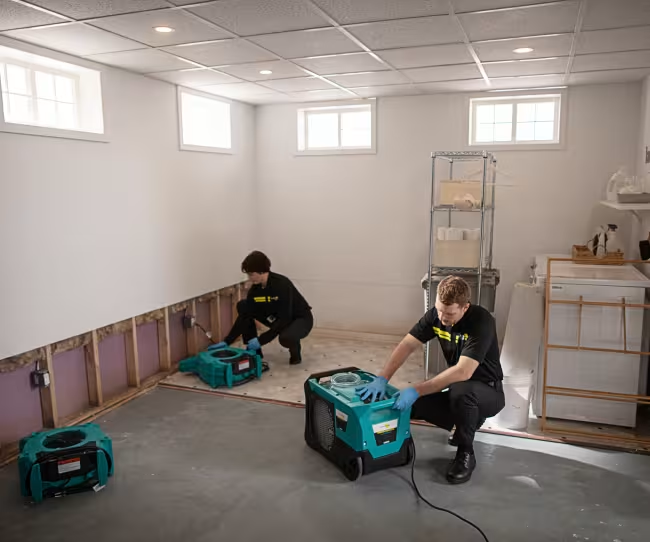
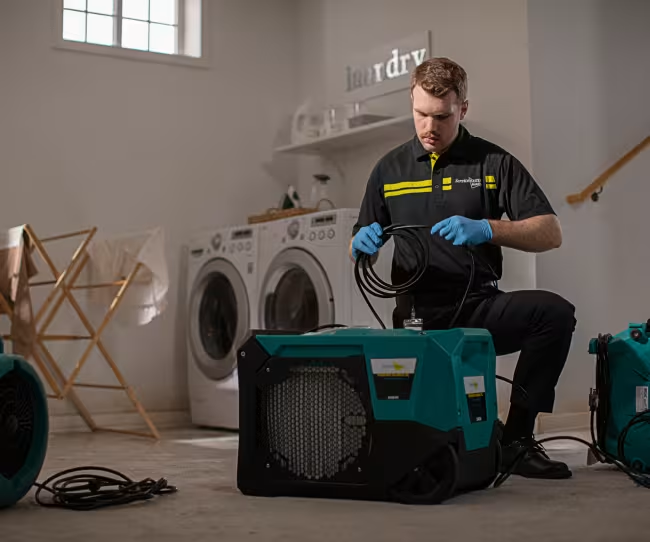
Year-Round Basement Humidity & Appliance Leak Dehumidification
Midland basements don’t need a flood to stay damp. A leaking washing machine hose, a dishwasher connection that drips into the floor below, or a water heater that corrodes and gives way can soak a lower level in hours. Sump pumps can fail during summer storms and power outages, and slow seepage through older foundations keeps concrete and framing moist. In humid summer months, cool basement walls draw condensation, and enclosed lower levels can feel damp even when there’s no standing water. Over time, that moisture settles into carpet, drywall, and stored belongings, leading to musty odors and mold.
Why Choose ServiceMaster Restoration Services for Drying & Dehumidification in Midland, MI

Precision Moisture Detection
Industrial-Grade Drying Equipment
Monitored Structural Drying Process
Mold Prevention Focused Drying Window
Why Moisture Damage Can't Wait in Midland Homes
Midland's humid summers, cold winters, and moisture-prone basements make timely water damage assessment important. The effects vary depending on how much water entered the home, the materials involved, and how long they remain wet.
Within 24 hours: Drywall may absorb moisture, paint may begin to soften, and wood flooring may swell. Limited airflow in lower-level rooms can make drying more difficult.
Within 24–48 hours: Moisture trapped inside insulation, framing, and other building materials can create conditions favorable to microbial growth. Enclosed basements and wall cavities may be particularly difficult to dry without specialized equipment.
After one week: Prolonged dampness can contribute to warped materials, reduced insulation performance, and deeper moisture penetration into structural components. Repairs may become more extensive as damage progresses.
What to Do Immediately After Water Damage in Your Midland Home
-
1Step 1Remove Standing Water Safely if Possible
If the area is safe to enter, remove small amounts of standing water with towels or a suitable wet vacuum. Do not enter standing water where electrical hazards may be present and avoid attempting cleanup if the water may be contaminated. Surface water removal does not address moisture trapped inside building materials.
-
2Step 2Improve Airflow in Affected Areas
If outdoor conditions are appropriate and it is safe to do so, open interior doors or windows to improve ventilation. However, outdoor humidity, cold temperatures, and condensation can affect drying, so ventilation alone may not be sufficient. Avoid using ordinary fans around electrical hazards or contaminated water.
-
3Step 3Protect Flooring and Belongings
When it is safe, move furniture and belongings away from wet surfaces. Place foil or suitable protective blocks beneath furniture legs to help reduce staining and moisture transfer. Avoid moving heavy items across wet flooring, which may already be weakened.
-
4Step 4Call for Professional Drying & Dehumidification
Once immediate safety concerns are addressed, contact ServiceMaster Restoration Services - Midland to discuss the damage and arrange appropriate assistance. Whether you need help after water extraction, a plumbing leak, or basement flooding, professional assessment can help identify hidden moisture and determine the next steps.