

Steady Commercial Mold Inspection & Removal Services in Kansas City
Commercial mold across the Kansas City metro often stems from humid summers and aging commercial buildings. Moisture left behind by storm or flood events adds to the risk. Humid Plains summers drive condensation in poorly ventilated commercial spaces. Flood-related moisture, like that from the June 2025 flash-flooding event, is another common cause. Roof or plumbing leaks going undetected in unoccupied portions of a property round out the most frequent triggers.
Warning signs to be on the lookout for include:
- Worsening allergy symptoms from employees with mold sensitivity, weakened immune systems, or those who have allergies
- Difficulty breathing, wheezing, or tightness from employees with asthma
- Unpleasant odor – often smelling damp, musty, or earthy in one area or throughout the facility
- Visible signs, like discoloration on walls or ceilings, that may be white streaks, clusters of spots, or green/grey areas
- Standing water or dried up water spots, especially in bathrooms or on lower levels
ServiceMaster DSI – Kansas City responds with certified inspection, containment, and safe removal. We're part of a national restoration network that's been in business since 1981. That mold remediation expertise covers the full metro, on both sides of the state line.
Rely on ServiceMaster for 24/7 mold inspection & removal for Kansas City businesses. When mold builds up, we're here to stop further damage.
Why Mold Removal Matters for Kansas City Businesses
A facilities manager needs to know the problem will be found and safely resolved. Our process is built to identify a mold issue without disrupting business operations more than necessary. That balance matters as much as the removal itself.
Property managers overseeing multiple metro-area locations sometimes need documentation that satisfies more than one audience at once. Ownership, an insurance carrier, and sometimes a tenant asking questions all need answers. One thorough report is built to serve all three at the same time.
Older commercial buildings across the metro carry mold risk that newer construction often doesn't. Aging plumbing and roofing systems create more opportunities for hidden moisture. Knowing which properties carry that added risk shapes how we approach every inspection.
Stay ahead of liability—get a certified mold evaluation now.

Roof & HVAC-System Mold
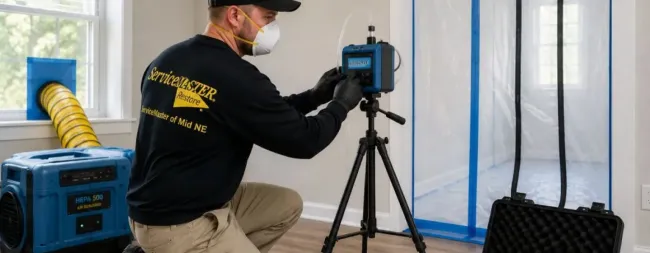
Roof leaks and HVAC condensation are common commercial mold sources in the metro's humid summers. Undetected roof leaks and oversized or poorly maintained HVAC systems are frequent triggers in commercial buildings. ServiceMaster DSI – Kansas City inspects using moisture meters and thermal imaging to locate hidden mold sources.
Containment and safe removal follow once the source is confirmed. Catching mold before it spreads through ductwork or ceiling systems is the priority throughout. A leak that goes unnoticed for weeks can affect far more of a building than the roof alone.
Basement & Foundation Mold
Basements are common in commercial buildings across the metro, making below-grade moisture and mold a real risk in older properties. Older building foundations and flash-flood events like June 2025's are common triggers for basement-level moisture. ServiceMaster DSI – Kansas City inspects and remediates basement and lower-level commercial space with that risk in mind.
Addressing moisture at the source matters more than removing what's visible. The metro's flood exposure is directly connected to this type of mold call. A basement that looks dry on the surface can still have a moisture problem building underneath.

Restroom & Break Area Mold
High-moisture commercial areas like restrooms and break rooms are frequent, recurring mold sources. Poor ventilation and plumbing leaks in these spaces are common triggers. ServiceMaster DSI – Kansas City provides targeted removal and moisture-source correction in these areas.
This is often an ongoing maintenance issue rather than a one-time event. Stopping the mold from recurring matters more than just removing what's visible today. A shared restroom used by dozens of employees needs a fix that actually holds.
A recurring musty smell in a break room is often the first sign something needs a closer look. Property managers who address that smell early avoid a bigger remediation job later. Waiting until mold is visible usually means the problem has already spread.
Why Choose ServiceMaster DSI – Kansas City for Commercial Mold Removal?
Thorough Certified Inspection
Safe Containment & Removal
Source-Level Moisture Correction
Minimal Business Disruption
Why Commercial Mold Removal Can't Wait in Kansas City
Mold can become a serious concern for Kansas City businesses when moisture is allowed to remain inside a commercial property. The metro's humid summers can slow natural drying, while thunderstorms, roof leaks, plumbing failures, HVAC condensation, and other moisture events can leave building materials damp.
In a commercial building, moisture may travel through walls, ceilings, flooring, insulation, and mechanical areas before visible mold is discovered. Delaying an inspection gives the problem more time to spread and can increase the disruption required to address it.
Within 24 to 48 Hours: Mold spores can begin colonizing damp materials after a leak or moisture event. Drywall, carpeting, wood, insulation, and other porous materials can retain moisture, particularly during Kansas City's humid summer conditions.
Weeks of Delay: Mold can spread through wall cavities, ceilings, insulation, and HVAC systems, potentially carrying moisture-related problems into areas far from the original source. What began in one office, storage area, restroom, or mechanical space can become a much broader building concern.
Months of Delay: Prolonged moisture and mold growth can contribute to deterioration of building materials and require more extensive remediation. A contained issue can become a larger project involving multiple areas of the property.
Early professional inspection can help identify the moisture source, determine the extent of affected areas, and establish an appropriate remediation plan. Acting promptly can help limit disruption and keep a localized problem from becoming a building-wide restoration challenge.
What to Do If You Suspect Commercial Mold in Kansas City
Visible mold, persistent musty odors, or unexplained moisture in a commercial property should be addressed promptly. Mold is not always confined to the surface where it first becomes visible. Moisture can move behind walls, beneath flooring, above ceilings, or through HVAC components, allowing affected areas to extend beyond what employees or customers can see. If you suspect mold in your Kansas City business, taking a few immediate precautions can help limit disruption while professional assessment is arranged.
-
1Step 1Limit Access to the Suspected Area
Keep employees, customers, and visitors away from areas with visible mold or strong musty odors. Avoid disturbing suspected growth until the area has been professionally assessed.
-
2Step 2Address Any Active Leak
Stop ongoing water intrusion if it can be done safely. A plumbing leak, roof problem, or HVAC moisture issue should be addressed promptly to prevent additional moisture from entering the building.
-
3Step 3Document What You See
Photograph and video visible mold, water stains, damaged materials, leaks, and other related conditions before cleanup or remediation begins. Documentation can help establish the scope of the problem.
-
4Step 4Call ServiceMaster DSI – Kansas City
Our teams provide 24/7 certified inspection and remediation services. We can assess affected areas, identify moisture concerns, and develop a plan for addressing the problem. Early action can help keep a localized mold concern from becoming a larger commercial restoration project.
Maintain a clean, compliant environment—start your mold solution today.