Need Appliance Leak Cleanup in Lexington, KY?
In Lexington, appliance leaks tend to follow the calendar. Through cold winters, water heaters in basements and garages work their hardest, and aging tanks are more likely to give out. All year long, washer hoses burst, dishwasher and refrigerator supply lines fail, and kitchens and laundry rooms take on water fast. The Bluegrass's limestone-rich water adds another layer, leaving mineral buildup that wears down valves, fittings, and water softeners over time. ServiceMaster Restoration by BTM provides appliance leak cleanup that removes the water, tracks how far it has spread, and dries the structure. We're proud to help Lexington families get back to normal fast.
Puddle by the water heater or a soaked kitchen floor? Let's stop it before it spreads.

Water Heater Leak Cleanup
Water heaters work hardest during Lexington's colder months. From December through February, incoming water is colder, so tanks run more often, and Kentucky's hard, mineral-rich water leaves sediment that speeds corrosion inside. Over time, that strain can cause an older tank to fail without warning. Whether it sits in a basement, garage, or utility closet, a burst tank can release dozens of gallons in minutes, soaking flooring, drywall, and stored belongings nearby. Our water heater leak cleanup removes the water and dries the area to keep the damage from spreading.
Washing Machine, Dishwasher & Refrigerator Leaks
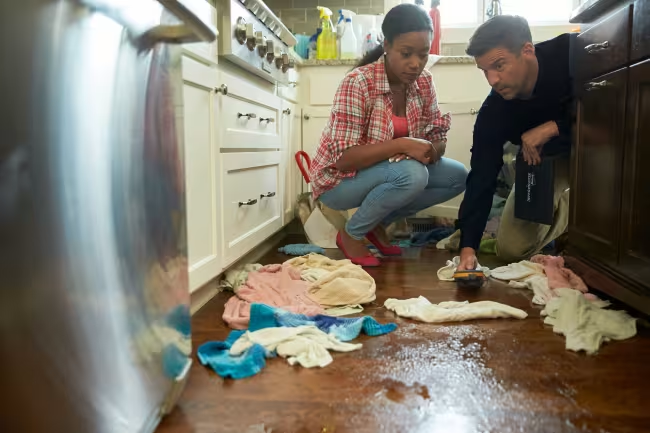
Kitchen and laundry appliance leaks can happen any time of year in Lexington homes. Washer hoses burst mid-cycle and send water across laundry rooms and into nearby hallways. Dishwasher seals and supply lines wear out, and refrigerator ice maker lines crack behind the fridge where no one can see them. Slow leaks under dishwashers and refrigerators are the sneakiest, dripping for weeks until flooring warps, cabinet bases swell, or a musty smell appears. By then, moisture has usually spread into the subfloor and nearby walls.

Water Softener & Hard Water Fitting Leaks
Lexington sits on limestone, and the water that runs through local homes carries plenty of minerals with it. Many homeowners rely on water softeners to manage that hard water, and their tanks, valves, and drain lines can crack or leak over time, often in basements and utility rooms where no one looks. Mineral buildup can also wear down shutoff valves and fittings on appliances throughout the house. These leaks usually start small, so water can collect under floors and behind walls long before anyone notices the damage.
Why Choose ServiceMaster Restoration by BTM for Appliance Leak Cleanup

Under-Cabinet and Under-Floor Detection
Cabinet-Saving Drying
Ceiling Drying After Attic Leaks
Clear Claim Documentation
Why Appliance Leaks Can’t Wait in Lexington Homes
Appliance leaks often start out of sight, under a cabinet or behind a machine, and Kentucky’s humid air keeps that hidden water from drying.
Within 24 hours: Water wicks under laminate and hardwood and into cabinet bases and toe kicks. It can also seep down into subfloors and the ceilings below.
24 to 48 hours: Mold can begin growing on damp drywall, cabinet backs, and subfloors within 24 to 48 hours. Humid summer conditions can speed that growth.
After a week: Flooring cups and buckles, cabinets delaminate, and subfloors weaken. Ceiling drywall may sag, turning a simple cleanup into a remodel.
What to Do Immediately After an Appliance Leak in Your Lexington Home
-
1Step 1Shut Off the Appliance’s Water
Close the shutoff valve behind the washer, under the sink, or on the water heater’s cold supply line. If you can’t find it, shut off the main valve. This is the most important step to stop the spread.
-
2Step 2Cut the Power to the Appliance
Unplug the appliance or switch off its breaker before touching it or standing in water. For gas water heaters, turn the control to off or pilot. Keep everyone out of standing water near outlets.
-
3Step 3Document the Damage for Insurance
Before moving anything, photograph the appliance, the failed hose or part, and the wet floors and cabinets. Clear, detailed photos of the damage are what help speed up your insurance claim.
-
4Step 4Call ServiceMaster Restoration by BTM
Once the water and power are off, call ServiceMaster Restoration by BTM. The sooner drying starts, the more flooring and cabinets can be saved. That’s why we offer 24/7 appliance leak cleanup across Lexington.