Need Commercial Mold Removal in La Crosse, WI?
Commercial properties in La Crosse can face mold from several local moisture sources. HVAC condensation can affect downtown offices, retail spaces, and mixed-use buildings, while post-flood moisture remains a concern near the confluence of the Mississippi, Black, and La Crosse Rivers. La Crosse's manufacturing and distribution base also creates humidity and process-related moisture challenges.
When mold is discovered, commercial containment, negative air, HEPA filtration, and detailed documentation can help control the affected area. Our team works with facility managers to plan remediation around business operations, including after-hours work when appropriate.
Mold can disrupt a commercial property quickly. Call ServiceMaster Recovery by Restoration Holdings for commercial mold remediation

HVAC & Condensation-Driven Mold Remediation
HVAC systems can create hidden moisture problems in La Crosse commercial buildings, particularly where humid summers meet cold winter temperatures. Condensation can accumulate inside wall cavities, above drop ceilings, and around mechanical equipment.
Commercial mold remediation may include inspection of ductwork, HVAC coils, and drain pans, along with thermal imaging to identify moisture concerns. Containment and HEPA air scrubbing help limit the movement of airborne particles while contaminated drywall, ceiling tile, and other affected materials are removed. After remediation, clearance testing can help verify that the affected area meets the applicable project requirements before normal use resumes.
Post-Flood Mold Remediation
Flood exposure can leave commercial buildings with hidden moisture that later supports mold growth. La Crosse sits at the confluence of the Mississippi, Black, and La Crosse Rivers and has experienced repeated significant flooding, including the historic 1965 flood.
After a flood or water intrusion, commercial mold removal begins with moisture mapping to locate affected materials. Structural drying, removal of unsalvageable materials, and EPA-registered antimicrobial treatment may be part of the remediation plan. Because mold can begin developing in damp materials within roughly 24–48 hours, prompt action is important when water remains trapped behind walls, beneath flooring, or inside insulation.

Manufacturing & Distribution Facility Mold Remediation
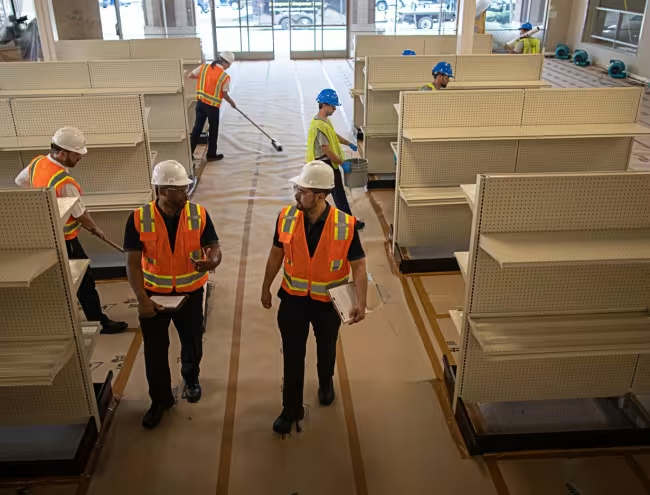
Large manufacturing and distribution facilities face moisture challenges that differ from those found in conventional office buildings. Large floor plates, process water, mechanical systems, and high-volume loading docks can all contribute to persistent moisture conditions.
Commercial mold remediation for these facilities requires a plan built around the property's size and operations. ServiceMaster Recovery by Restoration Holdings can use large-footprint containment, industrial dehumidification, and targeted removal of mold-affected framing and insulation. Remediation can also be phased so unaffected portions of a facility can continue operating while work progresses in isolated areas.
Why Choose ServiceMaster Recovery by Restoration Holdings – La Crosse for Commercial Mold Remediation

Commercial-Grade Containment & Negative Air

Advanced Moisture Mapping

Minimized Business Disruption
Documentation for Insurance & Compliance
Why Commercial Mold Can't Wait in La Crosse Businesses
24–48 hours: spores activate. Damp building materials can begin supporting mold development, particularly when moisture remains trapped in drywall, insulation, flooring, or other porous materials. If affected areas connect to an HVAC system, airborne particles can also spread beyond the original source.
Within one week: air quality degrades. As mold growth progresses, occupants may begin reporting musty odors or other concerns. Tenant and employee complaints can create additional operational, documentation, and liability considerations for property owners and managers.
Beyond two weeks: structural and financial damage compounds. Extended moisture can increase the amount of material requiring removal and replacement. For commercial properties, prolonged disruption can also contribute to tenant disputes, interrupted operations, and additional restoration costs.
The sooner the source and affected materials are addressed, the more manageable the remediation process can be compared with a larger renovation after prolonged damage.
What to Do Immediately After Finding Mold in Your La Crosse Commercial Property
-
1Step 1Isolate the Affected Area
Close doors and restrict access to the affected space. If possible, shut down the HVAC serving that zone to help limit the movement of airborne particles into unaffected areas.
-
2Step 2Restrict Access & Log Complaints
Keep employees, tenants, customers, and other unauthorized personnel away from the affected area. Record reported concerns and relevant observations in writing for your property and remediation records.
-
3Step 3Document Everything for Insurance
Take photos and video of visible mold, water damage, and surrounding conditions before materials are moved or cleaned. Preserve relevant maintenance, leak, and water-intrusion records.
-
4Step 4Call ServiceMaster Recovery by Restoration Holdings – La Crosse
Once the area is safely isolated and documented, contact ServiceMaster Recovery by Restoration Holdings for commercial mold remediation in La Crosse County. A professional assessment can help determine the affected areas and appropriate containment and removal approach.