
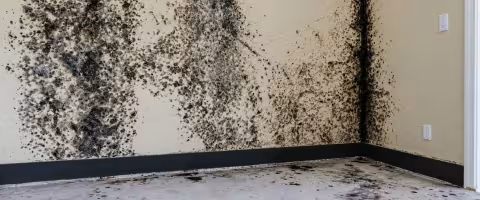

Mold Remediation by an IICRC Certified Firm
Mold growth inside a home or commercial building is more than a cosmetic issue. ServiceMaster of Mid NE is an IICRC Certified Firm providing professional mold remediation, moisture detection, containment, HEPA air filtration, and structural drying throughout Holdrege, Phelps County, and surrounding Central Nebraska communities.
Our experienced restoration professionals use industry-recognized procedures and professional equipment to identify moisture problems, contain affected areas, remove contaminated materials when necessary, and clean affected surfaces.
Proudly Serving Holdrege, Nebraska
ServiceMaster of Mid NE proudly provides professional mold remediation services throughout Holdrege and Phelps County. Whether mold is discovered in a basement, crawlspace, attic, commercial building, or following a water damage event, our restoration professionals can help identify the source of moisture, contain the affected area, and address mold contamination.
As a locally owned Central Nebraska restoration company, we understand the moisture problems that can contribute to mold growth in homes and businesses throughout the Holdrege area. Plumbing leaks, basement moisture, roof leaks, storm damage, high indoor humidity, and water damage that was not completely dried can all create conditions where mold may develop.
Our team serves homeowners, businesses, property managers, schools, healthcare facilities, agricultural operations, and other properties throughout the area.
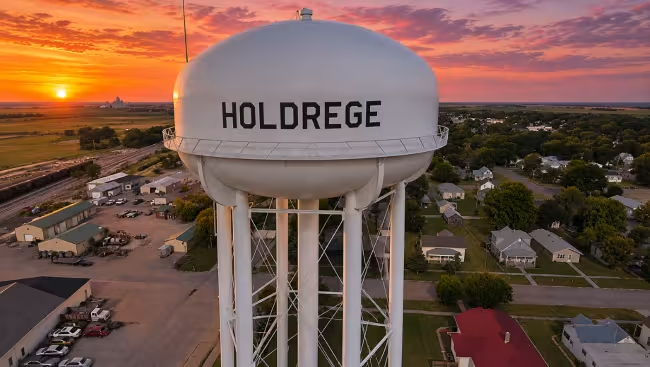
Common Causes of Mold Growth in Holdrege
Mold growth often develops in areas property owners rarely inspect until the problem becomes noticeable. In Holdrege and Phelps County, potential sources of excess moisture include:
- Basement water intrusion
- Leaking pipes and plumbing failures
- Crawlspace humidity and moisture
- Roof leaks and attic condensation
- Flood and storm-related water damage
- HVAC condensation problems
- Poor ventilation and elevated indoor humidity
- Appliance leaks
- Previous water damage that was not completely dried
- Commercial building moisture problems
Many mold problems begin behind walls, underneath flooring, above ceilings, inside insulation, or in other concealed spaces where moisture can remain trapped.
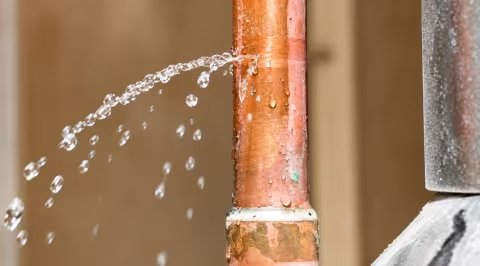
Signs You May Have Hidden Mold
Mold isn't always immediately visible. Some warning signs that may indicate a moisture or mold problem include:
- Persistent musty odors
- Visible staining or discoloration
- Water stains on walls or ceilings
- Soft, deteriorating, or damaged drywall
- Condensation or excessive indoor humidity
- Previous flooding or water damage
- Visible mold growth around building materials
- Recurring moisture in basements, crawlspaces, or other areas
If these conditions are present, determining where the moisture is coming from is an important part of addressing the problem.
Our Mold Remediation Process
Professional mold remediation involves more than simply cleaning visible mold from a surface. The appropriate procedures depend on the location, extent of contamination, affected materials, and underlying moisture conditions.
1. Inspection & Moisture Assessment
We inspect affected areas and use professional moisture-detection equipment when appropriate to help identify moisture sources and determine the extent of affected building materials.
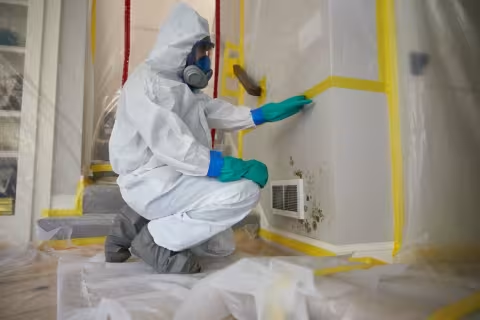
2. Containment
Containment may be established to help prevent mold spores and contaminated dust from spreading into unaffected portions of the property during remediation.
3. HEPA Air Filtration
Professional HEPA-filtered air filtration equipment may be used to capture airborne particles and help maintain controlled conditions within the work area.
4. Removal of Damaged Materials
Porous materials such as drywall, insulation, carpeting, or other materials may need to be removed when they cannot be effectively cleaned or restored.
5. HEPA Vacuuming & Cleaning
Affected surfaces are cleaned using appropriate remediation procedures, including HEPA vacuuming and detailed cleaning when applicable.
6. Structural Drying
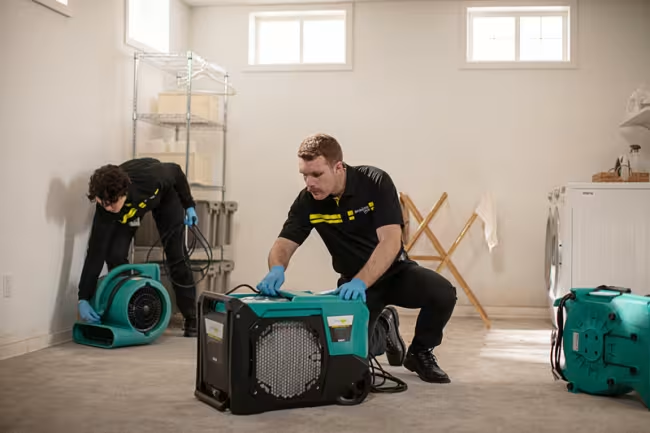
When excess moisture is present, commercial drying and dehumidification equipment may be used to reduce moisture in affected structural materials.
7. Final Inspection
The remediated area is inspected after work is completed to help verify that the remediation procedures have been properly performed.
Why Immediate Mold Removal Matters
Mold problems generally become more difficult to address when excess moisture and contaminated materials are allowed to remain.
- Mold can continue spreading while moisture remains.
- Damage to building materials can become more extensive.
- Additional materials may eventually require removal.
- Indoor environmental concerns can increase.
- Delayed remediation may increase restoration and repair costs.
Addressing both the mold contamination and the underlying moisture problem is important for reducing the potential for additional damage.
Insurance Claims Assistance
Dealing with mold or water damage can be stressful enough without having to navigate the insurance process alone. ServiceMaster of Mid NE works with many insurance providers and can help document affected areas, photograph damage, and provide restoration information that may be needed to support an insurance claim.
Coverage for mold can vary depending on the policy and the cause of the moisture or water damage. Your insurance provider can determine whether a particular loss is covered.
How to Help Prevent Future Mold Growth
Because moisture is necessary for mold growth, controlling excess moisture is one of the most important ways to reduce the likelihood of future problems.
- Maintain appropriate indoor humidity, preferably below 50%
- Repair plumbing leaks promptly
- Properly ventilate bathrooms
- Vent laundry and other moisture-producing areas
- Repair roof leaks and exterior water intrusion
- Dry water-damaged materials as quickly as possible
- Inspect basements and crawlspaces for moisture
- Address condensation around HVAC systems, windows, and pipes
Finding and correcting the source of moisture is especially important. Cleaning visible mold without addressing the moisture problem can allow mold growth to return.

Why Holdrege Property Owners Choose ServiceMaster of Mid NE
For over 40 years, ServiceMaster of Mid NE has helped property owners throughout Central Nebraska with professional cleaning and restoration services.
Homeowners and businesses in Holdrege can rely on our team for:
- IICRC Certified Firm
- Locally owned and serving Holdrege, Phelps County, and Greater Central Nebraska
- 24/7 emergency response for water damage
- Professional moisture detection equipment
- Containment and HEPA air filtration
- Professional mold remediation procedures
- Commercial-grade drying and dehumidification equipment
- Residential and commercial mold remediation
- Insurance claims assistance and restoration documentation
Our team understands how quickly an unresolved moisture problem can lead to additional damage. We focus not only on addressing visible mold contamination but also on identifying moisture conditions that may be contributing to the problem.
This section follows the North Platte page's emphasis on IICRC certification, local service, professional containment and HEPA filtration, commercial drying equipment, residential/commercial capabilities, and insurance documentation.
Mold After Water Damage in Holdrege
One of the most common conditions associated with mold growth is unresolved water damage. Mold can begin developing within 24–48 hours when moisture remains in susceptible building materials.
If your Holdrege property has recently experienced:
- Flooding
- Basement water intrusion
- Burst or leaking pipes
- Appliance leaks
- Sewage backups
- Roof leaks
- Storm-related water damage
…it is important to remove excess water and properly dry affected materials as quickly as possible.
ServiceMaster of Mid NE also provides:
- Water damage restoration
- Water extraction
- Structural drying
- Dehumidification
- Flood cleanup
- Emergency water mitigation services
Professional drying can help address moisture that may remain inside drywall, flooring, insulation, wall cavities, and other building materials even after visible water has been removed.
Mold Remediation for Commercial Properties in Holdrege
Mold problems in commercial buildings can disrupt operations and create concerns for employees, tenants, customers, and facility managers. ServiceMaster of Mid NE provides professional mold remediation for commercial and institutional properties throughout Holdrege and Phelps County.
We work with:
- Apartment complexes and multi-family properties
- Offices
- Retail stores
- Schools
- Medical and healthcare facilities
- Industrial buildings
- Hospitality properties
- Government facilities
- Agricultural and other commercial properties
Our team can help coordinate remediation efforts while working to minimize disruption to normal operations whenever possible. The North Platte page uses this same commercial emphasis and property mix.
Areas We Serve Around Holdrege, Nebraska
In addition to Holdrege, ServiceMaster of Mid NE provides mold remediation and restoration services throughout Phelps County and surrounding Central Nebraska communities, including:
Holdrege
Bertrand
Loomis
Funk
Atlanta
Elwood
Lexington
Cozad
Gothenburg
Phelps County
Dawson County
Frequently Asked Questions About Mold Remediation
How quickly can mold grow after water damage?
Mold can begin developing within 24–48 hours when moisture remains in susceptible building materials. Prompt water removal and structural drying can help reduce the conditions that allow mold growth to develop. This timing is also used in the North Platte page.
Can mold be hidden behind walls?
Yes. Mold problems can occur inside wall cavities, attics, crawlspaces, underneath flooring, above ceilings, or within other concealed areas where moisture is present.
Do you remove mold-damaged drywall and insulation?
Depending on the extent of contamination and condition of the materials, affected drywall, insulation, and other porous materials may require removal rather than cleaning.
Can you help after flooding or burst pipes?
Yes. ServiceMaster of Mid NE provides water mitigation, structural drying, and mold remediation services. Addressing water damage promptly can help reduce the likelihood of additional damage and mold growth.
Do you work with insurance claims?
Yes. We commonly work with insurance-related restoration projects and can help document affected areas and damages during the remediation process. Coverage for mold and water damage depends on the individual insurance policy and cause of loss.
Can Mold Come Back After Remediation?
Yes, mold can return if the underlying moisture problem is not corrected. Professional mold remediation addresses existing mold growth and contaminated materials, but mold spores are naturally present in the environment. If excess moisture from a plumbing leak, roof leak, basement water intrusion, elevated humidity, or another source returns, new mold growth can develop.
At ServiceMaster of Mid NE, mold remediation includes identifying and addressing the source of moisture whenever possible, containing affected areas, removing contaminated materials when necessary, and thoroughly cleaning affected areas using industry-recognized procedures.
Correcting the underlying moisture problem and maintaining appropriate indoor humidity are important steps in reducing the potential for future mold growth. This follows the final educational section of the North Platte page.
Contact ServiceMaster of Mid NE for Mold Remediation in Holdrege
If you suspect mold growth in your home or business, don't wait for the problem to become more extensive. Early remediation can help reduce additional property damage, limit the spread of contamination, and potentially reduce the amount of material that must be removed.
Contact ServiceMaster of Mid NE today for professional mold remediation in Holdrege, Phelps County, and surrounding Central Nebraska communities.