Need Commercial Mold Inspection or Removal for Your Stamford Business?
A musty smell in a break room is one common warning sign. Staining on a ceiling tile is another. A roof leak that never quite got fixed after a nor'easter is a third. Commercial mold problems in Stamford often start small and quiet.
ServiceMaster DSI - Stamford has been a vital part of the restoration industry and holds IICRC and QRV certification. In 2019, the franchise won the Marion E. Wade Award, recognizing it as the top ServiceMaster franchise in North America. Business owners searching for mold remediation near me want a team that understands the local climate. We understand exactly why mold shows up here in the first place.
Every quote starts with a clear mold inspection cost estimate, so there are no surprises later. Stamford sits directly on Long Island Sound, keeping coastal humidity close to downtown and Harbor Point buildings year-round. Commercial buildings near the harbor feel that moisture pressure more than most.
Suspect mold in your Stamford commercial property? ServiceMaster DSI - Stamford responds 24/7 with certified inspection.
Stamford's Unique Mold Risks For Businesses
Stamford's humid coastal climate drives condensation in poorly ventilated commercial spaces year-round. Roof damage left over from past nor'easters adds another layer of risk. As a mold removal company built around this climate, we inspect for both causes on every commercial visit. We also operate offices in Hartford and New London across Connecticut.
Commercial spaces bring their own challenges to a mold inspection. Drop ceilings hide ductwork and plumbing runs that carry moisture between floors. Shared HVAC systems can spread spores between tenant spaces without anyone noticing right away. We inspect these hidden systems as part of every commercial assessment we perform.
Property managers and facilities teams downtown and around Harbor Point often need documentation as much as cleanup. Tenant lease agreements and insurance policies frequently require proof of a proper mold assessment. We provide detailed reports that hold up for both purposes.
Commercial buildings near Cove Island Park and the harbor face extra moisture exposure from the Sound. We factor that proximity into every waterfront-adjacent inspection. Downtown high-rises further from the water see a different, HVAC-driven pattern instead.
Act quickly to prevent costly damage and request your inspection now.
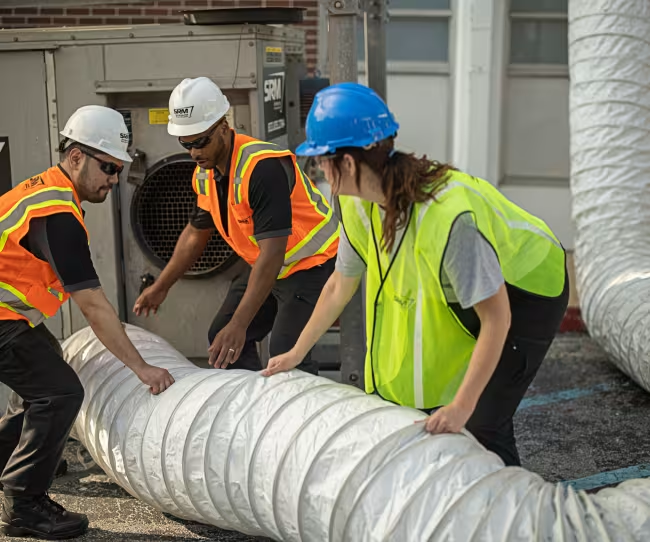
Roof & HVAC-System Mold
Flat and low-slope commercial roofs are common across downtown Stamford, and both are vulnerable to nor'easter damage. Slow leaks can also spread moisture through a building for weeks before anyone notices. Coastal humidity means local HVAC systems already work harder to keep indoor air dry.
Our commercial mold remediation services use moisture meters and thermal imaging to locate hidden water intrusion. We trace the full extent of the problem before removal ever begins. Our team contains the affected area to prevent spores from spreading through ductwork or ceiling systems.
A single missed roof leak can affect several rooms before a stain ever shows up. Water often travels along a joist or duct run before it surfaces on a ceiling tile. Our inspection follows that path back to the actual entry point.
Older & Converted Building Mold
Stamford's older commercial buildings often have ventilation and moisture-management characteristics different from newer construction. That's especially true for downtown's 1960s and 1970s office towers and converted loft or warehouse spaces. Those differences make older buildings more susceptible to hidden mold problems.
We inspect older buildings with the same certified process used everywhere else. That process is adjusted for their specific materials and layout. Our team addresses the underlying moisture source, not just the visible mold. Mold removed without fixing the source almost always comes back within months.
Storage rooms and mechanical spaces in older commercial buildings often go unchecked for months at a time. Mold can spread quietly in these low-traffic areas before anyone notices a smell upstairs. We include these spaces in every commercial inspection we perform.
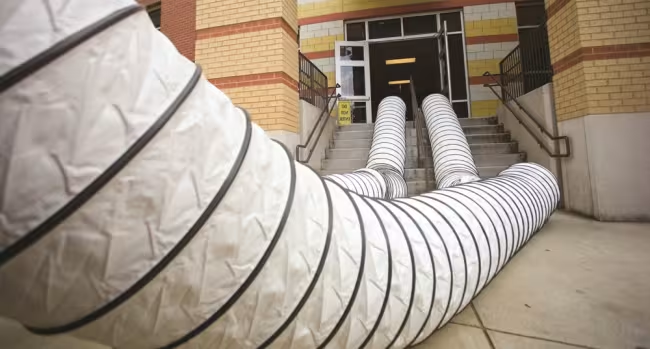
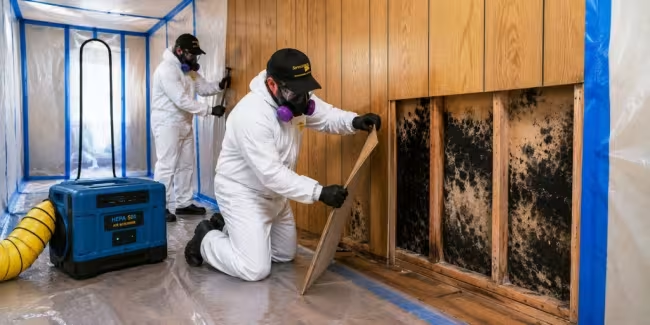
Restroom & Break Area Mold
Restrooms and break rooms are frequent, recurring sources of commercial mold. Poor ventilation is usually part of the cause. A single small plumbing leak is often the rest of it.
Our process targets both the visible mold and the moisture source behind it. We correct ventilation or plumbing issues wherever they're contributing to the problem. Left unaddressed, these spaces tend to develop mold again within just a few months.
Poor indoor air quality from shared-space mold is a genuine employee and tenant health concern. Break rooms with kitchenettes add another steady moisture source most facilities teams overlook. We inspect these fixtures along with the surrounding walls and flooring.
Why Choose ServiceMaster DSI - Stamford for Commercial Mold Inspection & Removal?
Large-Scale Roof & HVAC Inspection
Minimal Business Disruption
Indoor Air Quality Focus
Documentation for Compliance & Liability
Why Mold Can't Wait for Stamford Businesses
Mold in a commercial building affects more people, faster, than in a typical home. That's especially true given Stamford's coastal humidity.
Within 24 to 48 hours: Mold spores can begin colonizing damp materials quickly. This is especially true in spaces with large HVAC systems circulating air widely. This window is smaller than most people expect, and it's the easiest stage to treat.
Weeks of delay: Visible growth and odor typically become noticeable within a couple of weeks. HVAC systems may already be spreading spores to other parts of the building. What started in one room becomes several rooms fast, and cleanup costs rise right along with it.
Months of delay: Unaddressed mold can affect indoor air quality building-wide over time. That creates employee health complaints, tenant concerns, and potential liability exposure. Full remediation at this stage takes much longer to complete, often with sections of the building closed off.
Certified mold inspection today is almost always cheaper than a large-scale remediation project down the road.
What to Do If You Suspect Mold at Your Stamford Business
-
1Step 1Restrict Access to the Affected Area
Limit employee and tenant access until the area has been professionally assessed. This limits exposure while you wait for our team. Close off the space if you're able to.
-
2Step 2Avoid Running HVAC in the Area if Possible
This can help limit spore spread to other parts of the building. Wait until an inspection occurs before resuming normal airflow through that space. A short pause now can prevent a much larger cleanup later.
-
3Step 3Document the Situation
Photograph visible mold and any related moisture damage for insurance and compliance records. Note when you first noticed the problem and where it's located. Include any recent leaks or repairs you're aware of.
-
4Step 4Call ServiceMaster DSI - Stamford
Early inspection limits health, liability, and operational risk. We're available 24/7 across Stamford and Fairfield County. Our team can often schedule an inspection quickly, sometimes the same day.
Don’t let mold disrupt operations—schedule professional remediation now.