For Professional Disaster Recovery Services, You're a Quick Call Away
ServiceMaster DSI – Houston provides commercial disaster restoration for businesses facing water, fire, storm, and environmental damage across the Greater Houston area. When disruption hits, the priority is simple: stabilize the property fast, reduce downtime, and restore operations with minimal loss.
From Downtown high-rises and Midtown office buildings to industrial facilities near the Houston Ship Channel and retail centers along the Galleria corridor, commercial properties across the city face constant exposure to flooding, storms, and humidity-driven damage. Our team responds with scalable restoration solutions designed specifically for business continuity.
We dispatch rapidly to assess damage, contain affected areas, and begin mitigation to protect assets, equipment, and building systems.
What Immediate Risks Are Affecting Houston Businesses After Disaster Damage?
Houston’s climate and infrastructure create a constant exposure to commercial property damage, especially during Gulf Coast storm seasons, sudden rainfall events, and prolonged humidity spikes. For business owners, damage rarely stays contained—it spreads quickly through operations, inventory, and critical building systems.
One of the most common triggers is tropical storm and hurricane-driven flooding, where overflow from Buffalo Bayou, Brays Bayou, or White Oak Bayou pushes water into commercial districts. Businesses near Downtown, East Houston, and low-lying industrial corridors often experience rapid basement or ground-floor flooding within hours of heavy rain.
Another major issue comes from HVAC failures and humidity overload, especially in older commercial buildings. In Houston’s heat, a failed cooling system doesn’t just cause discomfort—it rapidly increases moisture buildup inside walls, ceilings, and inventory storage areas, creating conditions for mold growth.
Fire and smoke events also occur frequently in commercial kitchens, warehouses, and industrial zones near the Port of Houston, where electrical systems, equipment, or production processes can trigger sudden incidents requiring immediate containment.
In these situations, ServiceMaster DSI – Houston responds with commercial-scale extraction, damage containment, moisture detection, and structured cleanup designed to stabilize the property before damage spreads further.
Is Your Houston Business Facing Water, Fire, or Storm Damage Right Now?
If your facility has standing water, smoke damage, or storm intrusion, every minute increases structural and financial loss. ServiceMaster DSI – Houston is equipped to respond across commercial districts citywide, including Downtown Houston, the Energy Corridor, the Texas Medical Center area, and surrounding industrial zones.
Request emergency cleanup services and we’ll respond right away.
How Does Commercial Water and Storm Damage Restoration Work in Houston?
Commercial restoration is not just cleanup—it is structured recovery designed to keep your business operational or return it to service as quickly as possible.
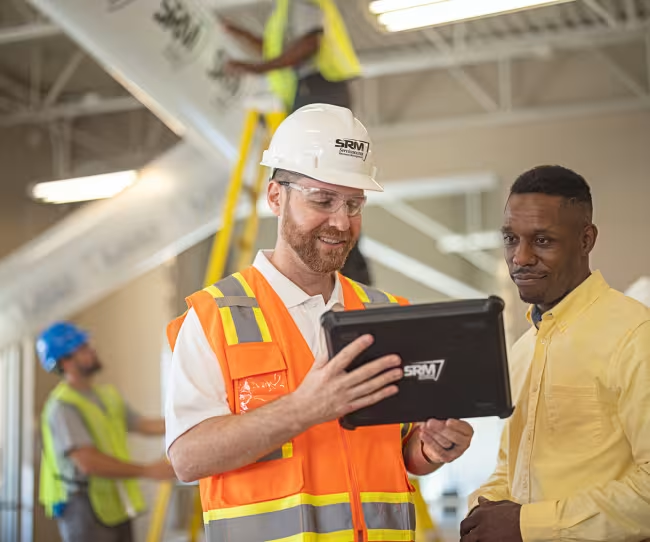
The first phase is emergency response and site stabilization. Once on-site, technicians assess structural safety, identify active leaks or intrusion points, and stop further damage spread. In flood events, this may include immediate water diversion or containment.
Next is commercial water extraction and damage removal, where industrial-grade pumps and truck-mounted systems remove large volumes of standing water. In Houston’s dense commercial environments—especially basements in Downtown buildings or warehouse floors in East Houston—rapid extraction is critical to preventing structural weakening.
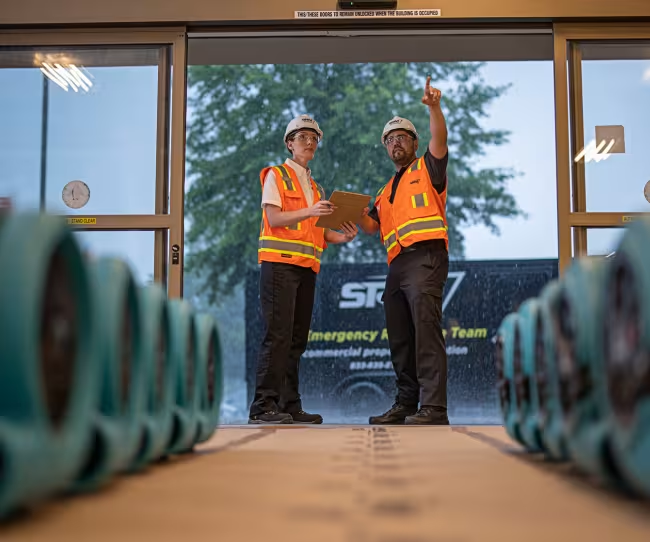
After removal, the focus shifts to structural drying and dehumidification. High-capacity air movers and commercial dehumidifiers are placed strategically to dry flooring systems, wall cavities, insulation layers, and concealed structural materials. Houston’s humidity makes this step especially important, as trapped moisture can linger without professional-grade drying systems.
Finally, the property undergoes cleaning, sanitization, and restoration prep. This includes odor removal, contamination control, and surface cleaning after floodwater, smoke, or sewage exposure. In healthcare, retail, and food service environments, sanitation protocols are adjusted based on industry requirements.
Throughout the process, documentation is created for insurance claims to support faster processing and reduced administrative downtime.
What Types of Commercial Properties in Houston Do We Restore?
Houston’s commercial landscape is diverse, and each property type carries different risks when disaster strikes.
Office buildings in Downtown Houston and Midtown often experience water intrusion from rooftop systems, plumbing failures, or bayou overflow events. Even minor leaks can impact multiple floors due to vertical building systems.
Industrial warehouses near the Houston Ship Channel and East Houston logistics corridors face high flood risk during storm surges and heavy rainfall. These environments also deal with inventory loss, equipment exposure, and structural saturation over large square footage areas.
Healthcare facilities near the Texas Medical Center require highly controlled restoration environments where sanitation and contamination control are critical. Any disruption must be handled carefully to maintain safety standards and operational continuity.
Retail centers, restaurants, and commercial kitchens throughout the Galleria area and surrounding districts often face fire and smoke damage, grease-related incidents, or localized flooding from plumbing failures. These spaces require rapid containment to minimize business interruption and protect customer-facing areas.
Educational and institutional facilities across Houston also rely on structured restoration to recover from storm damage, HVAC failures, and plumbing issues that can disrupt daily operations at scale.
ServiceMaster DSI – Houston adapts restoration strategy based on property type, damage severity, and operational urgency.
Why Choose ServiceMaster DSI – Houston for Disaster Recovery?
Commercial disaster recovery requires speed, precision, and the ability to scale response based on the size and complexity of the loss event.
Large-Scale Commercial Response Capability
Advanced Moisture and Damage Detection
Industrial Structural Drying Systems
Mold Prevention and Containment Strategy
Why Houston Businesses Cannot Delay Disaster Restoration
Houston’s climate accelerates damage progression faster than many other metro areas due to heat, humidity, and frequent storm activity. In commercial environments, this creates a narrow window where damage is still reversible.
Within 24 hours, water begins spreading through flooring systems and inventory. Drywall absorbs moisture, ceiling materials weaken, and electrical systems may become compromised depending on exposure level.
Within 24 to 48 hours, mold activity begins in humid conditions, especially in enclosed commercial spaces without ventilation. Materials like insulation, drywall, and carpet padding begin retaining moisture beyond surface level.
After one week, damage often becomes structural. Framing systems can warp, insulation loses effectiveness, and contaminated water from flooding or sewage intrusion penetrates deeper into building materials, requiring full replacement instead of restoration.
In Houston’s climate, delaying response rarely results in lower cost—it typically results in expanded reconstruction needs and longer downtime.
Call today and talk to a local technician you can trust.
What Should Houston Businesses Do Immediately After Disaster Damage?
Taking the right steps early can significantly reduce loss and speed up restoration.
-
1Step 1Ensure Safety and Shut Down Affected Systems
If safe, turn off electricity, gas, or water systems to prevent further damage or hazards. Do not enter visibly unstable or flooded areas.
-
2Step 2Restrict Access to the Damaged Area
Limit employee and customer access to affected zones to prevent safety risks and reduce liability exposure during active damage conditions.
-
3Step 3Document All Damage for Insurance
Take detailed photos and videos of all impacted areas, equipment, and structural damage before moving or cleaning anything. This helps streamline insurance claims.
-
4Step 4Contact ServiceMaster DSI – Houston
Once safety is confirmed and documentation is complete, contact our emergency restoration team. Rapid response helps reduce downtime, protect assets, and prevent secondary damage from spreading.