

Flexible Disaster Restoration for Madison Homes Needing a Bounce-Back
When a home disaster hits, it rarely stays contained to one area. Water spreads behind walls, smoke travels through HVAC systems, storms compromise roofing and foundations, and moisture creates long-term mold risks. In Madison, WI—where lake-effect weather, freezing winters, and rapid seasonal shifts are part of everyday life—home disasters can escalate quickly without immediate professional response.
ServiceMaster DSI – Madison provides 24/7 home disaster restoration services across Madison and Dane County, helping homeowners recover from water damage, fire and smoke events, storm destruction, and mold contamination. Whether your home is near Lake Mendota, Lake Monona, the Isthmus, Shorewood Hills, or East Madison, our team responds quickly with full-scale restoration solutions designed to stabilize, clean, and rebuild affected spaces.
From basement flooding to fire cleanup and storm recovery, our goal is to reduce damage early and restore homes safely and efficiently.
We stay on standby 365 days a year to ensure Madison residents can rely on our experts when they need urgent assistance after suffering fire, water, or mold damage.
Need Home Disaster Restoration After Water, Fire, or Storm Damage in Madison, WI?
Madison homeowners face recurring disaster risks driven by lakeside geography, seasonal weather extremes, and aging residential systems that can quickly escalate into multi-layer property damage.
Home disasters in Madison often follow predictable environmental patterns tied directly to local conditions. Water damage is one of the most common issues, especially in homes near Lake Mendota, Lake Monona, and Monona Bay, where groundwater levels rise quickly after heavy rainfall or snowmelt. Basements in these areas are especially vulnerable to seepage, sump pump failure, and foundation leaks.
In older neighborhoods such as the Isthmus, Vilas, and near UW–Madison, aging plumbing systems increase the likelihood of burst pipes during winter freezes. A single pipe failure can quickly affect multiple rooms, flooring systems, and structural materials.
Storm damage is another frequent issue in Madison. Summer thunderstorms bring wind-driven rain that can damage roofs, siding, and windows, particularly in residential areas like Shorewood Hills, Fitchburg, and East Madison. Clogged gutters and saturated soil often lead to basement flooding and foundation moisture intrusion.
Fire-related disasters, while less frequent than water damage, can be equally devastating. Kitchen fires, electrical malfunctions, and appliance failures can spread smoke residue throughout HVAC systems and multiple rooms, requiring specialized cleaning and deodorization.
ServiceMaster DSI – Madison provides integrated disaster restoration services, including water extraction, fire and smoke cleanup, storm recovery, structural drying, odor removal, and mold remediation. Each response is designed to address both immediate damage and hidden risks that can develop after the initial event.
Call today and talk to a local technician you can trust.

Storm Damage, Flood Cleanup & Water Intrusion in Madison Homes
Madison’s lake-influenced storms, rapid snowmelt cycles, and heavy seasonal rainfall create frequent and widespread water intrusion risks in residential properties.
Madison’s geography plays a major role in how storm-related home disasters develop. Positioned between Lake Mendota and Lake Monona, the city experiences fluctuating groundwater levels and fast-moving storm systems that can overwhelm residential drainage systems.
During spring and summer, intense rainfall can saturate soil quickly, leading to basement seepage and foundation leaks in low-lying neighborhoods near Tenney Park, Monona Bay, and the Yahara River corridor. In winter and early spring, rapid snowmelt can create similar conditions when frozen ground prevents proper drainage.
Storm damage in Madison homes often includes:
- Roof leaks caused by wind-driven rain
- Basement flooding from overwhelmed drainage systems
- Window and siding intrusion during severe storms
- Attic moisture accumulation from compromised roofing systems
ServiceMaster DSI – Madison responds with high-capacity water extraction systems, structural drying equipment, and moisture detection tools to identify both visible and hidden water damage. Moisture often spreads behind walls, under flooring, and into insulation layers, where it can cause long-term structural issues if not properly addressed.
All storm-related restoration work includes stabilization, drying, and documentation to support insurance claims and ensure a full recovery process.
Burst Pipe, Frozen Plumbing & Winter Water Damage in Madison Homes
Madison’s extended freezing temperatures and older housing stock make burst pipes and plumbing failures a major source of home disaster restoration needs.
Winter in Madison is long and often severe, with sustained freezing temperatures from December through February. These conditions place significant stress on residential plumbing systems, particularly in older homes located near Capitol Square, Monroe Street, and UW–Madison neighborhoods.
When temperatures drop below freezing, water inside pipes can freeze, expand, and eventually cause pipes to rupture. Even a short freeze event can result in extensive water damage when pipes are located in uninsulated walls, basements, or crawl spaces.
A single burst pipe can release hundreds of gallons of water into a home within hours, affecting:
- Finished basements
- Living rooms and bedrooms
- Electrical systems and outlets
- Flooring and structural framing
ServiceMaster DSI – Madison provides rapid response for burst pipe emergencies, including:
- Emergency water extraction and removal
- Demolition of saturated drywall and insulation
- Structural drying using commercial air movers and dehumidifiers
- Moisture detection using thermal imaging and moisture meters
Hidden moisture is one of the most serious risks following burst pipe events, especially in Madison homes with older construction. If not fully removed, it can lead to mold growth and long-term structural deterioration.


Fire Damage, Smoke Cleanup & Odor Removal in Madison Homes
Fire and smoke damage in Madison homes extends beyond visible burn areas, requiring deep cleaning and deodorization to restore safe indoor conditions.
Home fires in Madison can result from kitchen accidents, electrical system failures, heating equipment malfunctions, or appliance issues. Even when fire damage is localized, smoke and soot often spread throughout the home via HVAC systems and open air pathways.
Smoke residue can affect:
- Walls, ceilings, and flooring
- HVAC ducts and ventilation systems
- Furniture and personal belongings
- Air quality throughout the home
Homes in older Madison neighborhoods such as the Isthmus and near UW–Madison campus housing may experience more extensive smoke spread due to interconnected ventilation systems and older construction materials.
ServiceMaster DSI – Madison provides comprehensive fire and smoke restoration, including:
- Soot and residue removal from affected surfaces
- Deep cleaning of structural components
- Odor neutralization and air purification
- Removal of damaged materials when necessary
Fire damage restoration also includes careful attention to hidden smoke particles that can linger in walls, insulation, and duct systems long after visible damage is addressed.
Mold Damage & Indoor Air Quality Issues in Madison Homes
Madison’s humidity, lake proximity, and seasonal moisture cycles make mold growth a common secondary disaster following water damage events.
Mold in Madison homes often develops as a secondary issue after water intrusion, especially in basements and crawl spaces near Lake Mendota, Lake Monona, and the Yahara River system. High humidity levels combined with poor ventilation create ideal conditions for microbial growth.
Mold commonly develops after:
- Basement flooding or seepage
- Burst pipe water damage
- Roof leaks or attic moisture buildup
- Storm-related water intrusion
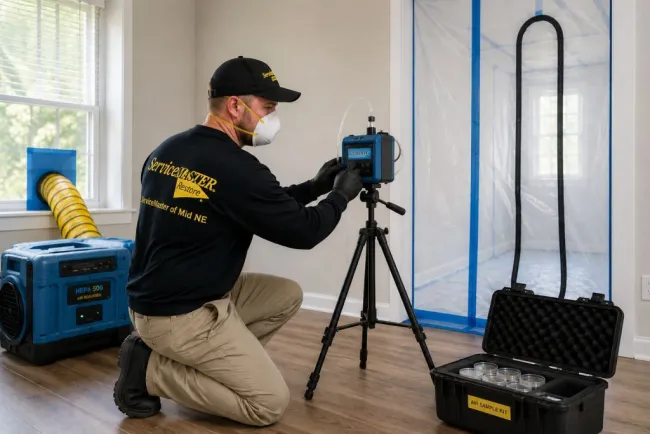
ServiceMaster DSI – Madison provides mold remediation services that include:
- Moisture source identification and removal
- Containment of affected areas
- Removal of contaminated materials
- Cleaning and treatment of affected surfaces
- Structural drying to prevent recurrence
Because mold spores can begin developing within 24 to 48 hours in damp conditions, fast response is critical to preventing widespread contamination.
Why Disaster Damage Escalates Quickly in Madison Homes
Madison’s climate, lake-effect moisture, and seasonal extremes accelerate how quickly home disasters spread and worsen.
Madison homes are exposed to constant environmental change throughout the year. These conditions cause disaster events to escalate rapidly if not addressed immediately.
Within 24 hours: Water begins soaking into drywall and flooring, smoke residue begins bonding to surfaces after fire events, and structural materials start absorbing moisture.
Within 24–48 hours: Mold growth becomes a risk in damp environments, especially in basements near Lake Mendota and Monona. Smoke odors begin spreading through HVAC systems, and water damage spreads behind walls and flooring.
After 7 days: Structural damage becomes more severe. Framing may warp, insulation loses effectiveness, and contaminated materials may require full replacement depending on exposure levels.
In Madison homes, delayed response significantly increases repair costs and reduces the likelihood of salvaging materials and belongings.
Request emergency cleanup services and we’ll respond right away.
What to Do Immediately After a Home Disaster in Madison, WI
Quick, structured action reduces damage severity and improves restoration outcomes for Madison homeowners facing disaster events.
-
1Step 1Ensure Safety and Stop the Source if Possible
If safe, shut off the main water supply or electrical source depending on the type of disaster. Do not enter unsafe areas affected by fire, flooding, or structural instability.
-
2Step 2Turn Off Electricity in Affected Areas
If water or fire damage is present, shut off power at the breaker panel to affected zones. Avoid contact with wet electrical systems or smoke-damaged wiring.
-
3Step 3Document All Damage for Insurance Purposes
Take photos and videos of all affected areas, belongings, and visible damage before beginning cleanup. Documentation helps streamline insurance claims and recovery planning.
-
4Step 4Call ServiceMaster DSI – Madison
Once the home is safe, contact the 24/7 disaster restoration team. Fast response helps limit secondary damage, reduce repair costs, and accelerate recovery timelines.
Madison’s Local Environment and Its Impact on Home Disasters
Madison’s geography plays a major role in how home disasters develop and spread. The city sits between Lake Mendota and Lake Monona, with the Yahara River system influencing groundwater levels and drainage patterns across residential neighborhoods.
Seasonal weather changes—especially winter freezes, spring snowmelt, and summer storms—create continuous stress on homes throughout Dane County. Older neighborhoods near the UW campus and downtown Madison face additional risk due to aging infrastructure and dense housing layouts.
Understanding these local conditions allows ServiceMaster DSI – Madison to respond more effectively, anticipating how water, fire damage, or storm events will move through different residential structures.
