Commercial Water Damage Response in Champaign, IL
When water disrupts your business in Champaign, IL, every minute of downtime affects operations, revenue, and customer trust. ServiceMaster DSI - Champaign provides rapid commercial water damage restoration for offices, retail centers, warehouses, healthcare facilities, and multi-tenant properties throughout Champaign County.
From burst pipes in downtown office buildings to storm flooding near University Avenue and Neil Street, commercial water emergencies require immediate action and specialized equipment. Our team is equipped to respond quickly with industrial water extraction, structural drying, and full-scale mitigation designed to reduce downtime and protect business continuity.
Champaign’s weather patterns—heavy spring storms, humid summers, and freezing winter temperatures—create frequent conditions for commercial water intrusion. Whether your facility is near the University of Illinois campus, Parkland College corridors, or industrial zones along I-74, water damage can escalate fast without professional intervention.
Call now for emergency commercial water restoration and rapid mitigation support in Champaign County.
What to Do When Your Champaign Business Has Water Damage
Commercial water damage in Champaign often begins with predictable local triggers, but escalates quickly due to building size, shared infrastructure, and occupancy demands.
Many properties near downtown Champaign and Green Street experience basement flooding after heavy rain events overwhelm drainage systems. Older office buildings and mixed-use structures can suffer pipe bursts during freezing winter nights when temperatures drop sharply across Central Illinois. Retail centers and warehouses near University Avenue or the I-57 corridor may also experience roof leaks or HVAC system failures during seasonal weather shifts.
In each case, water spreads rapidly through flooring systems, drywall, insulation, and shared mechanical systems. That’s why immediate response focuses on stopping the source, identifying hidden moisture, and preventing cross-contamination between business units or tenant spaces.
ServiceMaster DSI - Champaign uses advanced moisture detection tools, high-capacity extraction systems, and structured drying protocols to stabilize commercial environments quickly. The goal is not just cleanup—it’s operational recovery with minimal disruption.
We align every response with Champaign’s local building conditions, including older masonry structures downtown, newer campus-adjacent commercial developments, and large-scale industrial facilities across Champaign County.
Get emergency water damage help now before the problem gets worse.
Storm, Plumbing, and Building Water Intrusion Response
Commercial water damage in Champaign rarely comes from a single cause. It typically stems from weather, plumbing failures, or structural vulnerabilities tied to building age and design.
Storm & Flood Intrusion in Commercial Buildings
Champaign’s seasonal storm systems often bring intense rainfall that overwhelms drainage infrastructure. Low-lying commercial basements near downtown Champaign, University Avenue corridors, and mixed-use developments are especially vulnerable.
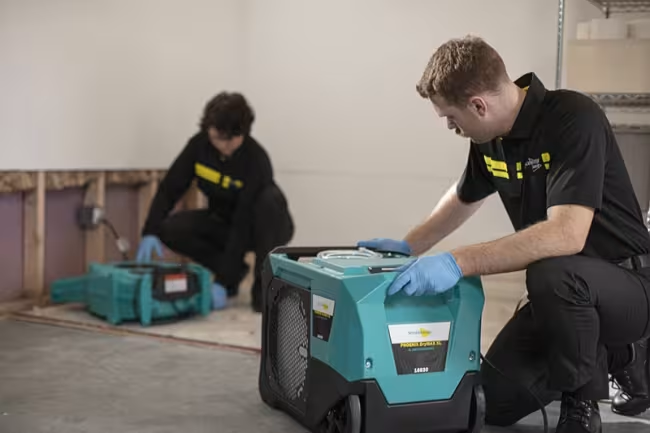
When stormwater enters a building, it can spread quickly into electrical systems, flooring, inventory storage areas, and tenant spaces. Our response focuses on immediate extraction using industrial-grade equipment, followed by structural drying to stabilize affected areas before secondary damage occurs.
We also prioritize moisture mapping to locate hidden saturation behind walls and under flooring systems, ensuring no trapped moisture remains after visible water is removed.
Burst Pipes and Mechanical Failures in Winter Conditions
Central Illinois winters bring sustained freezing temperatures that place stress on commercial plumbing systems. Older office buildings, warehouses, and campus-adjacent facilities are particularly at risk when pipes run through exterior walls, ceilings, or uninsulated mechanical rooms.
A single pipe burst can release hundreds of gallons of water into multiple floors, affecting offices, retail spaces, and shared infrastructure. In multi-tenant buildings, damage often spreads quickly through shared walls and utility systems.
Our restoration process includes rapid extraction, controlled demolition of saturated materials, and structural drying designed to protect framing, insulation, and mechanical systems. Moisture detection is used continuously to locate hidden water that can lead to mold growth or structural deterioration.

Roof Leaks and Building Envelope Failures
Flat roofing systems common in Champaign commercial properties are vulnerable to seasonal freeze-thaw cycles and heavy precipitation events. Ice dams, membrane failures, and storm-driven roof penetrations can introduce water into upper floors, inventory storage areas, and office spaces.
Left unaddressed, roof leaks can compromise ceilings, electrical systems, and HVAC infrastructure. Our team responds with targeted containment, moisture tracking, and drying strategies that focus on preserving structural integrity and minimizing operational downtime.
Each of these scenarios requires fast stabilization to prevent cascading damage throughout commercial buildings in Champaign County.
Why Choose ServiceMaster DSI for Commercial Water Restoration in Champaign
Commercial water damage requires more than cleanup—it requires precision, speed, and systems designed for large-scale environments.
Advanced Moisture Detection
High-Capacity Water Extraction Systems
Structural Drying & Environmental Monitoring
Mold Prevention Built Into Every Response
Why Commercial Water Damage in Champaign Escalates Quickly
Champaign’s climate and building environment create conditions where commercial water damage can intensify rapidly if not addressed immediately.
Within 24 hours:
Drywall begins to absorb moisture, ceiling tiles sag or collapse, and electrical systems in offices or retail spaces may become unsafe. Inventory and equipment stored in lower levels begin to degrade.
24 to 48 hours:
Mold spores activate in damp environments, especially in humid summer conditions common across Champaign County. Water continues spreading behind walls and into shared tenant systems in multi-use buildings near downtown and campus corridors.
After one week:
Structural materials begin to weaken. Framing can warp, insulation loses effectiveness, and contaminated water may spread into HVAC systems, increasing cleanup complexity and long-term repair costs.
Fast response is the difference between localized cleanup and full-scale commercial restoration.
ServiceMaster DSI - Champaign provides rapid-response commercial water restoration across Champaign County—available when your business cannot afford delays.
What Champaign Businesses Should Do Immediately After Water Damage
A structured response helps reduce losses and improve recovery speed.
-
1Step 1Shut Off the Water Source
If the source is identifiable and safe to access, stop the flow immediately. This may include shutting off a main valve, isolating a mechanical system, or stopping a burst pipe to prevent further spread.
-
2Step 2Secure Electrical Systems and Hazard Areas
Turn off power to affected zones if water has reached outlets, wiring, or equipment. Avoid contact with standing water in offices, server rooms, or mechanical areas where electrical risk may be present.
-
3Step 3Document All Damage for Insurance Purposes
Take clear photos and videos of affected areas, equipment, inventory, and structural damage before cleanup begins. Documentation helps streamline insurance claims and supports faster recovery processing.
-
4Step 4Contact ServiceMaster DSI - Champaign Immediately
Once the area is safe, call for emergency commercial restoration support. Rapid response limits downtime, prevents secondary damage, and helps restore business operations as quickly as possible. Our team serves commercial properties across Champaign County.