Need Commercial Mold Removal in Columbia, TN?
Columbia businesses face several conditions that can contribute to commercial mold growth. HVAC condensation can create moisture problems in downtown offices, insurance buildings, and healthcare facilities. Severe weather can damage roofs and building envelopes, allowing water intrusion; in May 2024, an EF-3 tornado crossed Maury County after touching down east of Columbia along the Duck River.
Manufacturing and automotive operations also face moisture challenges from large floor plates, process water, and high-volume production. Maury County's industrial base includes General Motors Spring Hill Manufacturing and numerous manufacturing and production businesses.
Commercial remediation may involve containment, negative air, HEPA filtration, moisture documentation, and carefully planned removal. Where possible, work can be coordinated around business hours to reduce disruption.
Need Commercial Mold Remediation? Call Now

HVAC & Condensation-Driven Mold Remediation
Columbia's offices, insurance facilities, and healthcare buildings operate year-round through humid summers and cooler winters, creating opportunities for condensation inside wall cavities, above drop ceilings, and around HVAC components.
Commercial mold remediation starts with finding the moisture source rather than simply cleaning visible growth. Our process may include thermal imaging, moisture readings, and inspection of ductwork, HVAC coils, and drain pans.
Once affected areas are identified, containment and HEPA air scrubbing can help control airborne particles while contaminated drywall, ceiling tile, insulation, and other materials are removed as appropriate. Post-remediation clearance testing can provide documentation that the affected area has been addressed.
Post-Storm Mold Remediation
Severe weather can create commercial mold problems long after a storm passes. The May 2024 EF-3 tornado that moved across Maury County caused significant structural and roof damage, illustrating how quickly severe weather can compromise a building envelope.
Roof damage, broken openings, and water intrusion can leave commercial interiors vulnerable to mold growth. Our response can include moisture mapping, structural drying, removal of unsalvageable materials, containment, and EPA-registered antimicrobial treatment where appropriate.
Mold spores can begin activating within roughly 24–48 hours when moisture and other favorable conditions are present. Addressing water intrusion and damp materials promptly can help limit the scope of subsequent remediation.
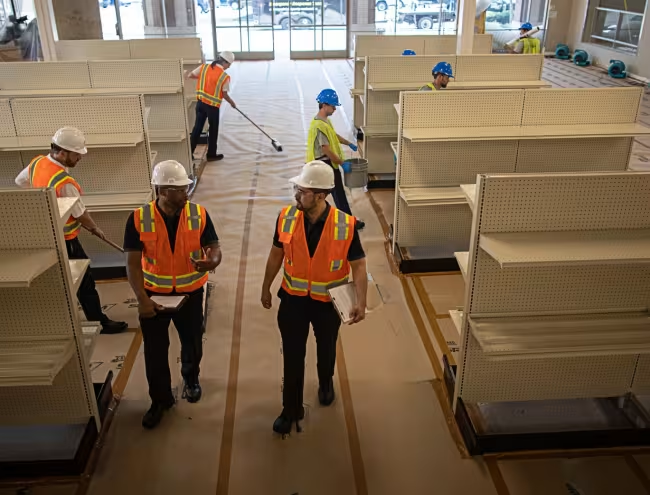

Automotive & Advanced Manufacturing Facility Mold Remediation
Maury County has a significant automotive and advanced manufacturing presence, including General Motors Spring Hill Manufacturing and a network of manufacturing, logistics, and supplier operations.
Large industrial floor plates, process water, production activity, and difficult-to-access areas can create persistent moisture challenges. Commercial mold remediation in these environments requires planning around the facility's size, equipment, personnel, and operating schedule.
Our response can include large-footprint containment, industrial dehumidification, and mold removal from affected framing, insulation, and other materials. Where conditions allow, remediation can be phased so portions of a facility remain operational while affected areas are addressed.
Why Choose ServiceMaster by Stechyn & Son for Commercial Mold Remediation?

Commercial-Grade Containment & Negative Air

Advanced Moisture Mapping

Minimized Business Disruption
Documentation for Insurance & Compliance
Why Commercial Mold Can't Wait in Columbia Businesses
24–48 hours: spores activate. Damp drywall, insulation, carpeting, and other porous materials can provide conditions for mold growth to begin. If contaminated air is circulated through an HVAC system, affected particles may also spread beyond the original moisture source.
Within one week: air quality degrades. As contamination increases, employees or tenants may begin reporting musty odors or other concerns. Delayed action can also make it harder to isolate the affected area and may increase operational and liability concerns.
Beyond two weeks: structural and financial damage compounds. Persistent moisture can increase the amount of material requiring removal and replacement. Extended disruption can also create tenant concerns, scheduling complications, and additional property costs.
The difference between a contained remediation project and a larger renovation can depend on how quickly the moisture problem is identified and addressed.
What to Do Immediately After Finding Mold in Your Columbia Commercial Property
-
1Step 1Isolate the Affected Area
Close doors and limit movement through the suspected area. If appropriate and safe, shut down HVAC serving the affected zone to help prevent potentially contaminated air from circulating.
-
2Step 2Restrict Access & Log Complaints
Keep employees, tenants, customers, and visitors out of the affected area. Document reported concerns and the locations where they were reported rather than relying on verbal accounts alone.
-
3Step 3Document Everything for Insurance
Take photos and videos before materials are moved, cleaned, or discarded when it is safe to do so. Record visible water damage, affected materials, and the apparent source of moisture.
-
4Step 4Call ServiceMaster by Stechyn & Son
Once the area is safely isolated and documented, contact ServiceMaster by Stechyn & Son for commercial mold remediation assistance. Our 24/7 response serves Columbia and surrounding Maury County communities.