

Does Your Cedar Rapids Facility Have a Mold Problem?
Cedar Rapids has long been one of the Midwest's major grain processing centers. The corn and oat processing plants, food manufacturers, and warehouses that anchor the local economy run on steam, water, and constant humidity. Inside those facilities, warm, moist air meets cold surfaces year-round, leaving condensation on walls, ceilings, ductwork, and storage areas where mold can quietly take hold. The Cedar River adds another layer of risk. Past floods have reached deep into downtown office buildings, riverfront businesses, and the converted warehouses of NewBo and Czech Village, and many of those structures still carry moisture concerns in their basements and lower levels. Across the city's offices, healthcare facilities, manufacturing plants, and distribution centers, flat roofs take a beating from severe thunderstorms, hail, and derecho-strength winds in summer. Winter brings ice dams and freeze-thaw cycles that open seams and let water seep in. Commercial mold remediation begins by finding where that moisture is coming from and how far the problem has spread. From office building mold inspection to industrial mold cleaning services, ServiceMaster by Rice – Cedar Rapids handles assessment, containment, and safe removal. We're proud to help Cedar Rapids businesses keep their facilities safe for the people who work in them.
Found Mold at Your Cedar Rapids Property? We’ll Inspect the Space and Pinpoint the Problem. Call Now.
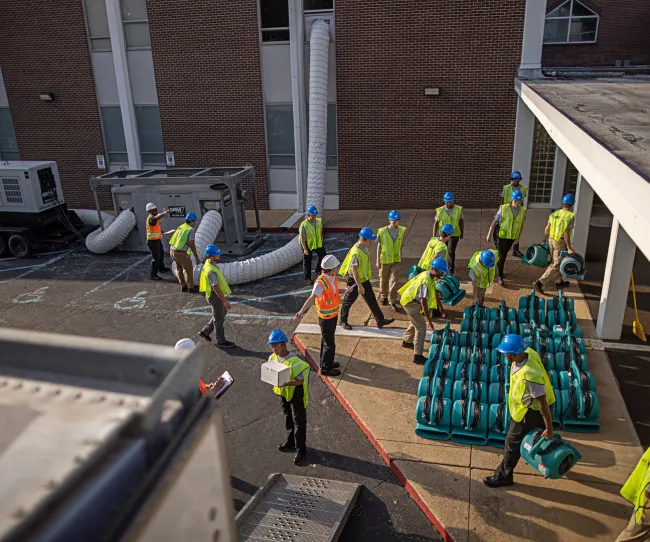
Commercial Flood and Storm Response
When water gets into a commercial property, mold can follow within a day or two. Cedar River floods have reached downtown offices and businesses in New Bohemia before, soaking lower levels and leaving moisture trapped in walls and floors for weeks. Severe windstorms have also torn roofing from buildings across the city, sending rain into ceilings, insulation, and tenant spaces. In multi-tenant buildings, water travels through shared walls and floors, so a problem in one suite can quickly become everyone's concern. We move fast with water extraction and structural drying to keep moisture from turning into mold.
Office Building Moisture Control
Finding mold at work raises immediate questions about the space and the people who spend their days in it. Cedar Rapids winters put flat roofs on office buildings through months of freezing and thawing, and small leaks can soak ceiling tiles and insulation without anyone noticing. Cold exterior walls meet warm indoor air, and condensation builds behind drywall, around windows, and in corner offices. When summer humidity arrives, those damp areas can turn into mold growth that shows up as stained tiles, musty conference rooms, or employees complaining of headaches and allergy symptoms. By the time it's visible, it's often spread further.


Industrial and Food-Processing Facility Mold Cleaning
Cedar Rapids' grain and food-processing facilities face mold risks that most buildings never see. Steam, wash-down water, and constant humidity from production lines leave condensation on walls, ceilings, and equipment year-round. Grain dust settles into corners, beams, and storage areas, giving mold a food source wherever moisture collects. Large warehouses and manufacturing floors have high ceilings and hidden spaces where growth can spread unnoticed. For food-adjacent environments, mold can threaten product quality, inspections, and customer trust. Stopping production to deal with it isn't always an option, so problems can linger longer than they should.
Why Cedar Rapids Businesses Choose ServiceMaster by Rice

Find the Problem Fully
Protect More of Your Property
Know Where Recovery Stands
Reduce Business Downtime
When Mold Has Time to Spread
In humid processing environments and older downtown commercial properties, a little moisture in the wrong place has the potential to become a much larger facility concern.
Within 24–48 hours: Damp materials give mold an opening. Following water damage, spores already present in the building can colonize damp ceiling tiles, insulation, or wall cavities when materials stay wet.
Within 1–2 weeks: An isolated problem could reach the rest of your facility. Continued moisture allows growth to spread across susceptible materials, while shared ventilation raises concerns about spores reaching other occupied spaces.
After a month or more: A larger problem means a more extensive cleanup. As moisture and mold remain, indoor air quality suffers, and remediation extends to more materials and areas of the property.
How to Handle Mold in Your Cedar Rapids Facility
-
1Step 1Avoid Disturbing the Mold
Skip the scrubbing and spraying. Disturbing visible growth releases spores into the air, \ spreading contamination through shared ventilation systems and into other occupied areas of your facility.
-
2Step 2Restrict Access to the Area
Keep employees and tenants away from affected spaces. Where practical and safe, have facility personnel isolate the affected ventilation zone until a professional determines the appropriate containment measures.
-
3Step 3Document What You See
Photograph visible mold, note musty odors, and record when you first noticed the problem. These details support moisture investigations, insurance documentation, and communication with tenants or employees.
-
4Step 4Contact ServiceMaster by Rice - Cedar Rapids
Schedule an inspection of your Cedar Rapids facility. A prompt assessment identifies the moisture source and extent of contamination, giving your business a chance to lower remediation costs and operational interruptions.