Need Commercial Mold Removal in St. Cloud, MN?
St. Cloud’s commercial buildings sit in a climate where moisture has plenty of chances to sneak in and stay awhile. Heavy summer rainfall, spring snowmelt, and long winter freeze-thaw cycles can leave roofing, foundations, exterior walls, and other building components vulnerable to moisture intrusion.
The established corridors along Roosevelt Road, Highway 15, Highway 10, and Division Street/Highway 23 include aging commercial buildings, multi-tenant retail centers, professional offices, and newer development. Downtown adds historic commercial buildings, while the I-94 and airport-area business parks accommodate warehouses, manufacturing, logistics, and other industrial uses.
A small roof leak above a suspended ceiling, plumbing failure inside a wall, or stormwater intrusion around a loading area can leave materials damp without producing an obvious problem right away. In a warehouse, moisture may reach cardboard inventory or insulation. In an office, it may linger above ceiling tiles or behind finished walls. In manufacturing spaces, moisture around large building envelopes or equipment areas can be especially difficult to spot.
St. Cloud’s combination of established commercial buildings, expanding industrial areas, and extensive infrastructure means mold problems can look very different from one property to another. When musty odors, staining, recurring dampness, or unexplained moisture appear, the visible clue may be only a small piece of a much larger moisture problem.
Mold Issues Disrupting Your St. Cloud Business? Call Now for Locally Trusted Remediation.
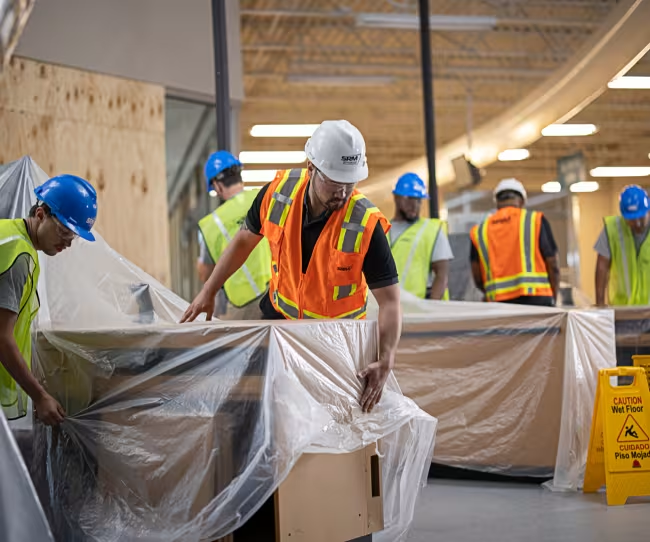
Commercial Mold Inspection & Hidden Moisture in St. Cloud
St. Cloud’s commercial buildings face a long cycle of moisture from heavy summer rainfall, snowmelt, and winter temperature swings. The city’s extensive stormwater network, with about 210 miles of pipe, 8,300 storm drains, and 159 treatment ponds, helps move runoff toward the Mississippi River, Sauk River, and wetlands, but intense precipitation can still create localized moisture problems. In older offices and retail buildings, moisture may linger around roofs, plumbing, walls, or below flooring. Newer industrial and warehouse properties can have their own vulnerable areas around loading spaces and large building envelopes. Once damp materials stay wet, mold can develop out of sight.
Commercial Mold Risks in Offices, Retail & Medical Spaces
St. Cloud’s mix of offices, retail centers, healthcare facilities, and multi-tenant buildings creates plenty of places where a small moisture problem can hide. Around the Division Street corridor and established commercial areas, older buildings may have aging roofing, plumbing, or building materials that are less forgiving when water gets inside. Midtown Square Newer professional and medical buildings bring different concerns, including moisture trapped behind finished walls or above suspended ceilings. A slow plumbing leak, roof intrusion, or condensation around cold surfaces can remain unnoticed until musty odors, staining, or damaged materials appear. In shared commercial spaces, that hidden moisture can affect more than the room where the original problem started.
Industrial & Warehouse Mold Risks Along the I-94 Corridor
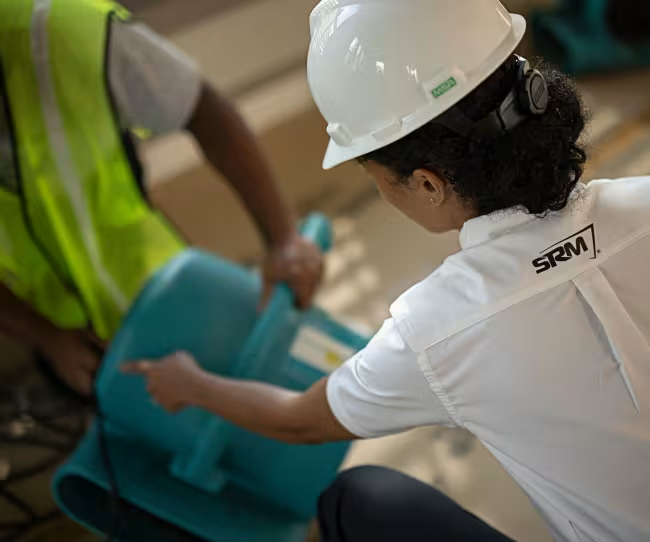
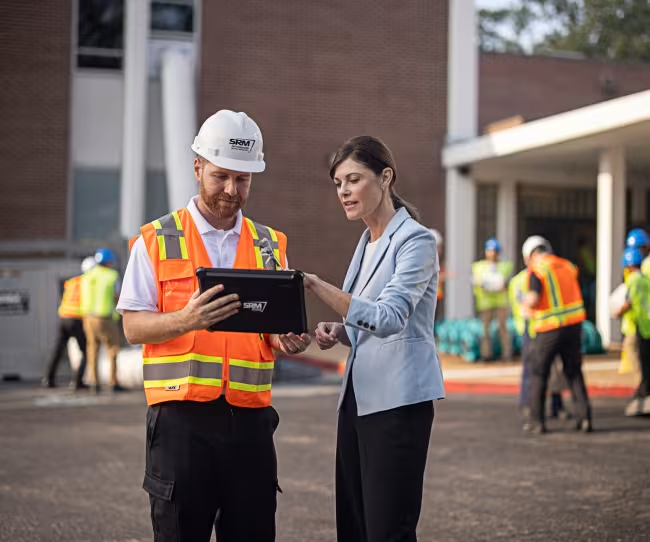
St. Cloud’s industrial landscape includes large warehouses, distribution centers, manufacturing facilities, and freight operations where moisture problems can affect expansive spaces and valuable materials. Facilities around the I-94 and industrial corridors include large-scale distribution and manufacturing operations such as SpartanNash Distribution Center and Grede. Heavy rainfall, roof leaks, plumbing failures, and water entering around loading areas can leave portions of these buildings damp without immediately attracting attention. Stored products, cardboard packaging, insulation, and other porous materials can provide places for mold to establish itself. In a large facility, the challenge is often not spotting moisture, but recognizing where it has traveled and how long affected materials have remained damp.
Why St. Cloud Businesses Trust Our Commercial Mold Remediation Services
Rapid Response for Business Continuity
Multi-Space Contamination Expertise
Industrial-Grade Equipment
Source-Focused Remediation
Why Commercial Mold Must Be Addressed Quickly in St. Cloud
Mold growth can progress quickly when moisture conditions remain unresolved. Delaying professional remediation may allow contamination to spread and increase the complexity of restoration.
Within days: Mold may begin spreading across hidden surfaces, including drywall, insulation, and other building materials.
Within weeks: Structural materials and affected areas may become more extensively contaminated, requiring larger remediation efforts.
Over time: Indoor air quality concerns may increase, business operations may be disrupted, and restoration costs may become more significant.
What to Do if You Suspect Mold in Your St. Cloud Business
-
1Step 1Limit Air Circulation
If you suspect mold contamination in HVAC systems, ceilings, or other areas connected to air circulation, avoid actions that may spread airborne particles throughout the building.
-
2Step 2Identify Moisture Sources
Look for signs of water intrusion, including leaks, condensation, plumbing issues, or areas affected by previous water damage. Identifying the moisture source is essential for long-term remediation.
-
3Step 3Restrict Access
If possible, limit employee and customer access to affected areas until the space can be evaluated. Reducing traffic can help prevent additional disturbance of contaminated materials.
-
4Step 4Call ServiceMaster Restoration Services - St. Cloud-Waite Park
Contact our St. Cloud commercial mold remediation team for professional inspection, containment, and restoration services. We help businesses address mold concerns with solutions designed around their specific property needs.