Need Basement Flood Cleanup in Midland, MI?
Midland homeowners know how quickly water can turn a finished basement into a soaked, unusable space. The Tittabawassee and Chippewa Rivers meet right in town. When spring snowmelt runs off across mid-Michigan, both rivers can rise fast, raising groundwater in neighborhoods near the water. Record flooding has swept through Midland and nearby communities before, filling basements across the city, and many homes still carry the memory of how fast the water came in. Heavy rain from storms stalling over the Great Lakes Bay Region can drop more water than yards and storm drains can handle. In older homes near Jefferson Avenue, downtown Midland, and the established neighborhoods around them, aging sump systems and drain tile can fail under pressure, especially when storms knock out power. Midland’s midcentury homes and newer subdivisions often have finished lower levels with carpet, drywall, and family rooms that soak up water quickly. Through the winter, freeze-thaw cycles widen foundation cracks, opening new paths for groundwater to seep inside once the ground thaws. Our team responds with industrial water extraction, structural drying, and moisture monitoring to stop damage from spreading. We’re proud to help families in Midland and throughout the Great Lakes Bay Region recover from basement flooding.
Basement Flooding in Midland Right Now? We’re Already Nearby and Ready to Dry It Out. Call Now.

Storm and Groundwater Basement Cleanup
Mid-Michigan storms have plenty of water to work with. Heavy rain bands can stall over Midland and the Great Lakes Bay Region, dropping inches of rain in a single afternoon. When that rain arrives in spring, the ground is often still saturated from snowmelt, and the Tittabawassee and Chippewa Rivers are already running high. Groundwater rises in neighborhoods near the rivers, and water pushes through foundation cracks, wall joints, and window wells into basements. Runoff carries mud and debris into carpet and corners. Even after the puddles are gone, concrete, drywall, framing, and stored belongings hold onto moisture that can lead to mold and musty odors.
Frozen Pipe and Ice Dam Water Removal
In a Midland winter, basement water damage might start several floors above it. When subzero cold settles over mid-Michigan, pipes in exterior walls, attics, and crawl spaces can freeze and split. Heavy snow on the roof can build ice dams along the eaves, pushing meltwater under shingles and into ceilings. Gravity carries that water through insulation, down wall cavities, and across ceilings until it collects in the basement. Homes left empty during a holiday trip or a winter getaway face added risk, since water can keep flowing for days. By the time anyone returns, damage may stretch from the attic to the basement floor.
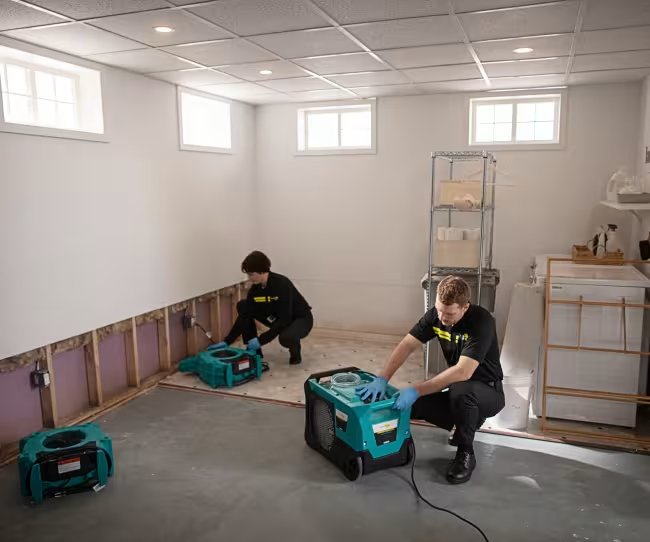
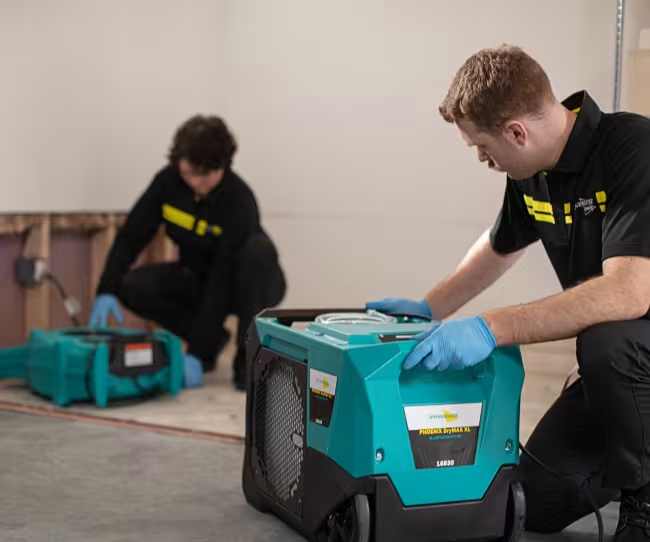
Sump Pump Failure Restoration and Structural Drying
A sump pump has one job, and Midland puts that job to the test. During spring thaw and when the rivers run high, pumps can run nonstop for days and wear out faster than expected. Summer thunderstorms and winter ice storms knock out power, stopping the pump exactly when it’s needed most. Float switches stick, discharge lines clog or freeze solid in winter, and older pumps simply give out. Once the pump stops, water rises quickly. It soaks carpet, drywall, furniture, and stored belongings in finished basements, and porous materials keep absorbing water long after the flooding stops.
Why Choose Our Team for Flooded Basement Drying & Restoration in Midland

Deep Moisture Detection Mapping
High-Volume Water Extraction Systems
Controlled Structural Drying Process
Mold Prevention Drying Strategy
Why Basement Flooding Can’t Wait in Midland Homes
Midland’s seasonal moisture swings and clay-heavy soils can create challenging conditions for basement drying. Once water enters a home, porous materials begin absorbing it, and damage can progress even after the original source has stopped.
Within 24 hours: materials begin absorbing water and swelling. Drywall edges can soften, carpet padding can become saturated, and wood framing can wick moisture upward from floors.
Within 24–48 hours: conditions can become favorable for mold growth. Enclosed basement spaces and elevated humidity can allow microbial growth to develop behind walls, beneath flooring, and in other areas that remain damp.
After several days: structural and indoor-environment concerns can increase. Wet insulation can lose effectiveness, wood materials can remain saturated, and contaminants carried by groundwater or other sources can settle into porous materials.
What to Do Immediately After a Basement Flood in Midland, MI
-
1Step 1Stop Water Entry If Possible
If it is safe to do so, shut off the main water line or the power source for the sump system if a mechanical failure is contributing to the flooding. Stopping the source can prevent additional water from entering the basement.
-
2Step 2Avoid Electrical Hazards
Do not enter standing water if electrical outlets, appliances, cords, or other electrical equipment may be submerged. If power needs to be shut off, do so from a dry location only if it can be done safely. When in doubt, stay out of the affected area until it can be evaluated safely.
-
3Step 3Move Valuables to Dry Areas
If water levels and conditions allow, move furniture, electronics, documents, and other belongings to a dry location. Avoid walking through contaminated water or handling items that may create an electrical or other safety hazard.
-
4Step 4Call ServiceMaster Restoration Services - Midland
Once immediate safety concerns have been addressed, contact a professional drying team. Rapid water extraction, moisture detection, and dehumidification can help limit the progression of water damage and reduce conditions that contribute to mold and persistent odors.