Protect Your Business with Expert Mold Services from ServiceMaster of Eugene
In Eugene, OR, commercial property owners face a unique set of challenges when it comes to mold. The region's naturally damp climate, frequent rainfall, and fluctuating temperatures create an environment where mold can thrive—especially in poorly ventilated or moisture-prone spaces. For business owners, this presents more than just a maintenance concern. Mold growth can lead to serious structural issues, pose health risks to employees and customers, and result in operational downtime that directly affects your bottom line.
At ServiceMaster of Eugene, we specialize in commercial mold removal, helping businesses stay safe, healthy, and compliant. Whether you manage an office, retail store, industrial facility, or any other type of commercial building, our certified team is here to deliver fast, thorough mold inspection and remediation services tailored to your property’s needs.
Mold found in your Eugene business? ServiceMaster of Eugene is available 24/7 to help you take the next step.
What's Causing Mold Growth in Your Eugene Business?
Commercial mold often develops when water enters a building or moisture remains trapped in materials without adequate ventilation. Eugene's wet climate, aging commercial properties, and seasonal moisture challenges can create conditions where mold takes hold.
In Eugene's historic downtown core near Broadway and Willamette Street, older brick storefronts and office buildings may have flat or low-slope roofs that require careful maintenance. Leaks around roof membranes, flashing, and penetrations can allow water into ceiling assemblies and wall cavities. With measurable precipitation occurring throughout the year, even a small roof leak can become a recurring concern.
HVAC condensation and inadequate humidity control present another challenge for retail and office spaces. November, December, and January are particularly wet months, with average rainfall reaching approximately six to seven inches per month. When moisture accumulates around cooling equipment, ductwork, or poorly ventilated areas, damp surfaces can support mold growth.
Older industrial and warehouse buildings in the Whiteaker district may also experience moisture intrusion through slabs, foundations, and exterior walls. Properties near Amazon Creek or the Willamette River can face additional concerns where site-specific flood exposure or water intrusion is present. Eugene has a documented history of major flooding, including significant events along the Willamette River and other local waterways.
ServiceMaster of Eugene's IICRC-certified team uses moisture mapping, thermal imaging, and calibrated moisture meters to help locate hidden dampness and identify areas requiring further assessment. When appropriate, indoor air quality testing can help inform the evaluation and commercial mold remediation plan.
Ensure a healthy workspace—book your commercial mold inspection today.
How Does ServiceMaster of Eugene Inspect and Remove Commercial Mold?
ServiceMaster of Eugene follows a structured inspection and remediation process to identify affected areas, contain contamination, and document the work. The goal is to address the mold problem while limiting unnecessary disruption to your business.

Step 1: Inspect and Map Moisture
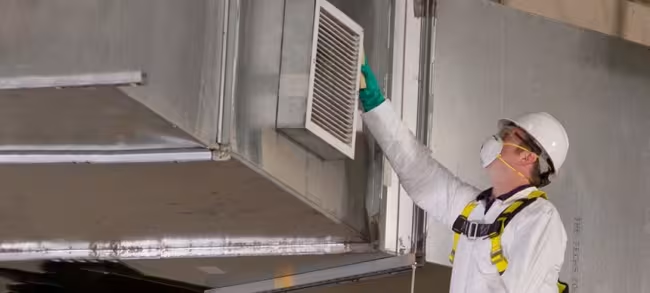
Technicians assess visible mold, moisture sources, and surrounding building materials. Moisture meters and thermal imaging help identify potential problem areas behind walls, above ceilings, and around HVAC systems so the assessment can extend beyond what is immediately visible.
Step 2: Contain Affected Areas
Containment barriers separate the work area from occupied portions of the building. Appropriate containment measures help limit the movement of mold spores during removal, particularly in offices, retail spaces, and multi-tenant properties where other people may still need access to unaffected areas.
Step 3: Remove Contaminated Materials
The remediation team removes affected materials as appropriate and handles their disposal. EPA-registered antimicrobial treatments may be used where suitable as part of the remediation process. Addressing the moisture source is also important to reduce the conditions that allowed mold to develop.
Step 4: Verify and Document the Work
After remediation, the team reviews the completed work and provides documentation relevant to the project. Depending on the property and applicable requirements, records can help support insurance claims, landlord communication, and health department inquiries. Any additional verification or testing should be determined by the project's needs.
Why Eugene Businesses Choose ServiceMaster for Mold Remediation
ServiceMaster of Eugene approaches commercial mold remediation with attention to the building as a whole, the needs of its occupants, and the documentation required to manage a property effectively.
Full-Building Moisture Mapping
Contained, Documented Removal
Scheduling Built Around Business Hours
Paperwork for Insurance and Compliance
Why Can't Mold Problems Wait in a Eugene Workplace?
Eugene's rainfall continues beyond winter, and moisture that enters poorly ventilated buildings can create conditions for mold growth even when outdoor conditions become drier.
Delaying a mold inspection can affect employees, customers, property owners, and business operations. Musty odors or suspected indoor air quality problems may prompt complaints from people using the building, making it important to investigate the source rather than simply masking the smell. Persistent moisture can also damage building materials and furnishings, increasing the scope of cleanup and repairs.
Mold spores can begin colonizing damp materials within 24 to 48 hours under favorable conditions. Once growth becomes established, contamination may extend beyond the area where it first appeared. In multi-tenant buildings, shared HVAC systems, connected wall cavities, and common building assemblies can complicate efforts to identify and contain the affected areas.
For a business, delayed remediation may mean interrupted operations, lost revenue, or temporary closure while affected spaces are addressed. Landlords and property managers may also face lease-related obligations, tenant concerns, and disputes over responsibility for moisture damage or remediation costs.
A timely mold inspection for businesses helps clarify the extent of the problem and supports informed decisions about containment, cleanup, and next steps. Early action protects the people using your building while helping limit avoidable disruption and expense.
What to Do If You Find Mold in Your Eugene Business
If you discover visible mold or suspect hidden growth, take these four steps to limit exposure and prepare for professional assessment.
-
1Step 1Restrict Access to the Affected Area
Limit foot traffic in the affected space to reduce exposure and the potential spread of spores. Keep employees, customers, and tenants away until the area can be assessed.
-
2Step 2Address Any Active Moisture Source, If Safe
If a leaking pipe, roof, or HVAC unit is responsible, stop the water source if it is safe to do so. Avoid entering hazardous areas or disturbing suspected mold.
-
3Step 3Document the Mold and Water Source for Records
Photograph or record video of the visible growth, water damage, and likely moisture source before touching or cleaning anything. These records may help with insurance claims and lease-related documentation.
-
4Step 4Call ServiceMaster of Eugene
Once the area is restricted and documented, arrange a professional inspection to evaluate the problem and determine appropriate next steps. ServiceMaster of Eugene responds 24/7 throughout Lane County.
Eliminate Mold Before It Affects Your Business
Unchecked mold growth can pose a serious threat to your property, other people, and your reputation. What starts as a small moisture issue can quickly evolve into a major remediation project, disrupting your operations and costing thousands in repairs.
At ServiceMaster of Eugene, we’re here to help you take proactive steps to protect your investment. Whether you suspect a mold issue or want to schedule a routine inspection as part of your facility maintenance plan, our team is ready to assist—24 hours a day, 7 days a week.
Don’t let mold disrupt operations—schedule professional remediation now.